
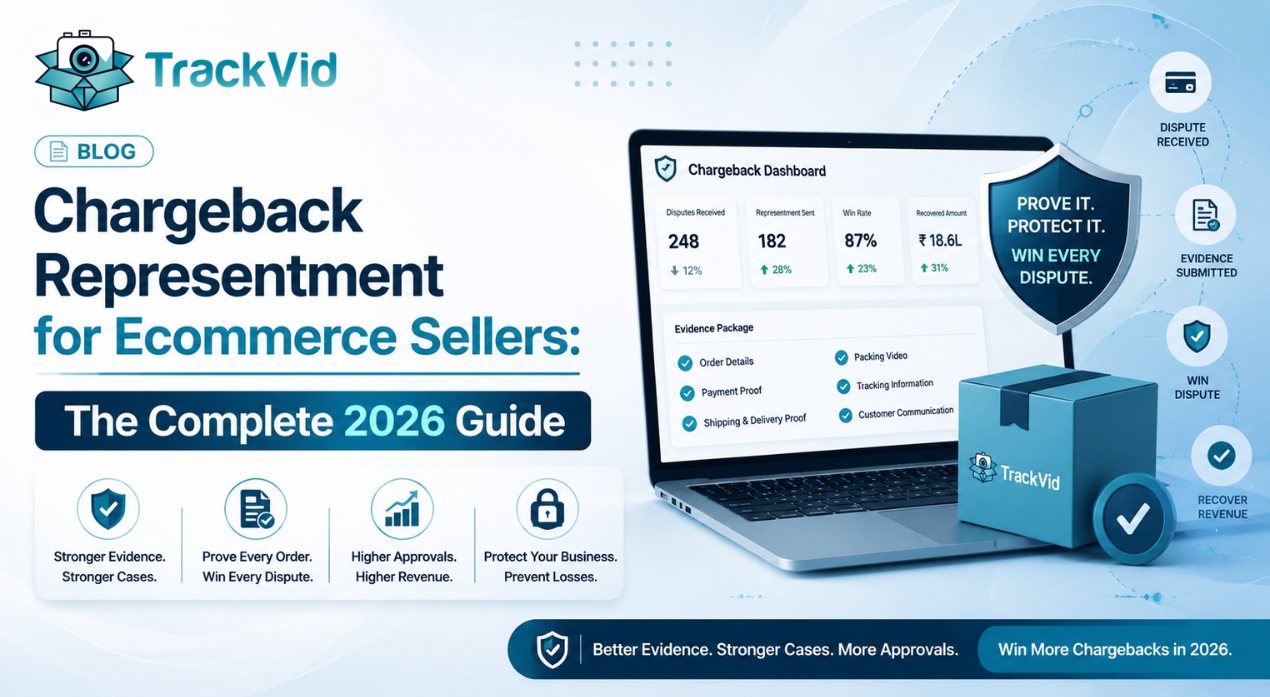
For ecommerce sellers on Amazon, Shopify, eBay, Etsy and global marketplaces. Updated May 2026.
Global chargeback volume will reach 337 million transactions by 2026, a 41 percent increase from 2023, according to Mastercard data. Merchants win only 20 to 30 percent of those disputes overall. But 77 percent of merchants who prepare properly achieve win rates of 30 percent or higher, and friendly fraud cases can reach 43 percent success rates with strong evidence, according to Justt.ai 2026 research.
The gap between 20 percent and 43 percent is not the merits of the case. It is the quality of the representment. Chargeback representment is the formal process merchants use to dispute a chargeback, re-presenting a transaction to the issuing bank with evidence that the charge was legitimate. Most merchants either skip it entirely, or submit it with weak evidence and lose. This guide covers what representment is, how the process works, and, most importantly, what evidence actually wins.
What Is Chargeback Representment?
Chargeback representment is the legal mechanism by which a merchant challenges a chargeback filed by a customer. When a cardholder disputes a transaction, the issuing bank reverses the charge and debits the merchant's account. The merchant then has a specific window, typically 7 to 30 days depending on the card network, to re-present the transaction with evidence that the chargeback is invalid.
The term "representment" refers to re-presenting the original transaction back to the card network with supporting documentation. It is a formal legal process governed by the card network's operating rules, not an informal complaint.
Chargeback representment is available for every major dispute type. It is not limited to fraud cases. A merchant can representment a chargeback for any reason code, including friendly fraud claims, "item not received" disputes, and "item not as described" chargebacks, which together account for the majority of ecommerce disputes.
The outcome of representment is decided by the issuing bank. If the bank agrees with the merchant's evidence, the funds are returned. If not, the merchant may escalate to pre-arbitration and then arbitration, though these carry additional fees and risk.
Why Most Chargeback Representments Fail
The structural reason most chargeback representments fail is not that the merchant's case is weak, it is that the evidence submitted cannot be independently verified.
Banks and card networks evaluate representment submissions under increasing automation in 2026. As Chargeflow's 2026 analysis notes, late or poorly organised evidence will lose even if the facts are correct, because banks are reviewing fewer disputes manually and automated screening decides many cases before a human looks at them.
Three evidence failures dominate merchant losses in representment:
Unverifiable evidence. Photos, written accounts, and order management records all describe what should have happened. They do not prove it. An issuing bank's review system cannot independently verify a seller's written account of what was packed.
Wrong evidence type for the reason code. A "product not received" chargeback requires proof of delivery to the correct address. An "item not as described" chargeback requires proof of product condition at fulfillment. Most merchants submit the same evidence package regardless of reason code.
Evidence that answers the wrong question. Carrier tracking proves the parcel arrived. It does not prove what was inside. A bank evaluating a "wrong item received" claim does not care that the parcel was delivered, they care what was in it. Standard tracking does not answer this question.
The Representment Process: Step by Step
Step 1: Receive the chargeback notification. The merchant's payment processor issues a chargeback notice with a reason code, dispute amount, and response deadline. The deadline is absolute, missing it means automatic loss.
Step 2: Identify the reason code. The reason code defines what evidence is required. Common codes include: 10.4 (Visa, card-not-present fraud), 13.1 (item merchandise not received), 13.3 (not as described), and equivalents across Mastercard, Amex, and Discover. Each requires different evidence.
Step 3: Gather evidence matched to the reason code. For "not received" disputes: proof of delivery, tracking with signature for orders above $750, and packing documentation showing the product was packed and shipped. For "not as described": product condition evidence at fulfillment, listing accuracy documentation, communication records. For fraud disputes: device fingerprint, IP matching, delivery confirmation to billing address.
Step 4: Write the rebuttal letter. The rebuttal is a concise factual summary of why the chargeback is invalid. It should be specific to the reason code, reference all submitted evidence, and avoid emotional or argumentative language. Length matters less than precision.
Step 5: Submit within the deadline. Most card network deadlines are 7 to 30 days. Some platform-specific mechanisms like Amazon SAFE-T have separate windows. Submitting a day late is the same as not submitting.
Step 6: Track the outcome. The issuing bank typically takes 30 to 75 days to respond. Track each case and its outcome to build pattern data, which evidence types are winning, which reason codes are being lost, and where the evidence gaps are.
What Evidence Actually Wins Chargeback Representment
This is where most guides stop being useful. They list evidence types without ranking them by actual win rate.
From highest to lowest effectiveness in ecommerce chargeback representment:
1. Order-linked packing video (highest impact). A timestamped recording of the specific order being packed, showing the product, its condition, and the Order ID in one continuous recording. This is independently verifiable, a bank reviewer can confirm what was packed without relying on either party's account. For "not as described" and "wrong item" disputes, this is the only evidence type that directly answers the bank's question. For "not received" disputes, it proves the product existed and was in the box before collection.
2. Delivery confirmation with proof of receipt. GPS delivery photo, signature confirmation (required for orders above $750 on Visa and Mastercard), or carrier-provided proof-of-delivery documentation. This is the primary evidence for "not received" disputes.
3. Communication records. Email threads, chat transcripts, and support tickets that show the customer received the order, expressed satisfaction, or contacted support before the dispute. Particularly effective for friendly fraud cases where the customer is disputing a legitimate purchase.
4. Product condition documentation. Photos taken at packing with the Order ID visible, showing product condition before dispatch. Supplementary to packing video but useful where video is not available.
5. Transaction metadata. IP address matching billing address, device fingerprint, shipping address matching billing address, and successful prior transactions from the same customer. Primarily relevant for fraud-code disputes rather than service disputes.
The evidence that wins chargeback representment is not the evidence that is easiest to compile after a dispute arrives. It is the evidence that was created before the dispute existed, at the moment of fulfillment.
The Fulfillment Evidence Gap That Loses Representments
The pattern across losing representments is consistent: the merchant had the right to dispute, submitted within the deadline, and lost because the evidence could not independently verify the specific complaint.
For "item not as described" and "wrong item received" chargebacks, which together represent a large share of friendly fraud cases, the decisive evidence is what was in the parcel at the moment of packing. Not at the moment of listing. Not at the moment of delivery. At the moment of packing.
Most ecommerce sellers have no record of this moment. They have CCTV footage that recorded the warehouse generally that day, but not a recording linked to the specific Order ID. They have photos taken before or after packing, but not at packing with the Order ID visible. They have order management records confirming the product was assigned to the order, but not verification that the product was physically confirmed as correct and undamaged before being sealed.
TrackVid creates this evidence automatically for every order. When the shipping label is scanned, recording begins. The video is linked to the Order ID, SKU, and AWB in real time. When a chargeback arrives and representment is needed, the packing video is retrieved by Order ID in under two minutes and submitted as primary evidence.
Sellers using TrackVid's system report 90 percent and above representment win rates on disputes where packing video is submitted as primary evidence.
Related: Ecommerce fulfillment proof, the evidence layer every seller needs →
Visa's New AI Tools for Chargeback Representment (April 2026)
Visa launched new AI-powered dispute tools in April 2026 that directly affect how representment evidence is evaluated. Understanding these changes is essential for sellers filing representments in 2026.
Dispute Recovery Manager automates representment for merchants, managing disputes with AI-generated responses and providing win-prediction scoring to maximise recovery. Visa is expanding this pilot in late 2026.
Compelling Evidence 3.0, updated April 1, 2026, allows merchants to share evidence with banks through Visa's Order Insight tool, including packing documentation and prior transaction evidence. This update specifically strengthens the merchant's ability to contest first-party fraud disputes by submitting fulfillment-level evidence directly to the issuing bank's review system.
The implication for representment strategy: Visa's automation is increasingly evaluating evidence quality algorithmically before human review. Clean, structured, order-linked evidence performs better in automated review than unstructured photo sets and written accounts. Order-linked packing video, the format Compelling Evidence 3.0 is designed to support, is now more effective than ever in the representment process.
Related: AI for ecommerce returns, how merchants are winning the fraud war →
Five Mistakes That Kill Chargeback Representments
1. Missing the deadline. There is no recourse after a missed response window. Set automated reminders for every chargeback notification on every platform and treat the deadline as absolute.
2. Submitting the same evidence package for all reason codes. A "not received" chargeback and a "not as described" chargeback require completely different evidence. Using a generic template loses both.
3. Submitting unverifiable evidence as primary proof. A written account of what was packed, supported only by photos and order records, is disputable. The bank has no way to verify it independently. Always lead with the highest-verification evidence available.
4. Writing argumentative rebuttal letters. The rebuttal letter is not an argument. It is a factual summary referencing evidence. Long, emotional letters perform worse than concise factual ones in both human and automated review.
5. Not tracking outcomes by reason code. If you are losing "item not as described" representments consistently and do not know it, you cannot address the evidence gap causing the losses. Track outcome by reason code and identify where the pattern is.
Book a free TrackVid Demo Today
In one session, you will see how TrackVid's packing video system creates the primary representment evidence for every order automatically and where your current evidence gaps are costing you winnable disputes.
Frequently Asked Questions
What is chargeback representment in ecommerce?
Chargeback representment is the formal process where a merchant re-presents a disputed transaction to the issuing bank with evidence that the chargeback is invalid. When a customer files a chargeback, the bank reverses the charge. The merchant then has a defined window, typically 7 to 30 days, to submit evidence challenging the reversal. If the bank accepts the merchant's evidence, the funds are returned. If not, the merchant may escalate to pre-arbitration. Representment is governed by card network operating rules and is available for all dispute types including friendly fraud, "item not received," and "item not as described" chargebacks.
How does chargeback representment work?
The merchant receives a chargeback notification with a reason code and deadline. They gather evidence specific to the reason code, delivery confirmation for "not received," product condition evidence for "not as described," device and transaction data for fraud. They write a concise rebuttal letter summarising the evidence and submit everything before the deadline. The issuing bank reviews the submission and decides whether to return the funds. The process takes 30 to 75 days for the bank's response. Merchants who submit strong, independently verifiable evidence, particularly order-linked packing video, achieve significantly higher win rates than those submitting standard written accounts and photos.
What evidence wins chargeback representment?
In order of effectiveness: order-linked packing video showing the specific product packed for the specific Order ID, timestamped at packing; delivery confirmation with signature for orders above $750; communication records showing customer acknowledgement; product condition photos with Order ID visible; and transaction metadata including IP and device data. The critical requirement is independent verifiability, evidence that a bank reviewer or automated system can evaluate without relying on either party's account. Order-linked packing video is the only evidence type for "wrong item" and "not as described" disputes that directly and independently answers the bank's question.
How long does chargeback representment take?
The merchant's response window is typically 7 to 30 days depending on the card network and reason code. Visa and Mastercard generally allow 20 to 30 days for the merchant to submit evidence. The issuing bank then takes 30 to 75 days to evaluate the representment and issue a decision. If pre-arbitration is needed, the process can extend further. Platform-specific mechanisms like Amazon SAFE-T have separate timelines, for SAFE-T, sellers have 7 days from return delivery to submit evidence. The time pressure is why automated evidence retrieval matters, manual evidence compilation consistently misses windows at scale.
What is the chargeback representment win rate for ecommerce?
Overall, merchants win 20 to 30 percent of chargeback disputes according to Justt.ai 2026 research. However, 77 percent of merchants achieve win rates of 30 percent or higher with proper evidence preparation. Friendly fraud cases specifically can achieve 43 percent success rates with strong evidence. Merchants using order-linked packing video as primary evidence, as TrackVid's system provides, report win rates of 65 to 90 percent on disputes where the video is submitted. The difference between the average 20 to 30 percent rate and the 90 percent rate is almost entirely attributable to evidence quality, not case merit.
What is a chargeback rebuttal letter?
A chargeback rebuttal letter is the merchant's written response to the issuing bank in a representment submission. It summarises the evidence, references the specific reason code, and states concisely why the chargeback is invalid. The letter should be factual and specific, not argumentative. It should reference each piece of evidence submitted by name. Automated bank review systems score evidence quality before human reviewers see it, so the letter's formatting and precision matter as much as its content. The rebuttal letter does not win representments alone, it contextualises the evidence that wins.
Sources: Mastercard State of Chargebacks 2025-2026, Justt.ai Merchant Chargeback Rights February 2026, Digital Commerce 360 Visa AI Dispute Tools April 2026, Chargeflow 2026 Chargeback Statistics, Chargebacks911 2026 Field Report, Visa Compelling Evidence 3.0 documentation, Shopify Chargeback Guide May 2026, TrackVid seller data.
TrackVid creates order-linked packing video evidence automatically for every order, the primary evidence type that wins chargeback representment. Learn more at trackvid.in.


Get the Marketplace Claim Recovery Checklist
A 12-point checklist used by 1,100+ sellers to recover 85-90% of marketplace claim losses. Free, instant access.
- Marketplace-specific evidence formats (AJIO, Flipkart, Amazon, Myntra)
- Claim window deadlines for every major platform
- The 6-step process that pushes approval from 85-90%
- Common rejection reasons and how to avoid them
No spam. Unsubscribe anytime. Used by sellers at Rare Rabbit, HRX, Da Milano + 1,100 more.
Stop Losing Money to Fake Returns
Join 1,100+ sellers who recover lakhs every month with TrackVid