
For sellers on Amazon, Flipkart, AJIO, Myntra and Meesho.
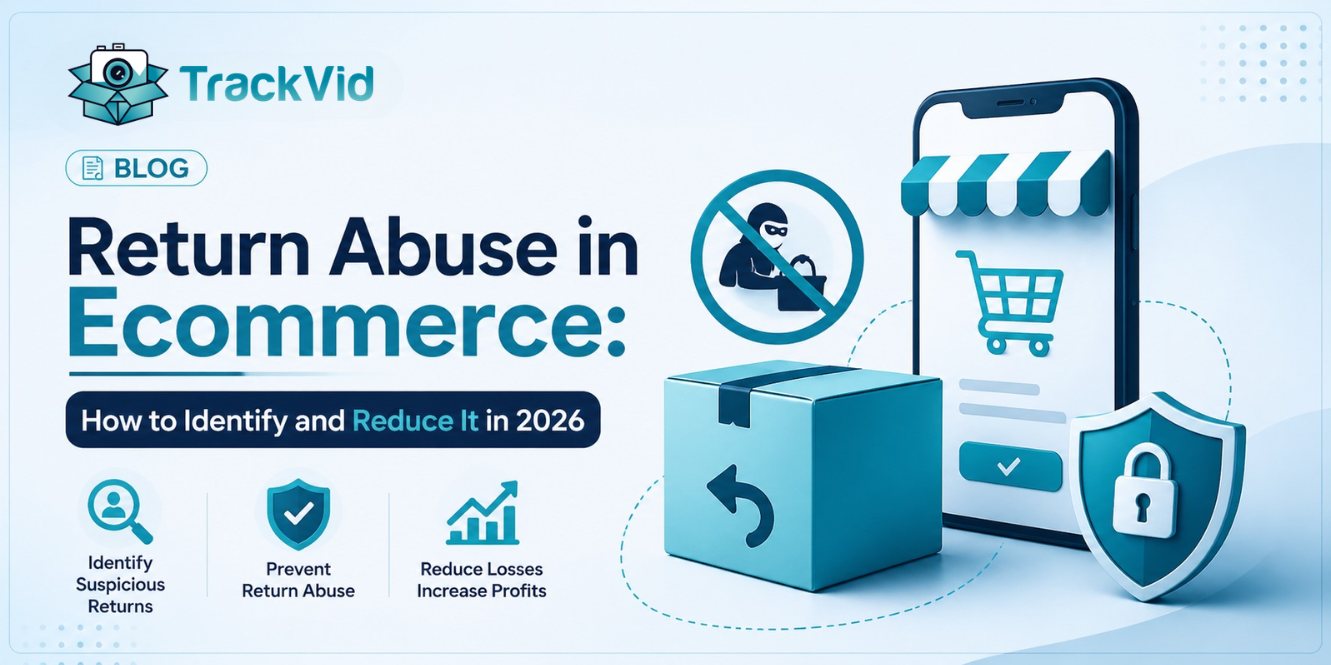
Return abuse ecommerce India is not the same thing as return fraud. And that distinction matters more than most Indian sellers realise, because the two problems require different responses. One of them is also far more common than the other.
Fraud is when a customer deliberately deceives you: swapping the product, sending an empty box, claiming an item never arrived. Abuse is quieter. It is the customer who buys three sizes knowing she will keep one and return two. The buyer who purchases a lehenga for a wedding, wears it once, and ships it back as if unused. The account that has returned over 60 percent of its orders in the past six months and always claims "product different from image."
Serial returners represent just 5 to 10 percent of a typical brand's customer base but account for 30 to 40 percent of all returns, according to research by Claimlane. Abusive returns surged 64 percent between January 2024 and May 2025, and 45 percent of ecommerce consumers admit to having committed some form of return policy abuse.
The problem is not going away. It is accelerating. And for Indian sellers in fashion, ethnic wear, and lifestyle categories, return abuse is often costing more than outright fraud.
Return Abuse vs Return Fraud: Why the Difference Matters for Indian Sellers
Most sellers treat all returns the same. A return is a return. Process it, check the product, file a claim if something looks wrong.
That approach misses the structural damage that return abuse causes over time.
Return fraud is a single incident. A customer swaps a product once, the seller detects it, files a claim, recovers some of the loss. It is discrete, often detectable, and linked to a specific order.
Return abuse is a pattern. The same customer, over months, exploits the return window repeatedly in ways that technically stay within platform policy. No single return is provably fraudulent. But the cumulative effect on the seller's margin is severe.
Signifyd's Global State of Commerce 2026 report found that abusive returns in apparel rose 13 percent year-over-year. In India, where fashion and ethnic wear dominate ecommerce return volumes, this trend is hitting sellers who have no visibility into which accounts are systematically abusing their return rights.
Understanding the types of return abuse is the first step to managing them.
Wardrobing is buying a garment for a specific occasion, wearing it, and returning it as if unused. In India, this is particularly common with wedding season ethnic wear, party wear, and premium occasion dresses. The product comes back looking worn or with minor signs of use that are easy to claim as pre-existing.
Bracketing is buying multiple sizes, colours, or styles of the same product with full intent to return all but one. Reports show that 63 percent of consumers now bracket when buying clothes and shoes. For fashion sellers processing hundreds of orders a day, bracketing returns look legitimate on a per-order basis but systematically inflate return costs.
Serial returning is the pattern of a customer who purchases frequently and returns most purchases, often using different reasons each time. They are not always dishonest in the traditional sense. But their behaviour consumes disproportionate operational resources and erodes margin.
False damage claims involve marking a product as defective or damaged to avoid restocking fees or return shipping charges, even when the product was in perfect condition when received.
A Bangalore D2C Brand That Tracked the Pattern
Shreya runs a D2C womenswear brand based in Bangalore. She sells on AJIO, Myntra, and her own website. Monthly order volume sits around 1,200 to 1,500 units, with fashion being a mix of casual and occasion wear.
For almost a year, she tracked her overall return rate and saw 28 percent. Frustrating, but manageable. It was when she broke down her return data by customer account that the picture changed.
She found that 8 percent of her customer accounts were responsible for 34 percent of her total returns. Within that group, several accounts had return rates above 70 percent of their order history. The return reasons were varied and rarely consistent. But the pattern was clear.
These were not customers who received bad products. They were customers who were using her return window as a try-before-you-buy service, with Shreya's business absorbing the logistics cost on both ends.
The monthly cost she attributed to these accounts, including outbound and return shipping, quality checking, repackaging, and restocked-at-markdown items, was approximately 1.4 lakh rupees. None of it showed up as fraud on her claim reports because none of it technically was.
"I was running a free fitting room for 8 percent of my customer base," she said. "And I had no system to stop it."
How to Identify Serial Returners in Your Ecommerce Operation
The data to identify return abuse exists inside your seller analytics. Most Indian sellers do not look at it with enough specificity.
Here is what to track, and what signals to look for.
Return rate by customer account. Any account with a return rate above 40 percent of their purchase history over a 90-day period is worth flagging. Not banning, but flagging. A single high-return event can have a legitimate explanation. A consistent pattern across multiple orders does not.
Return reason consistency. A customer who always claims "product different from image" across very different product types is showing a pattern. A customer who alternates between "size issue", "quality issue", and "damaged" across consecutive returns is not giving you accurate feedback. They are using available options to avoid friction.
Return timing. Returns that consistently arrive back just inside the return window, especially for occasion or event wear, are a wardrobing signal. Returns that come back on Mondays after weekend purchases are worth noting in fashion categories.
Pincode patterns. Some pincodes in India have consistently higher return rates, COD abandonment rates, and abuse signals. Indian logistics platforms and marketplace seller analytics provide return rate data by geography. Building a pincode risk list is one of the most practical abuse-reduction tools available to Indian sellers. The vast majority of online retailers say customers' misuse of return policies is affecting their bottom line, according to a global study.
COD order return patterns. COD return-to-origin rates in India run between 20 and 40 percent. But within that, accounts that consistently cancel COD at the door or initiate returns within 24 hours of delivery are operating differently from normal customers. Flag these accounts for prepaid-only requirements on future orders.
How to Reduce COD Return Abuse in Indian Ecommerce
COD is structurally the highest-risk channel for return abuse in India. The buyer has no payment commitment at the time of order. The consequence of an easy return is almost zero. And the seller absorbs both the forward and reverse shipping cost when abuse happens.
These are the practical levers Indian sellers use to reduce COD return abuse without restricting genuine customers.
Prepaid nudge with discount. Offering a 5 to 10 percent discount on prepaid orders shifts purchase commitment to the buyer. Sellers using this consistently report lower return rates on prepaid orders compared to COD for the same product.
COD restriction by pincode. Build your high-risk pincode list from your own return data and disable COD for those areas. This is available in most marketplace seller panels and is one of the most direct levers for reducing return abuse without impacting the broader customer base.
Confirmation call for high-value COD. For COD orders above a certain value threshold, a brief confirmation call before dispatch reduces the delivery failure and door-cancellation rate significantly. It also creates a friction layer that deters low-intent buyers.
Account-level COD restriction. For accounts that have returned more than 60 percent of COD orders over a 90-day window, switch them to prepaid only. Most Indian marketplaces allow sellers to manage this through their seller panel settings.
What Smart Sellers Do About Abuse That Has Already Happened
Prevention reduces future abuse. But the abuse that has already happened, the returns you have processed and the claims you have filed and lost, represents recoverable revenue that a different system would have handled differently.
This is where return abuse intersects directly with return fraud. Because a seller who cannot prove what was originally shipped cannot win a claim, regardless of whether the return was genuine abuse or outright fraud. The evidentiary standard is the same.
The sellers absorbing the most return losses are not experiencing more abuse than average. They are building less proof than average.
The sellers who recover meaningful percentages of their return losses, both from abuse and from fraud, have one thing in common: every order packing is recorded, linked to its Order ID, and retrievable within the claim window.
When a return arrives that looks wrong, or a damage claim comes in on a product you know was in perfect condition, you search the Order ID. The packing video shows what left your warehouse. You submit it. The claim has a real evidential basis.
This is what TrackVid builds for Indian marketplace sellers. It records every order packing automatically, links the video to the Order ID, SKU, and AWB in real time, and stores everything in searchable cloud. When you need to dispute a damage claim or a wrong item return, the proof is there in seconds.
For AJIO sellers, TrackVid goes further. AJIO requires order-level packing video for claims, and its auto-detection feature responds to AJIO's "CCTV required" emails automatically, so no deadline is missed and no manual effort is needed.
Five Signals That Tell You Return Abuse Is Draining Your Margin
Use these as your monthly audit checklist.
Is your return rate above 20 percent overall, but concentrated in fewer than 15 percent of your accounts? That concentration is the abuse signal.
Do you have accounts that have returned more than three times in the last 60 days with different stated reasons each time? Flag them for review.
Are your COD return-to-origin rates above 30 percent in specific pincodes? Your pincode risk list needs building.
When a customer claims damage, can you pull a packing video for that order within 10 minutes? If not, your documentation system is costing you claim approvals.
Do you know the cost per return for your top five most-returned products? If not, the abuse pattern in those products is invisible to you and therefore not being addressed.
The Scale of the Problem Makes This Urgent
Return abuse and fraudulent returns cost retailers an estimated $46 billion globally in 2024 in merchandise value alone, not counting shipping, inspections, restocking, or markdowns.
For Indian sellers operating on thin margins in fashion and lifestyle categories, the local impact is proportionally severe. A Bangalore fashion D2C brand doing 1,500 orders a month with a 28 percent return rate is processing 420 returns a month. If 35 percent of those involve some form of abuse or are from serial returners, that is 147 returns a month with above-average cost and below-average recoverability.
Building the detection systems, the COD controls, and the documentation infrastructure to address this is not a large project. It is a series of operational decisions that compound over months.
The sellers who make those decisions early are the ones whose margin looks different six months from now.
Book a free TrackVid Demo Today
In one session, you will see exactly how TrackVid's documentation system fits into your current operation and where your proof gaps are costing you on both abuse and fraud claims.
Frequently Asked Questions
What is return abuse in ecommerce?
Return abuse is when customers exploit return policies in ways that damage seller margins without necessarily committing outright fraud. Common forms include wardrobing (buying and wearing before returning), bracketing (ordering multiple variants to keep one and return the rest), serial returning (consistent high-frequency returns across purchases), and false damage claims. According to Riskified research cited in 2026, 45 percent of ecommerce consumers admit to having committed some form of return policy abuse. Unlike fraud, abuse often stays within platform policies, making it harder to detect and even harder to dispute.
How to identify serial returners in ecommerce India?
Track return rate by customer account, not just overall. Any account returning more than 40 percent of purchases over 90 days is worth flagging. Look for inconsistent return reasons across orders, returns that consistently arrive just inside the return window (wardrobing signal), and COD accounts with repeated door-cancellation or same-day return patterns. Serial returners typically represent 5 to 10 percent of a seller's customer base but drive 30 to 40 percent of all returns, making customer-level analysis far more valuable than aggregate return rate monitoring.
How to stop return abuse on Amazon India?
Use Amazon Seller Central's buyer abuse reporting tool to flag accounts with documented patterns. For COD orders, restrict high-risk pincodes and apply prepaid-only requirements to accounts with return rates above 60 percent of their order history. Require photo evidence for all damage claims. Most importantly, build a documentation system that records every packing with the Order ID linked. This creates the evidence base for winning claim disputes even when abuse escalates to fraud. TrackVid at trackvid.in automates this documentation for Amazon India sellers.
What is the difference between return abuse and return fraud?
Return fraud involves deliberate deception: sending back a wrong item, shipping an empty box, or claiming an item never arrived when it did. Return abuse involves exploiting policy loopholes without technically breaking rules: buying multiple sizes to return most, wearing a garment once then returning it, or returning high-frequency purchases with varied excuses. Both erode seller margins. Fraud is easier to dispute with proof. Abuse requires operational detection and prevention systems alongside documentation for the cases that do become disputable claims.
How to reduce COD return abuse in India?
Four levers work consistently. First, a 5 to 10 percent prepaid discount shifts purchase commitment to the buyer and reduces return intent. Second, COD restriction by pincode using your own return data removes the highest-risk delivery zones without impacting your broader customer base. Third, a confirmation IVR call before dispatch for high-value COD orders reduces door-cancellation significantly. Fourth, account-level COD restriction for buyers with more than three consecutive COD returns in 90 days moves the abuse risk to zero for those accounts going forward.
Can Indian ecommerce sellers blacklist serial returners?
Sellers can report buyer abuse through the platform's buyer abuse reporting mechanism on Amazon and Flipkart. Full account restrictions are controlled by the platform, not the seller directly. Amazon and ASOS have reportedly applied restrictions to serial returners globally. What sellers can control: COD restrictions by account, prepaid-only requirements, and detailed documentation that supports abuse reports filed with platforms. Building evidence over time with tools like TrackVid makes abuse reports significantly stronger.
What is wardrobing in ecommerce?
Wardrobing is when a customer buys a product, typically a garment or accessory, uses it briefly for a specific event or occasion, and then returns it as if unused. It is particularly common in ethnic wear, party wear, and occasion clothing in India. Signifyd's Global State of Commerce 2026 report found that abusive returns in apparel, which includes wardrobing, rose 13 percent year-over-year. Tamper-evident tags and hygiene seals help deter wardrobing, but packing video documentation of original product condition is the strongest evidence for disputing false condition claims on returned items.
Sources: Signifyd Global State of Commerce 2026, Claimlane Return Fraud Guide 2026, Riskified Consumer Returns Study, Indian Retailer Returns Fraud Analysis, NRF Returns Landscape Report 2025, Shopify India Ecommerce Returns Report.
TrackVid is a video proof and claim management platform used by 1,100+ Indian ecommerce sellers on Amazon, Flipkart, AJIO, Myntra and Meesho. Officially authorised by Snapdeal. Learn more at trackvid.in.
Get the Marketplace Claim Recovery Checklist
A 12-point checklist used by 1,100+ sellers to recover 85-90% of marketplace claim losses. Free, instant access.
- Marketplace-specific evidence formats (AJIO, Flipkart, Amazon, Myntra)
- Claim window deadlines for every major platform
- The 6-step process that pushes approval from 85-90%
- Common rejection reasons and how to avoid them
No spam. Unsubscribe anytime. Used by sellers at Rare Rabbit, HRX, Da Milano + 1,100 more.
Stop Losing Money to Fake Returns
Join 1,100+ sellers who recover lakhs every month with TrackVid