
For online sellers and D2C brands on Shopify, Amazon, eBay, and global marketplaces. Updated May 2026.
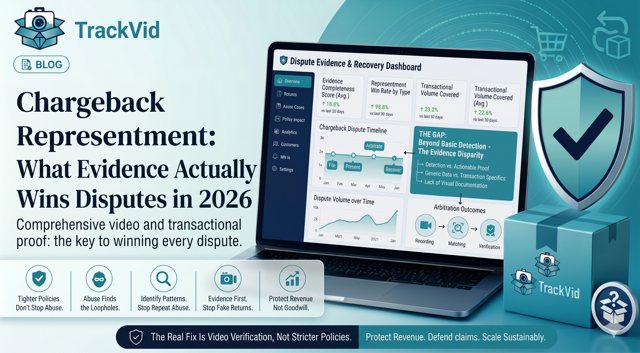
Chargeback representment is the formal process a merchant uses to dispute a chargeback and recover reversed funds. Merchants win only 20 to 30 percent of chargebacks overall, according to Justt.ai 2026 research. But merchants who prepare properly achieve win rates of 30 percent or higher, and with the right evidence matched to the right reason code, win rates reach 65 to 90 percent. The gap between losing 80 percent of your disputes and winning 65 to 90 percent is not the strength of your case. It is two things: evidence type and evidence match.
Most merchants lose chargeback representment not because their case is weak but because they submit evidence that answers the wrong question. A carrier delivery confirmation wins an "item not received" dispute. It does not win an "item not as described" dispute. Submitting the same evidence package regardless of reason code is the single most common representment failure across ecommerce, and it is entirely preventable.
Why Most Chargeback Representments Fail
The mechanics of chargeback representment are well documented. A chargeback notification arrives from the merchant's acquirer or payment processor. The merchant has a defined response window, typically 7 to 30 days depending on the card network and processor, to submit a rebuttal letter and supporting evidence. The issuing bank reviews the submission and decides whether to reverse the chargeback in the merchant's favor or uphold the customer's claim.
The process is clear. The failure is almost always in the evidence layer.
According to Chargeflow 2026 analysis, late or poorly organised evidence loses even when the facts are correct, because automated screening at the issuing bank decides many cases before a human reviewer sees the submission. A well-formatted, structured, independently verifiable evidence package wins. A folder of screenshots, a written account, and a tracking number loses. Not because the merchant is wrong. Because the evidence cannot be independently evaluated quickly enough for the automated review to favor them.
The second failure is reason code mismatch. Every chargeback reason code defines a specific dispute type, and each type requires different evidence. Merchants who build a single "standard evidence package" and submit it across all dispute types consistently underperform merchants who match evidence specifically to the reason code.
The merchant who wins representment consistently is not the one who argues loudest. They are the one who produces the most specific, independently verifiable answer to the exact question the bank is asking.
The most consequential evidence gap in ecommerce representment is for product dispute reason codes: "item not as described" and "wrong item received." For both of these, the bank is asking a specific question: was the item that left the merchant's warehouse the item described and paid for? Carrier tracking cannot answer this. A listing screenshot cannot answer this. Only order-linked packing video, recorded at the moment of dispatch and linked to the specific Order ID, answers this question directly.
This is the gap that accounts for the majority of preventable representment losses across product-selling ecommerce merchants, and it is the gap that the rest of this guide addresses in detail.
Manchester Seller James: 12 Percent Win Rate Despite Filing Every Dispute
James runs a D2C electronics accessories brand from Manchester, selling through his own Shopify store and two Amazon UK channels at approximately 310 orders a day. His products are mid-range: phone cases, charging cables, screen protectors, and small peripherals. Average order value around £35.
For two years James filed representment on every chargeback that arrived. He had a defined process: tracking number, delivery confirmation, listing screenshot, and a written rebuttal explaining the transaction. He submitted this package consistently within his processor's deadline. His win rate was 12 percent.
He assumed the losses were inevitable. The chargebacks seemed to be from customers who knew the dispute system better than he did. He had heard that merchants usually lose chargebacks and had accepted it as a structural cost of operating at volume.
When he reviewed 90 days of lost representments in detail, the reason code breakdown told a different story. Approximately 35 percent of his disputes cited "item not received" on orders where his carrier tracking showed confirmed delivery to the correct postcode. He was submitting delivery confirmation for these cases and losing them because his carrier tracking showed "delivered" without GPS confirmation or signature, leaving the dispute unresolvable without more specific proof.
Fifty-one percent of his disputes cited "item not as described" or "wrong item received." For every one of these, James had submitted his standard package: listing screenshots showing the product description, a tracking number, and a written account. He had not realised that for product condition disputes, listing screenshots answer the wrong question entirely. The bank was not asking whether his listing was accurate. The bank was asking whether the specific item dispatched for the disputed order matched what the customer was shown. His listing could prove the description was correct. It could not prove what was inside the parcel when it left his warehouse.
Every dispute I filed, I thought I had evidence. I did not understand that I had the wrong evidence for the wrong question.
After James restructured his representment process, two changes made the material difference. For INR disputes, he added GPS-confirmed delivery documentation and followed up with direct customer communication records where available. For product condition disputes, he added order-linked packing video as primary evidence. Every packing session was recorded with the video automatically tagged to the Order ID, retrievable in under two minutes when a dispute arrived.
His representment win rate moved from 12 percent to 74 percent within two billing cycles. His monthly chargeback cost dropped from £8,700 to under £2,300. The disputes that remained losses were predominantly genuine fraud cases where he had no prior purchase relationship with the claimant to support his case.
What Evidence Wins Chargeback Representment by Reason Code
Winning chargeback representment requires matching evidence to the specific question each reason code defines. Here is the correct evidence for each major dispute type.
Item Not Received (INR)
The bank's question: did the item ship and was it delivered to the customer's address?
Primary evidence: carrier tracking with delivery timestamp and GPS location confirmation. Not generic "delivered" status. The specific time, date, and GPS coordinates of the last delivery scan. Signature confirmation for high-value orders. Prior communication records where the customer acknowledged the order or the shipment.
Where packing video helps: for INR disputes where the customer claims the parcel arrived empty, packing video showing the item being placed into the parcel is the only evidence that can address this specific claim. Delivery confirmation proves arrival. It does not prove contents.
What loses: carrier tracking alone without GPS confirmation, particularly on orders above £50. Unverified delivery status without date-timestamp.
Item Not as Described
The bank's question: was the item dispatched in the condition and configuration represented to the customer?
Primary evidence: order-linked packing video showing the specific product being packed for the disputed Order ID. This is the only evidence that independently and directly answers the bank's question about what was in the parcel. Supporting evidence: product listing screenshots from the time of purchase, any customer communication prior to the dispute.
What loses: listing screenshots without order-level packing evidence. A listing screenshot proves your description was accurate. It does not prove the item dispatched matched that description. These are two different questions, and banks evaluate the second one. This is why "item not as described" representments have the lowest win rate of any dispute type for merchants without order-linked video documentation.
Wrong Item Received
The bank's question: was the correct item dispatched for this specific order?
Primary evidence: order-linked packing video showing the correct item being packed for the disputed Order ID. This dispute type is structurally unwinnable without it. The customer is claiming you sent the wrong product. Your only means of rebuttal is demonstrating what you actually sent, at the order level. A warehouse inventory screenshot does not demonstrate what left your facility for order number 10042 specifically.
Supporting evidence: dispatch records showing SKU match to order, weight confirmation if available, any customer communication acknowledging the product before the dispute.
What loses: generic warehouse footage, SKU reports without order-level linkage, product listing screenshots. All of these fail because they prove what you generally stock, not what specifically shipped.
Unauthorized Transaction (Fraud)
The bank's question: did the actual cardholder authorize this purchase?
Primary evidence: device fingerprint matching the cardholder's known devices, AVS and CVV match at transaction, IP address matching the cardholder's registered location, prior purchase history from the same device and card. For returning customers, Visa CE3.0 compelling evidence rules allow merchants to demonstrate prior undisputed identical transactions as evidence of cardholder participation.
What loses: transaction records alone without behavioral data. Delivery confirmation without device or behavioral evidence.
Damaged in Shipping
The bank's question: did the damage occur before or after the item left the merchant?
Primary evidence: order-linked packing video showing the item in undamaged condition at the moment of packing. This shifts the damage liability question to the carrier and opens a separate carrier claim. Without packing video, the merchant has no way to prove the item was undamaged at dispatch. The default assumption in the absence of evidence is that damage occurred before shipment.
Supporting evidence: carrier insurance documentation, any photographic evidence of packaging standards.
Credit Not Processed
The bank's question: did the merchant issue the refund they agreed to issue?
Primary evidence: refund confirmation records from the payment processor, customer communication acknowledging the refund request and outcome, order cancellation timestamps.
What loses: verbal confirmation of refund without processor records. This dispute type is administrative and wins or loses entirely on documentation quality.
How to Structure a Winning Chargeback Representment Submission
Beyond evidence content, the format and structure of the submission affects the outcome. Banks process high volumes of representment submissions. A submission that is clearly organised, labelled, and matched to the specific reason code is more likely to receive favorable treatment than an identical set of documents submitted without context.
A strong chargeback representment submission contains four components.
The rebuttal letter opens with a direct statement of the merchant's position, references the specific reason code, and maps each piece of evidence to the specific claim being made. It does not narrate the entire order history. It addresses the bank's question directly and concisely. Two paragraphs maximum. Clear. Factual. No emotional language.
The evidence package is organised in the order the rebuttal letter references it. Each document is labelled. Each label matches the reference in the rebuttal letter. There are no unlabelled documents and no documents not referenced in the letter. Banks following automated review protocols match documents to references. Unlabelled documents are frequently ignored.
The timeline is a one-page document showing the order date, dispatch date, tracking events with timestamps, communication events, and the chargeback notification date. This gives the reviewer a clear picture of the chronology without requiring them to reconstruct it from scattered documents.
The response deadline is noted on the cover page of the submission. Missing a representment deadline loses the case regardless of evidence quality. Most processors give 7 to 30 days from chargeback notification. Some give less for specific reason codes.
Related: How to reduce chargebacks in ecommerce with a two-layer prevention system →
The Evidence Layer Most Merchants Are Missing
For product dispute chargebacks, "item not as described" and "wrong item received" combined account for a significant share of all friendly fraud chargebacks. According to Chargebacks911, clothing, electronics, and subscription goods are the most disputed categories, and these disputes predominantly use product condition and description reason codes.
The merchants who consistently win these disputes have one thing in common: they have order-linked packing video for every fulfilled order.
The mechanism is straightforward. When a dispute arrives for order 10042 claiming wrong item received, the merchant searches Order ID 10042 in their documentation system, retrieves the packing video for that specific order in under two minutes, and submits it as primary evidence alongside the rebuttal letter. The video shows exactly what was packed, the label confirming the Order ID, and the product matching the description. The bank's question is answered directly. The dispute is resolved in the merchant's favor.
Without order-linked video, the merchant submits listing screenshots and a written account. The bank's question, "what was in that specific parcel at dispatch," remains unanswered. The default in the absence of specific evidence is to side with the cardholder. The merchant loses a case they should have won.
TrackVid automates this documentation for ecommerce sellers globally. Every packing session is recorded and linked to the Order ID at the moment of packing. Videos are stored in indexed cloud searchable by order number. When a representment requires packing video, the correct clip is retrieved in under two minutes and submitted as structured evidence. Merchants using TrackVid for product dispute representment report win rates of 65 to 90 percent on cases where packing video is submitted, compared to the industry average below 25 percent using standard documentation.
TrackVid works with existing warehouse cameras and takes under 15 minutes to set up.
Book a free TrackVid Demo Today
In one session, you will see your current dispute breakdown by reason code, which of your recurring losses are in product condition categories, and what order-level documentation coverage looks like across your fulfillment volume.
Five Questions to Find Where Your Representments Are Losing
- What percentage of your chargebacks cite product condition reason codes? If more than 30 percent cite "item not as described" or "wrong item received," you are losing representments where order-linked packing video would reverse the outcome. Standard evidence packages do not win these.
- What evidence are you submitting for product condition disputes? If the answer is listing screenshots, tracking numbers, and a rebuttal letter, you are submitting evidence that answers the wrong question. The bank is not asking whether your listing was accurate. It is asking what was in the parcel.
- Can you retrieve the packing video for any specific historical order in under two minutes? If evidence retrieval requires reviewing warehouse CCTV archives manually, you will miss your representment deadline on high-volume dispute periods. Order-linked documentation is retrieval in seconds, not hours.
- Are you submitting the same evidence package across all dispute types regardless of reason code? A single standard package fails for the majority of reason codes. Representment win rates improve significantly when evidence is matched specifically to the question each reason code defines.
- What is your representment win rate by reason code, not overall? An overall win rate hides where the losses are concentrated. Merchants who audit by reason code consistently find their losses are disproportionately concentrated in two or three code categories, all of which have specific, fixable evidence gaps.
Frequently Asked Questions
What is chargeback representment?
Chargeback representment is the formal process by which a merchant disputes a chargeback and asks the issuing bank to reverse the decision in their favor. When a customer files a chargeback, the merchant has a defined window, typically 7 to 30 days depending on the processor and card network, to submit a rebuttal letter and supporting evidence. The issuing bank reviews the submission and decides whether to uphold the chargeback or reverse it. According to Justt.ai 2026 research, merchants who prepare properly achieve win rates above 30 percent, and with evidence matched correctly to the reason code, win rates reach 65 to 90 percent.
How to win a chargeback representment?
Winning chargeback representment requires two things: the right evidence type and the right match to the reason code. For "item not received" disputes, carrier tracking with GPS delivery confirmation is primary. For "item not as described" and "wrong item received" disputes, order-linked packing video showing what was packed for the specific Order ID is the highest-impact evidence type. For unauthorized transaction disputes, device fingerprinting and prior purchase history from the same card and device are primary. Submitting delivery confirmation for a product condition dispute answers the wrong question and loses regardless of case strength. According to TrackVid data, merchants using order-linked packing video for product disputes achieve win rates of 65 to 90 percent.
What evidence do I need for chargeback representment?
The evidence required depends entirely on the chargeback reason code. "Item not received" requires carrier GPS delivery confirmation, tracking timeline, and customer communication. "Item not as described" and "wrong item received" require order-linked packing video as primary evidence, supported by product listings from the time of purchase. "Unauthorized transaction" requires device fingerprinting, AVS match, and prior purchase history. "Damaged in shipping" requires packing video showing undamaged condition at dispatch. The single most common representment failure is submitting the same generic evidence package across all dispute types. Matching evidence to reason code is the difference between a 12 percent and a 74 percent win rate.
Why do I keep losing chargeback disputes?
The most common reasons merchants consistently lose chargebacks despite filing representment are: submitting the same evidence package for all dispute types regardless of reason code, missing the representment deadline during high-volume periods, and submitting evidence for product condition disputes that answers a different question than the one the bank is asking. Delivery confirmation proves an item arrived. It does not prove what was inside the parcel. For "item not as described" and "wrong item received" disputes, order-linked packing video is the only evidence that answers the bank's actual question. Without it, merchants lose these cases structurally regardless of how well they prepare everything else.
Item not as described chargeback: how to win?
To win an "item not as described" chargeback, the merchant needs to demonstrate that the specific item dispatched for the disputed order matched what the customer was shown and paid for. The bank is not asking whether the listing was accurate. It is asking whether the item in the parcel matched the listing. Product listing screenshots prove the first. Order-linked packing video proves the second. Merchants who submit listing screenshots without packing video consistently lose "item not as described" representments because the most important question remains unanswered. Merchants who submit order-linked packing video alongside the listing and rebuttal letter win the majority of these disputes because the bank's question is directly answered.
Does packing video win chargeback disputes?
Yes, significantly, for product condition dispute categories. Order-linked packing video is the highest-impact evidence type for "item not as described," "wrong item received," and "damaged in shipping" chargebacks because it directly and independently answers the bank's question about what was dispatched. Merchants using TrackVid's automated packing video system for these dispute categories report win rates of 65 to 90 percent, compared to the industry average below 25 percent for merchants using standard documentation without video. Packing video needs to be order-linked to be accepted as primary evidence. Generic time-based CCTV footage is not the same as order-linked packing video and does not meet the bank's evidence standard for direct order verification.
Chargeback representment deadline: how long do I have?
Representment deadlines vary by card network and processor. Visa typically gives merchants 30 days from the chargeback notification date. Mastercard gives 45 days for most reason codes. American Express gives 20 days. PayPal gives 10 business days. Shopify Payments deadlines follow the card network underlying the transaction. Missing the deadline loses the case regardless of evidence quality. For merchants managing high dispute volumes manually, missed deadlines during peak periods are a significant source of preventable losses. Automated evidence retrieval systems reduce the time from chargeback notification to submission from hours to minutes, protecting against deadline misses under volume pressure.
How to write a chargeback rebuttal letter?
A winning chargeback rebuttal letter is concise, factual, and reason-code-specific. Lead with a direct statement of your position in one sentence. Reference the specific reason code and dispute ID. Map each piece of evidence you are submitting to the specific claim it addresses: "The enclosed packing video for Order ID [number] demonstrates that the item dispatched was [description] in [condition]." Keep it to two paragraphs. Use neutral, factual language. Avoid emotional framing or accusations. End with a request for reversal based on the evidence. The purpose of the rebuttal letter is not to tell a story but to guide the bank's reviewer directly to the evidence that answers their question. Clarity and specificity convert at significantly higher rates than length.
Sources: Justt.ai Merchant Chargeback Rights February 2026, Chargeflow 2026 Chargeback Statistics, Chargebacks911 2026 Chargeback Field Report, Visa CE3.0 Compelling Evidence guidelines, Mastercard Dispute Resolution guidelines, Shopify Chargeback Guide 2026, TrackVid internal seller data
TrackVid is a video proof and claim management platform used by 1,100+ ecommerce sellers globally. Officially authorised by Snapdeal. Learn more at trackvid.in.
Get the Marketplace Claim Recovery Checklist
A 12-point checklist used by 1,100+ sellers to recover 85-90% of marketplace claim losses. Free, instant access.
- Marketplace-specific evidence formats (AJIO, Flipkart, Amazon, Myntra)
- Claim window deadlines for every major platform
- The 6-step process that pushes approval from 85-90%
- Common rejection reasons and how to avoid them
No spam. Unsubscribe anytime. Used by sellers at Rare Rabbit, HRX, Da Milano + 1,100 more.
Stop Losing Money to Fake Returns
Join 1,100+ sellers who recover lakhs every month with TrackVid