
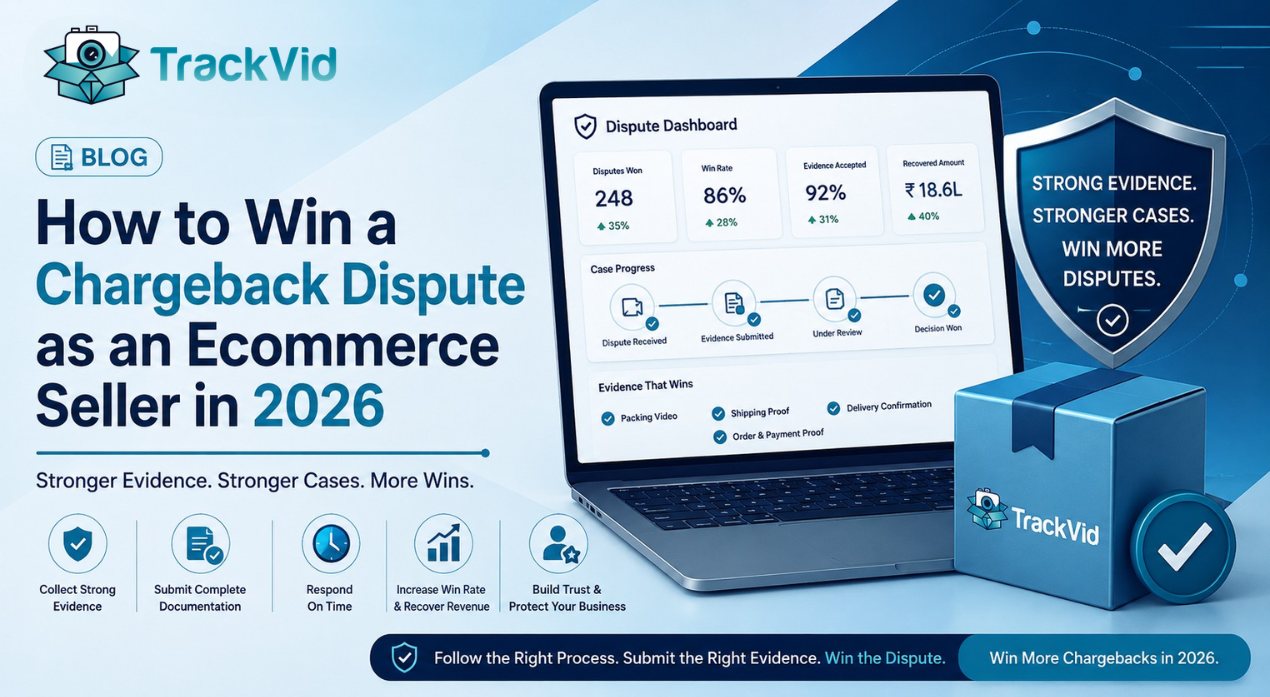
For ecommerce sellers on Amazon, Shopify, eBay, Etsy and global marketplaces. Updated May 2026.
Merchants win only 20 to 30 percent of chargeback disputes overall, according to Justt.ai 2026 research. But 77 percent of merchants who prepare properly achieve win rates of 30 percent or higher, and with the right evidence for the right dispute type, win rates reach 65 to 90 percent.
The gap between losing 80 percent of your chargebacks and winning 65 to 90 percent is not the strength of your case. It is the evidence. Most merchants lose winnable disputes because they do not understand what evidence banks actually evaluate, and they do not have that evidence ready when the dispute arrives.
This guide covers exactly what winning looks like in 2026, the evidence hierarchy, the process, the mistakes, and the one evidence type that changes outcomes most dramatically.
Why Most Merchants Lose Winnable Chargebacks
The structural reason merchants lose winnable chargebacks is that the evidence they submit cannot be independently verified by the bank's review system.
Banks are increasingly automating dispute evaluation. Chargeflow's 2026 analysis confirms that late or poorly organised evidence will lose even if the facts are correct, because automated screening decides many cases before a human reviewer sees them. A well-formatted, structured, independently verifiable evidence package wins. A folder of screenshots, a written account, and a tracking number loses, not because the merchant is wrong, but because the evidence cannot be independently evaluated.
The second structural reason is submitting evidence that answers the wrong question. A customer claiming "item not received" is not disputing that an order was placed, they are disputing that they received it. Carrier delivery confirmation answers this question. A customer claiming "item not as described" is not disputing delivery, they are disputing what was inside the parcel. Carrier tracking cannot answer this question. Only packing documentation can.
Most merchants use the same evidence package for every dispute type. This is why they lose disputes that should be won.
The Evidence Hierarchy for Winning Chargebacks
Evidence is not equal. Here is the hierarchy from highest to lowest effectiveness in ecommerce chargeback disputes:
Tier 1. Independently verifiable fulfillment proof: Order-linked packing video showing the specific product being packed for the specific Order ID, timestamped at the time of packing. This is the only evidence type that independently answers "what was in the parcel" without relying on either party's account. Banks' automated review systems evaluate it as primary proof for product disputes.
Tier 2. Delivery and receipt confirmation: GPS delivery photo, signature confirmation (required above $750 on Visa/Mastercard), carrier-provided proof-of-delivery documentation. Primary evidence for "item not received" disputes.
Tier 3. Transaction and customer history: Prior undisputed transactions from the same customer (supports Visa CE3.0 submission for fraud disputes), IP and device matching to billing address, communication records showing customer engagement.
Tier 4. Supplementary documentation: Product condition photos with Order ID visible, listing accuracy documentation, refund policy acknowledgement records, order confirmation emails opened by the customer.
What never wins alone: Written accounts of what was packed, order management system records confirming product assignment, shipping weight records without product-specific documentation.
Matching Evidence to Reason Codes
Every chargeback has a reason code. The code defines the customer's claim and therefore what evidence is required to counter it. Mismatching evidence to reason codes is one of the most common causes of lost representments.
"Item not received" (Visa 13.1, Mastercard 4853): Required, delivery confirmation to the correct address, signature confirmation for high-value orders, proof the order was shipped within the promised timeframe. Helpful, packing video showing product was packed and label applied.
"Item not as described" / wrong item (Visa 13.3, Mastercard 4853): Required, packing video showing the correct product packed for the specific Order ID, original listing with accurate description, product condition documentation. Written accounts are insufficient. Only independently verifiable packing evidence directly counters this claim.
Fraud / unauthorised transaction (Visa 10.4, Mastercard 4863): Required, device fingerprint matching billing address, IP matching, Visa CE3.0 prior transaction history if available. Helpful, packing video and delivery confirmation showing the transaction was fulfilled legitimately.
Subscription / recurring charge (Visa 13.6): Required, signed authorisation, cancellation policy disclosure, confirmation that cancellation request was not received before charge.
Related: Visa Compelling Evidence 3.0: What ecommerce sellers need to know →
A DTC Brand That Went From 18% to 74% Win Rate
Sophie runs a homewares brand based in Manchester, UK. She sells on Shopify and eBay with an average of 190 orders per day.
For over a year, her team handled chargebacks manually. They submitted tracking numbers for "not received" claims and written accounts for "not as described" claims. Their win rate across both platforms was 18 percent.
A Shopify merchant community thread introduced her to packing video as primary evidence. She set up a structured system where every packing event was recorded and linked to the Order ID automatically.
In the first 60 days, she resubmitted three ongoing disputes with packing video as primary evidence. Two were overturned. Her ongoing win rate in the following quarter moved to 74 percent.
"The bank had never seen the inside of a parcel before. Once they could, the dispute resolved itself."
The product was correct. The order was legitimate. The evidence simply had not existed before.
The Seven-Step Process for Winning Chargeback Disputes
Step 1: Open and log immediately. When a chargeback notification arrives, log it with the dispute amount, reason code, platform, and deadline. The deadline is absolute. Missing it means automatic loss regardless of evidence quality.
Step 2: Identify the reason code and what it requires. Map the reason code to the evidence hierarchy above. Know before you start gathering what type of evidence the bank is looking for.
Step 3: Retrieve packing video by Order ID. For any dispute involving product quality, condition, or contents, the packing video is your primary evidence. If you have a structured system, this takes under two minutes. If you do not, this step is where most merchants find their evidence does not exist.
Step 4: Gather tier 2 and 3 evidence. Delivery confirmation, customer communication records, transaction history. Gather everything relevant to the specific reason code.
Step 5: Write a concise, code-specific rebuttal letter. The letter should be one to two pages maximum. It should state the reason code, explain why the chargeback is invalid with direct reference to each piece of evidence, and avoid emotional or argumentative language. Precision over length.
Step 6: Submit before the deadline. For Visa and Mastercard disputes, submit through your payment processor's dispute management portal. For Visa 10.4 disputes, consider CE3.0 submission through Order Insight. For Amazon SAFE-T, submit through Seller Central.
Step 7: Track the outcome and build pattern data. Record the outcome for every representment. Identify which reason codes you are winning and losing. Where losses cluster, identify the evidence gap and address it.
Related: Chargeback representment for ecommerce sellers, the complete guide →
The One Change That Most Improves Win Rates
Merchants who significantly improve their chargeback win rates make many of the changes above. But the single change with the largest impact is building structured packing video documentation at fulfillment, before disputes exist.
The reason is simple. Every other evidence type, delivery confirmation, communication records, transaction history, is available to any merchant with standard operations. The evidence that most merchants cannot produce is independent proof of what was in the parcel at the moment of packing.
This evidence gap is why "item not as described" and "wrong item" disputes have such low merchant win rates. The merchant knows what was packed. The bank has no independent way to verify it. Without verification, the bank defaults to the customer.
TrackVid closes this gap. Every packing event is recorded automatically, linked to the Order ID in real time, stored in indexed cloud, and retrievable in under two minutes when a dispute requires evidence.
The evidence that wins chargebacks is not found in response to a dispute. It is created at the moment of packing, for every order, before any dispute exists.
Book a free TrackVid Demo Today
In one session, you will see how TrackVid's packing video system creates the primary chargeback evidence for every order and where your current evidence gaps are costing you winnable disputes.
Frequently Asked Questions
How to win a chargeback dispute as an ecommerce seller?
The process has seven steps: log the dispute immediately with its deadline; identify the reason code and what evidence it requires; retrieve order-linked packing video as primary evidence for product disputes; gather delivery confirmation, communication records, and transaction history; write a concise rebuttal letter referencing each piece of evidence; submit before the deadline through the relevant platform's dispute mechanism; and track outcomes to identify evidence pattern gaps. The single biggest improvement most merchants can make is building structured packing video documentation at fulfillment so that product dispute evidence exists before disputes arrive.
What evidence wins a chargeback dispute in 2026?
In order of effectiveness: order-linked packing video timestamped at packing (highest impact, independently verifiable), delivery confirmation with proof of receipt, prior undisputed transaction history for Visa CE3.0 submissions, communication records showing customer engagement, and supplementary product documentation. The critical factor is matching evidence to the specific reason code, "item not received" disputes require delivery proof while "item not as described" disputes require product condition evidence. Using the wrong evidence type for a reason code consistently loses disputes even when the merchant is correct.
Can I win a chargeback if the item was delivered?
Yes, but delivery confirmation alone only wins "item not received" disputes. For "item not as described" or "wrong item received" chargebacks, delivery confirmation proves the parcel arrived but does not prove what was inside. These disputes require product-level evidence, specifically order-linked packing video showing the correct product being packed for the specific Order ID. Merchants who submit delivery confirmation for product condition disputes consistently lose because delivery tracking answers the wrong question.
How long do I have to respond to a chargeback as an ecommerce seller?
Response windows vary by card network and platform. Visa typically allows 20 to 30 days for representment. Mastercard allows similar windows. Amazon SAFE-T allows 7 days from return delivery confirmation. Shopify Payments dispute response windows depend on the underlying card network. eBay chargebacks require response within 5 calendar days. The deadline is absolute, submitting evidence after the window closes means automatic loss. This is why automated evidence retrieval matters: manual processes consistently miss windows when dispute volume is high.
Does packing video help win chargebacks?
Yes, significantly. Order-linked packing video is the highest-impact evidence type for product dispute chargebacks, "item not as described," "wrong item received," and product condition claims. It directly and independently answers the bank's question about what was in the parcel. Merchants using TrackVid's automated packing video system report 85 to 90 percent win rates on product disputes where packing video is submitted, compared to the industry average below 25 percent for merchants using standard documentation. The improvement is entirely attributable to the independently verifiable nature of the evidence.
Sources: Justt.ai Merchant Chargeback Rights February 2026, Chargeflow 2026 Chargeback Statistics, Chargebacks911 2026 Field Report, Visa CE3.0 guidelines, Shopify Chargeback Guide May 2026, eBay Resolution Center seller guidelines, TrackVid seller data.
TrackVid creates the packing video evidence that wins chargeback disputes. Order-linked. Timestamped. Retrievable in under 2 minutes. Learn more at trackvid.in.

Get the Marketplace Claim Recovery Checklist
A 12-point checklist used by 1,100+ sellers to recover 85-90% of marketplace claim losses. Free, instant access.
- Marketplace-specific evidence formats (AJIO, Flipkart, Amazon, Myntra)
- Claim window deadlines for every major platform
- The 6-step process that pushes approval from 85-90%
- Common rejection reasons and how to avoid them
No spam. Unsubscribe anytime. Used by sellers at Rare Rabbit, HRX, Da Milano + 1,100 more.
Stop Losing Money to Fake Returns
Join 1,100+ sellers who recover lakhs every month with TrackVid