
For ecommerce sellers on Amazon, Shopify, eBay, Etsy and global marketplaces. Updated May 2026.
Regular order tracking tells you when a shipment was collected, when it cleared customs, and when it was delivered. It does not tell you what was inside. And when a customer claims their order arrived empty, contained the wrong product, or was damaged before dispatch, the carrier's delivery confirmation proves exactly nothing about the contents.
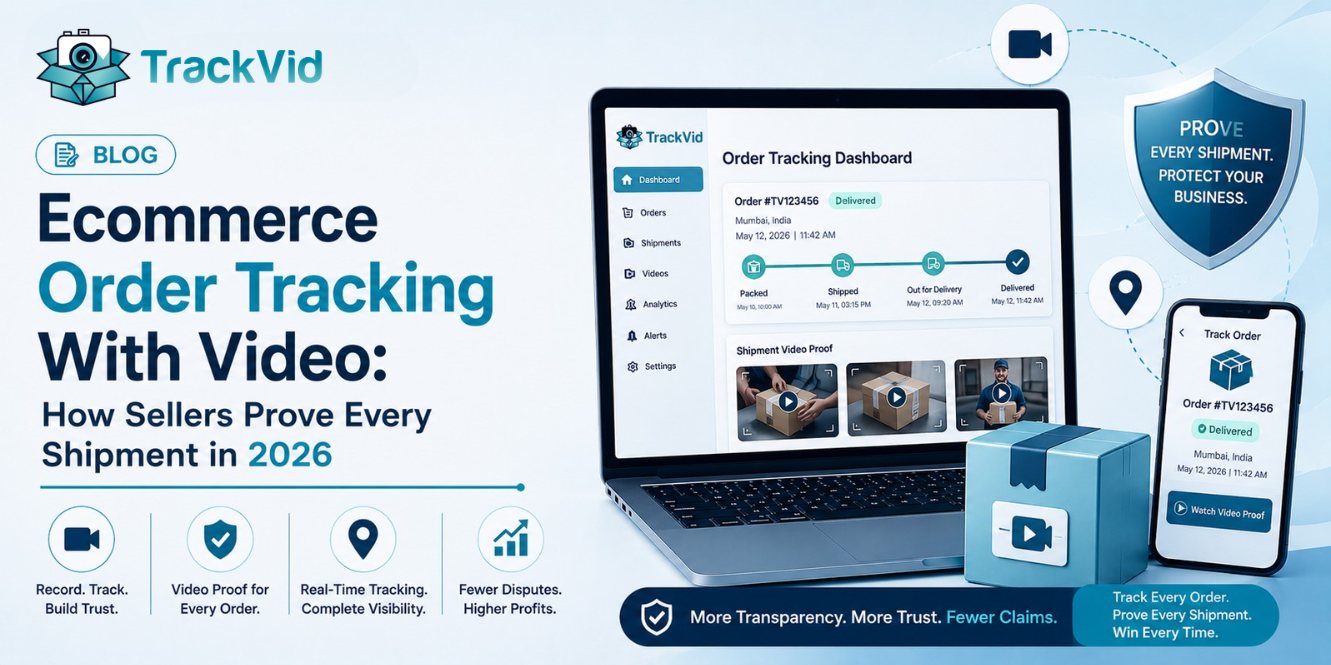
This is the gap that ecommerce order tracking with video fills. Video order tracking links a recording of the actual packing event to the Order ID, AWB, and SKU in real time, so that the contents of any specific shipment are independently verifiable at the moment of packing, not reconstructed after a dispute arrives.
For a seller processing 200 orders a day with a 10 percent fraudulent return rate, that is 20 disputes per month where the difference between winning and losing comes down entirely to whether order-linked packing video exists.
What Ecommerce Order Tracking With Video Actually Means
Most sellers conflate two different things when they search for order tracking software. The distinction matters.
Standard order tracking is logistics tracking. It follows the parcel from dispatch to delivery, carrier scans, customs events, delivery confirmation. Tools like AfterShip, ShipStation, and Narvar do this well. They tell you and your customer where the parcel is in the delivery chain.
Video order tracking is evidence tracking. It follows what was inside the parcel from the moment it was packed. It records the packing event, links the recording to the Order ID, and makes that recording retrievable by order data when a dispute questions the contents.
These are two different problems. Standard tracking solves "where is my parcel." Video order tracking solves "what was in my parcel when it left the warehouse."
The second problem is the one that generates return fraud disputes, chargeback claims, and marketplace violation reports. And standard tracking software provides zero evidence for it.
How Video Order Tracking Works: The Technical Flow
Ecommerce order tracking with video works in six steps, all of which happen automatically in a properly built system.
Step 1: Label scan triggers recording. When a packer scans the shipping label to begin fulfillment, the video system starts recording automatically. No manual action required.
Step 2: Real-time order data tagging. As recording begins, the system links the video to the Order ID, SKU, and AWB pulled from the scan in real time. This connection is made at the source, not added afterward.
Step 3: Complete packing sequence captured. The recording covers the entire packing event: product verification, barcode confirmation, boxing, sealing, and label application. One continuous, unedited recording.
Step 4: Indexed cloud storage. The finished recording is uploaded to cloud storage indexed by Order ID, AWB, SKU, date, and packing station. Standard tracking data feeds into the same indexing.
Step 5: Order-linked retrieval. When a dispute arises, the seller searches the Order ID. The packing video for that specific order loads in under two minutes.
Step 6: Dispute submission. The video is submitted as primary evidence through the relevant dispute portal. Amazon SAFE-T, Shopify Payments dispute resolution, eBay Money Back Guarantee, or any marketplace mechanism. The evidence is independently verifiable and accepted as primary proof.
This is what separates ecommerce order tracking with video from CCTV: every step is order-driven rather than time-driven. The footage does not need to be found. It is indexed by the same order data that drives every other element of the fulfillment workflow.
Why Regular Tracking Is Not Enough for Fraud Disputes
A common response when a fraud dispute arrives is to pull the tracking record. It shows the parcel was scanned at dispatch, delivered successfully, and signed for. Problem solved.
Except it is not.
Delivery confirmation proves the parcel arrived. It does not prove what was inside. A customer claiming the order arrived with the wrong item, an empty box, or a damaged product has already accepted that the parcel arrived. Their dispute is about the contents, not the delivery.
Carrier tracking data does not describe contents. Delivery photos, where available, show the parcel on a doorstep. They do not show what was inside.
The dispute mechanism at every major marketplace and payment processor evaluates one question: can the merchant independently verify what was packed and shipped for this specific order? Carrier tracking data cannot answer that question. Only video order tracking that recorded the packing event for that specific order can answer it.
This is why sellers who rely on carrier tracking data in disputes consistently lose claims that should be winnable. The evidence answers the wrong question.
Order tracking tells you the parcel arrived. Video order tracking tells you what arrived. Only one of those answers wins a fraud dispute.
The Tools That Provide Real Video Order Tracking for Ecommerce
Several categories of software position themselves as ecommerce order tracking solutions. Most do not provide video-linked order tracking in the meaningful sense.
Post-purchase tracking platforms (AfterShip, Narvar, parcelLab) provide excellent carrier event tracking and branded tracking pages. They do not record or link packing videos to Order IDs. They answer "where is my parcel" but not "what was in my parcel."
Warehouse management systems (Unicommerce, ShipHero, Linnworks) manage inventory and fulfillment workflows. Some have video add-ons (Unicommerce UniCapture), but these are embedded within specific WMS ecosystems and require hardware installation.
Purpose-built video order tracking systems record packing events automatically, link each recording to the Order ID in real time, and provide instant retrieval with automated dispute workflows. TrackVid is the dedicated system in this category for global ecommerce sellers.
TrackVid records every packing automatically when the shipping label is scanned, links each video to the Order ID, SKU, and AWB in real time, stores everything in searchable cloud, and retrieves any order's footage in under two minutes. It works with existing warehouse cameras, sets up in under 15 minutes, and covers Amazon, Shopify, eBay, Etsy, and other global marketplaces from a single system.
For dispute-specific automation, TrackVid detects incoming claim emails and responds with the correct order-linked video automatically, so claim windows are never missed and no manual retrieval is needed.
Related: Best packing video software for ecommerce in 2026 →
What Video Order Tracking Proves That Nothing Else Can
When building an evidence chain for an ecommerce fraud dispute, the hierarchy of evidence is clear.
What carrier tracking proves: parcel was collected from the seller, was in transit, and was delivered or attempted at the address on record. Useful for non-delivery claims.
What photos of the packed item prove: the product existed and appeared to be in a certain condition at a certain point. Disputable because photos can be taken at any time and are not linked to the specific order.
What CCTV footage proves: something happened in a warehouse area during a time window. Not linked to specific orders, not searchable by order data, not accepted as order-specific evidence by marketplace dispute portals.
What video order tracking proves: a specific product was placed into a specific box for a specific Order ID at a specific timestamp, in the exact condition visible in the recording. This is independently verifiable by any third party reviewing the evidence. It is the only evidence type that cannot be credibly disputed in a fraud claim.
The 9 to 14 percent of ecommerce returns that are fraudulent, according to NRF data, are almost entirely dependent on the merchant's inability to prove what was originally packed. Video order tracking closes this gap completely.
Related: What is first-party fraud in ecommerce →
Building Video Order Tracking Into Your Fulfillment Operation
For sellers who want to implement ecommerce order tracking with video, the operational requirements are simpler than most expect.
The core infrastructure is a camera at each packing station, connected to software that links recordings to order data from your order management system or marketplace feed. The camera does not need to be new, most existing packing station cameras can be connected to TrackVid's system.
The workflow change is minimal. Packers scan the shipping label as they always do. The scan triggers recording automatically. Nothing else changes in the packing process.
For high-volume operations, the cloud storage and retrieval system handles the evidence layer entirely. No team member needs to search footage, export clips, or manually compile evidence packages. The Order ID is the only input required to retrieve any packing video.
For sellers managing disputes across multiple platforms, the same system covers all channels. A dispute on Amazon SAFE-T, a Shopify chargeback, and an eBay Money Back Guarantee claim all draw from the same indexed cloud storage.
Book a free TrackVid Demo Today
In one session, you will see how video order tracking integrates with your current fulfillment setup and how much of your current dispute loss is recoverable with structured evidence.
Frequently Asked Questions
How to track ecommerce orders with video?
Ecommerce order tracking with video requires software that records the packing event for each order and links the recording to the Order ID at the time of packing. When a dispute arises, the Order ID is searched in the system and the packing video loads in under two minutes. TrackVid at trackvid.in provides this for global ecommerce sellers, working with existing warehouse cameras and covering Amazon, Shopify, eBay, Etsy, and other major marketplaces from a single system. Setup takes under 15 minutes.
What is video order tracking in ecommerce?
Video order tracking links a recording of the order packing process to the Order ID, AWB, and SKU in real time. It differs from standard carrier tracking, which follows the parcel through the logistics chain, by creating evidence of what was inside the parcel at the moment of packing. This evidence is what wins fraud disputes, wrong item claims, empty box returns, false damage claims, where carrier tracking data provides no useful information about the parcel's contents.
What software tracks ecommerce orders with video?
TrackVid is the purpose-built software for ecommerce order tracking with video. It records every packing automatically when the shipping label is scanned, links each video to the Order ID in real time, stores recordings in indexed cloud, and retrieves any order's footage in under two minutes. Unicommerce UniCapture provides similar functionality within the Unicommerce WMS ecosystem for sellers on specific marketplaces. Standard post-purchase tracking platforms like AfterShip and Narvar provide carrier event tracking but do not record or link packing videos to orders.
How does video order tracking prevent ecommerce fraud?
Video order tracking creates order-level, timestamped, independently verifiable evidence of what was packed for each shipment before any dispute exists. When a customer files a fraudulent return claim, wrong item, empty box, false damage, the merchant retrieves the packing video for that Order ID in under two minutes and submits it as primary evidence. The video shows the correct product being packed for that specific order. Fraudulent claims cannot credibly contradict independently verifiable timestamped evidence. Sellers using TrackVid's video order tracking system report 90 percent and above win rates on disputes where packing video is submitted.
What is the difference between order tracking with video and regular tracking?
Regular order tracking follows the parcel through the logistics chain, carrier pickups, transit events, delivery scans. It answers the question "where is my parcel." Video order tracking records the packing event and links it to the Order ID. It answers the question "what was in my parcel when it left the warehouse." Regular tracking is essential for delivery transparency. Video tracking is essential for fraud dispute resolution. Most ecommerce fraud disputes, wrong item claims, empty box returns, false damage, are disputes about contents, not about delivery. Regular tracking data cannot answer questions about contents.
Can video order tracking work with my existing warehouse cameras?
TrackVid and most standalone packing video systems work with existing warehouse cameras at packing stations. No new camera hardware is required. The software connects to your existing cameras and adds the order-linking and indexing layer that turns raw footage into structured, searchable evidence. For sellers already investing in warehouse cameras for security, adding a video order tracking layer costs the camera investment nothing, it simply adds the intelligence layer that makes the footage useful for dispute resolution.
Sources: National Retail Federation Returns Research 2026, TrackVid seller data, Amazon SAFE-T documentation, Shopify Payments dispute guidelines, eBay Money Back Guarantee seller guidelines, Unicommerce UniCapture documentation, Chargebacks911 2026 Chargeback Field Report.
TrackVid provides ecommerce order tracking with video for sellers on Amazon, Shopify, eBay, Etsy and global marketplaces. 15-minute setup. Works with existing cameras. Learn more at trackvid.in.

Get the Marketplace Claim Recovery Checklist
A 12-point checklist used by 1,100+ sellers to recover 85-90% of marketplace claim losses. Free, instant access.
- Marketplace-specific evidence formats (AJIO, Flipkart, Amazon, Myntra)
- Claim window deadlines for every major platform
- The 6-step process that pushes approval from 85-90%
- Common rejection reasons and how to avoid them
No spam. Unsubscribe anytime. Used by sellers at Rare Rabbit, HRX, Da Milano + 1,100 more.
Stop Losing Money to Fake Returns
Join 1,100+ sellers who recover lakhs every month with TrackVid