
For ecommerce sellers and operations teams worldwide. India section included. Updated May 2026.
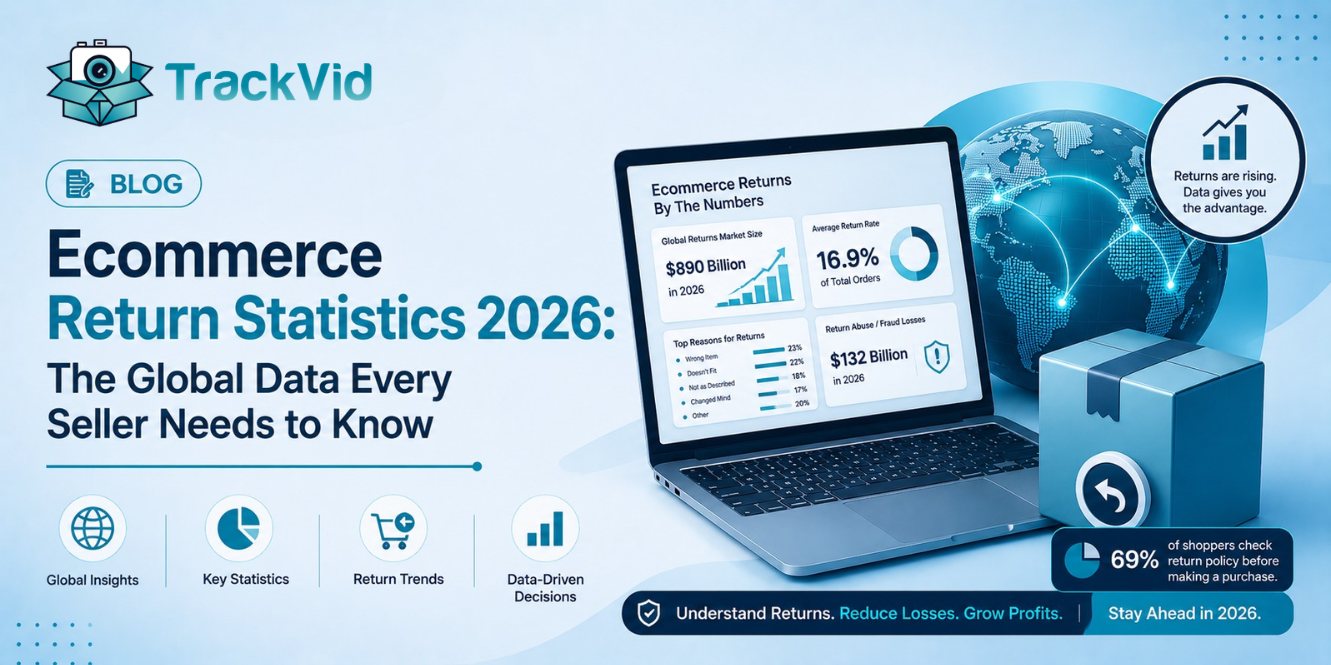
US retail returns hit $849.9 billion in 2025. Global ecommerce returns now exceed $640 billion annually. The average online return rate in 2026 is 19 to 20.5 percent, more than double the brick-and-mortar rate of 5 to 8.9 percent. If your financial model does not account for returns at the category level, your margins are lying to you.
These ecommerce return statistics are not projections. They are the confirmed picture of 2026 drawn from the NRF's Retail Returns Landscape report, Eightx's category benchmarking data, Signifyd's State of Commerce report, and the Merchant Risk Council's Global Fraud report. Every number below is sourced and current.
This is the complete reference for ecommerce return statistics in 2026: global scale, return rate by category, the real cost per return, fraud data, India-specific numbers, consumer behaviour drivers, and what the ecommerce return statistics mean for your operation.
The Scale of Global Ecommerce Returns in 2026
The first thing these ecommerce return statistics establish is that returns are no longer a post-sale operational detail. They are a primary financial event at global scale.
- US retail returns totalled $849.9 billion in 2025, according to the NRF and Happy Returns 2025 Retail Returns Landscape report. For every $1 billion in online sales, retailers face approximately $145 million in returned merchandise.
- Global ecommerce returns exceed $640 billion annually, according to WiserReview 2026 data. At current trajectories, global returns are projected to approach $1 trillion annually within this decade.
- Online return rates increased 39.2 percent from 2023 to 2024, according to NRF data. That is not a one-year spike. It reflects a structural acceleration that predates 2024 and continues into 2026.
- The average ecommerce return rate in 2026 is 19 to 20.5 percent across all product categories, according to Eightx. One in five online orders gets sent back. The comparable brick-and-mortar return rate is 5 to 8.9 percent, meaning online retail is absorbing returns at two to three times the physical store rate.
Key global ecommerce return statistics for 2026
Average ecommerce return rate: 19 to 20.5 percent (Eightx 2026)*
US retail returns in 2025: $849.9 billion (NRF and Happy Returns)*
Global ecommerce returns annually: over $640 billion (WiserReview 2026)*
Brick-and-mortar return rate: 5 to 8.9 percent for comparison (Eightx)*
Year-over-year increase in return rates, 2023 to 2024: 39.2 percent (NRF)*
- Returns as a share of ecommerce revenue: approximately 20 percent of gross sales go back
Ecommerce Return Rate by Category in 2026
The average ecommerce return rate of 19 to 20.5 percent is a blended figure. Category-level data tells a more operationally useful story, because a 25 percent return rate in fashion is a fundamentally different business problem from an 11 percent rate in electronics.
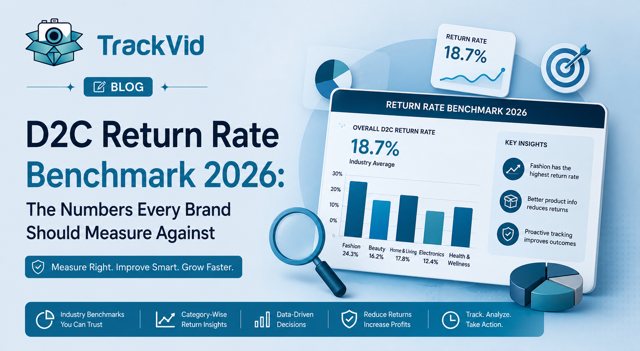
Ecommerce return rate by category in 2026
Fashion and apparel leads all categories. The average apparel return rate is 25 percent, with some fashion sub-segments reporting rates above 40 to 50 percent, according to Eightx and NRF/Happy Returns data. Customers use delivery as a fitting room. Bracketing, buying multiple sizes with intent to keep one and return the rest, is now practised by 63 percent of online shoppers, according to Loop Returns research.
Footwear sits at approximately 18 percent, driven by the same sizing uncertainty as apparel.
Electronics averages 11 to 15 percent return rates depending on the sub-category, according to Eightx and Branvas 2026 data. Electronics returns are driven more by buyer's remorse and genuine defects than fit issues, making them a different management problem from fashion.
Beauty and skincare has one of the most variable ranges: 4 to 12 percent. The lower end reflects the hygiene barrier to returns; the higher end reflects category-specific issues like shade matching and skin reaction claims.
Home and furniture averages 15 to 20 percent, according to NRF and Happy Returns category data. The returns are typically driven by size, colour, and assembly issues.
Supplements and health products average 7 percent, one of the lowest rates across ecommerce categories, according to Eightx.
Jewellery averages approximately 4 percent when sold through reputable sellers with strong product imagery, according to Branvas 2026 category research.
Why category matters
A 5-percentage-point difference in return rate, say 25 percent versus 20 percent, has an outsized margin impact. For a brand doing $10 million in annual revenue with a $75 average order value, that 5 percent difference represents over 6,600 additional returns annually. At $20 average return cost, that is $132,000 in direct processing costs before accounting for items that cannot be resold at full price, according to Branvas analysis.
The Real Cost of an Ecommerce Return in 2026
Most sellers think about the return as the loss of one product sale. The actual cost is substantially higher, because every return triggers a chain of expenses beyond the refund.
Processing a single ecommerce return costs between $10 and $65 depending on the product category, shipping distance, and return complexity, according to Eightx 2026 analysis. Redo's March 2026 industry benchmarking put the more conservative estimate at $15 to $30 per return in direct processing costs.
Only 48 percent of returned items are resold at full price, according to Eightx. The other 52 percent are sold at a discount, liquidated, donated, or destroyed. This means every return carries a double cost: the processing overhead and the margin haircut on the item's second commercial life.
A 25 percent return rate can reduce contribution margin by 70 percent, not 25 percent. Most brands significantly underestimate the compounding effect, according to Eightx's fractional CFO analysis.
The explanation is that a 25 percent return rate, combined with 52 percent items that cannot be resold at full price, means a meaningful share of gross revenue is cycling through costly reverse logistics without generating net positive revenue.
Hidden cost layers in every ecommerce return
The refund issued to the customer is the visible cost. Behind it are:
- Inbound return shipping, which the merchant often covers
- Warehouse labour for receiving, inspection, and condition grading
- Restocking labour and systems cost
- Refurbishment cost where applicable
- The lost revenue window while inventory sits in the returns queue
- The margin difference between full-price resale and liquidation value
Returns also generate environmental costs that are increasingly attracting regulatory attention. Ecommerce returns generate 24 million metric tons of CO2 annually, and 9.5 billion pounds of returned goods end up in US landfills every year, according to Ringly.io citing environmental impact data. Return shipments produce approximately 30 percent more emissions than the original outbound delivery.
Ecommerce Return Fraud Statistics in 2026
Inside the overall ecommerce return statistics are a category of returns that are not just costly, they are fraudulent. The NRF estimates that 9 percent of all returns are fraudulent, and Happy Returns puts the industry figure at 14 percent. Either way, this represents over $100 billion in return fraud losses annually across global ecommerce, according to NRF data.
Return fraud takes multiple forms. Empty box returns involve the customer shipping back packaging with nothing inside. Swap returns involve returning a different, cheaper, or broken item in place of the original. Wardrobing involves purchasing a product for a specific use and returning it as unused. False damage claims involve reporting the product as defective upon arrival when it arrived in perfect condition.
Key return fraud ecommerce statistics for 2026
Annual return fraud cost globally: over $100 billion (NRF)*
Percentage of returns that are fraudulent: 9 to 14 percent (NRF / Happy Returns)*
First-party fraud (customers disputing legitimate purchases): 36 percent of all global ecommerce fraud (MRC 2026)*
For every $100 in returned merchandise, retailers lose $10.30 to return fraud (Shopify data)*
- Fraudulent returns have increased proportionally as overall return volume has grown
The most difficult aspect of return fraud from an ecommerce return statistics perspective is that fraudulent returns look identical to legitimate returns in most tracking systems. They appear as normal return events, generate normal refunds, and the fraud is only discoverable if the merchant opens the return and has evidence of what was originally shipped.
Most merchants do not have that evidence. Which is the core operational gap these ecommerce return statistics ultimately point toward.
Ecommerce Return Statistics India 2026
Indian ecommerce return statistics differ from global averages in several meaningful ways, driven by category mix, COD penetration, and marketplace structure.
The overall ecommerce return rate in India sits between 15 and 35 percent depending on category, with fashion at the higher end of that range, according to TrackVid seller data and IBEF industry reporting. Fashion and ethnic wear, which represent a disproportionately large share of Indian ecommerce volume, see return rates between 25 and 35 percent, aligned with global fashion category benchmarks but compounded by India's specific market dynamics.
India has a unique logistics phenomenon that adds a layer to its ecommerce return statistics: the return-to-origin (RTO) rate. COD orders in India that are never delivered, because the customer refuses the shipment at the door, or because the address is inaccessible, generate return-to-origin events that function economically like returns but are tracked separately. COD RTO rates in India run between 20 and 40 percent on COD orders, according to Pragma logistics research.
For Indian sellers, the combined effect of regular returns plus COD RTOs means the effective product-back-to-warehouse rate is substantially higher than the headline return rate suggests.
Key ecommerce return statistics India 2026
India ecommerce overall return rate: 15 to 35 percent by category (TrackVid / IBEF)*
Fashion return rate India: 25 to 35 percent (IBEF industry data)*
COD return-to-origin rate: 20 to 40 percent of COD orders (Pragma research)*
India reverse logistics market size: projected to reach $39.81 billion by 2027 at 6.15 percent CAGR (India Reverse Logistics Market Report)*
Sellers lose approximately 8 to 15 percent of monthly revenue to unrecovered return losses (TrackVid seller data)*
The India ecommerce market reached $65 to 66 billion in GMV in 2025 and is growing at 19 to 21 percent annually, according to Bain and Company and Flipkart research cited by Tapwell.in. At that scale, even a 1 percentage point improvement in return claim recovery rate represents significant recoverable revenue for mid-to-large Indian marketplace sellers.
India's ecommerce return statistics are further complicated by the marketplace platform structure. Sellers on Amazon India, Flipkart, AJIO, Myntra, and Meesho operate under different claim windows and evidence requirements for each platform, creating a fragmented claims environment that manual processes cannot manage consistently at high volume.
Related: The complete India VMS guide for marketplace sellers →
Consumer Behaviour Driving Ecommerce Returns in 2026
Understanding the ecommerce return statistics requires understanding why consumers return. The data on return drivers has become considerably more specific in 2026, and it changes how sellers should think about prevention.
Why consumers return ecommerce orders in 2026
Sizing and fit issues remain the primary driver, causing 45 to 52 percent of all ecommerce returns across categories, according to multiple 2026 sources including Eightx and WiserReview. This is primarily a product information and category-specific problem: customers ordering online cannot try products before purchasing.
Bracketing amplifies the sizing problem. 63 percent of online shoppers now buy multiple sizes or variants with intent to keep only one and return the rest, according to Loop Returns research. This means a significant share of return volume is planned at the moment of purchase, not reactive.
Product different from description causes 14 percent of returns, a gap between product imagery or copy and the received item. This is a listing quality problem.
Damaged items on arrival cause 16 percent of returns, according to Eightx. Some of these are genuine carrier damage. A meaningful portion are fraudulent damage claims.
Changed mind and buyer's remorse represent the remaining volume, returns with no objective fault in the product, driven entirely by post-purchase decision reversal.
The most concerning consumer behaviour trend in the 2026 ecommerce return statistics is the normalisation of fraud-adjacent returns. 84 percent of consumers say filing a chargeback or dispute feels easier than requesting a merchant refund, and 52 percent skip contacting the seller before filing, according to Chargebacks911 research. This means the boundary between "return" and "return fraud" has become porous in consumer behaviour even when the customer does not think of themselves as committing fraud.
Ecommerce Return Policy Trends in 2026
Policy is shifting. The ecommerce return statistics confirm that free, frictionless returns are no longer economically sustainable at current volumes, and merchants are responding.
As of early 2026, 65.2 percent of merchants charge return fees for mail-in returns, with an average fee of $9.04, according to eFulfillmentService's 2026 Return Crisis analysis. This is a structural shift: in 2020, free returns were the near-universal standard for competitive online retail.
72 percent of US retailers now charge return fees, and 53 percent report reduced return rates as a result, according to Eightx 2026 data. The evidence that return fees reduce volumes is reasonably consistent across the research.
But the consumer response is complex. 82 percent of consumers say free returns are a factor in where they choose to shop, according to Ringly.io citing 2025 data. And 71 percent say a bad return experience would stop them from shopping with a retailer again. The margin between "sustainable return policy" and "customer-damaging return friction" is narrow and category-dependent.
Other notable policy trends in the 2026 ecommerce return statistics
- Over 60 percent of ecommerce brands now offer free exchanges while restricting free refunds, according to WiserReview. Store credit over cash refunds is increasingly common as brands attempt to retain revenue within the system.
- 37 percent of merchants are now using AI for returns management, with fraud detection, inventory forecasting, and return-reason analysis as the top three use cases, according to FedEx and Morning Consult's January 2026 survey. An additional 51 percent plan to deploy AI solutions for returns in the near future.
- Verification at return receipt is becoming standard for high-volume brands, according to Redo's March 2026 industry guide. Rather than issuing refunds without inspection, leading operators require photo or video documentation of return condition before approving claims, a direct operational response to rising return fraud.
The Statistic Most Ecommerce Sellers Do Not Track
Every seller in global ecommerce knows their return rate. Very few know their recovery rate.
The return rate, 20 percent, 25 percent, 30 percent, is visible. It shows up in your marketplace dashboard, your logistics costs, and your P&L. It receives attention, generates concern, and motivates investment in product quality, description accuracy, and sizing guides.
The recovery rate is invisible to most sellers. It is the percentage of fraudulent or invalid returns for which a successful claim was filed and approved. And it is where the real money is.
The return rate is a market reality. The recovery rate is an operational choice. Most sellers work hard on the first and have no system for the second.
The global ecommerce return statistics confirm that 9 to 14 percent of returns are fraudulent. For a seller doing 300 orders a day at a 20 percent return rate, that means between 5 and 9 fraudulent returns arrive every single day. Over a month, that is 150 to 270 provably fraudulent returns.
The industry average claim recovery rate on those returns, without a structured evidence system, is under 25 percent, according to TrackVid seller data. With structured order-linked packing video proof, that rate moves to 65 to 90 percent on disputes where the evidence is submitted correctly.
That gap, between under 25 percent and 65 to 90 percent, is the recoverable revenue that ecommerce return statistics never account for because most sellers write it off before it is measured.
TrackVid is built to close this gap. It records every packing automatically, links each video to the Order ID at the time of recording, stores everything in searchable cloud, and retrieves any order's footage in under two minutes when a return dispute arrives. For AJIO sellers, it automates the entire claim response workflow, detecting claim emails and responding with video proof without any manual effort.
The ecommerce return statistics tell you the scale of the problem. Your recovery rate tells you how much of it you are actually addressing.
Related: How packing video proof is changing ecommerce claims →
Five Questions to Move from Statistics to Action
- Your return rate is a number you can name. Can you name your claim recovery rate with the same precision? If not, you are tracking the metric you cannot control and not tracking the one you can.
- For every 100 returns that arrive at your warehouse this month, how many are fraudulent or contain the wrong item? Across global ecommerce return statistics, the answer is 9 to 14. What is your specific number, and how many of those are you recovering through claims?
- What does each return cost your business end to end, including processing, restocking, the margin on items resold at discount, and the claim cost for fraud? Most sellers can estimate the refund. Very few can calculate the full downstream cost.
- If a customer received their order, kept the product, and then filed a chargeback claiming non-delivery, what specific evidence could you submit within 72 hours? If the answer is a shipping label and a tracking number, your dispute is likely to fail.
- If your return volume increased 20 percent next month, would your current returns operation scale with it or break under it? Most manual processes break. Structured systems scale.
Book a free TrackVid Demo Today
In one session, you will see where your current claim recovery rate sits relative to what a structured packing video system achieves, and exactly what building that system looks like in your operation.
Frequently Asked Questions
What is the average ecommerce return rate in 2026?
The average ecommerce return rate in 2026 is 19 to 20.5 percent across all product categories, according to Eightx's category benchmarking data published in May 2026. Some sources, including Ringly.io citing Capital One Shopping data, put the figure slightly higher at 20.8 percent. Either way, roughly one in five online orders is returned. This is two to three times higher than the brick-and-mortar return rate of 5 to 8.9 percent. The rate varies significantly by category, with apparel at 25 percent and jewellery as low as 4 percent. The overall rate increased 39.2 percent from 2023 to 2024, and the trend has continued into 2026, according to NRF data.
How much do ecommerce returns cost sellers in 2026?
Processing a single ecommerce return costs between $10 and $65, factoring in inbound shipping, warehouse labour, inspection, restocking, and potential refurbishment, according to Eightx 2026. Redo's March 2026 industry benchmarking puts the standard estimate at $15 to $30 in direct processing costs. Beyond processing, only 48 percent of returned items are resold at full price (Eightx), meaning every return carries an additional margin haircut on the item's second commercial life. For a brand at 25 percent return rate on $10 million in annual revenue, direct processing costs alone can reach $500,000 per year, before accounting for items that cannot be resold at full price, according to Redo analysis.
Which ecommerce category has the highest return rate?
Apparel and fashion has the highest return rate of any ecommerce category in 2026, averaging 25 percent across the category and reaching 40 to 50 percent in some fast fashion and occasion wear sub-segments, according to Eightx and NRF/Happy Returns data. The primary driver is fit and sizing uncertainty, customers order multiple sizes with intent to keep one and return the rest (a behaviour called bracketing, practised by 63 percent of online shoppers according to Loop Returns). Footwear is second at approximately 18 percent. Electronics averages 11 to 15 percent. Beauty ranges from 4 to 12 percent. Jewellery sits as low as 4 percent for well-presented products. Supplements average 7 percent.
Ecommerce return rate India kitna hai 2026 mein?
India mein ecommerce return rate 15 se 35 percent ke beech hai, category ke hisaab se. Fashion aur ethnic wear mein yeh rate 25 se 35 percent tak jaata hai, jo globally fashion ke saath align karta hai. Electronics aur electronics accessories mein kam hai. Iske alawa, India mein COD return-to-origin (RTO) rate 20 se 40 percent hai COD orders ke liye, jab customer delivery ke time parcel refuse kar deta hai. India ka reverse logistics market $39.81 billion tak pahunchne ka projection hai 2027 tak, 6.15% CAGR se. Indian sellers par ek aur pressure hai ki Amazon, Flipkart, AJIO, Myntra aur Meesho ke alag-alag claim windows mein manage karna padta hai, jisme 24 ghante se lekar 7 din tak ka window hota hai.
How much revenue is lost to ecommerce return fraud annually?
Return fraud costs retailers over $100 billion per year globally, according to the National Retail Federation. Between 9 and 14 percent of all ecommerce returns are fraudulent, according to NRF and Happy Returns data respectively. For every $100 in returned merchandise, retailers lose $10.30 to return fraud, according to Shopify data. The forms of return fraud include empty box returns, swap fraud where a cheaper item is substituted, wardrobing where the product is used and returned as new, and false damage claims. First-party fraud, where a legitimate customer disputes a valid purchase, accounts for 36 percent of all global ecommerce fraud in 2026, representing a $132 billion risk, according to the MRC 2026 Global eCommerce Payments and Fraud Report.
Why are ecommerce returns increasing in 2026?
Four structural forces drive the continuing increase in ecommerce return rates. First, the inability to physically inspect products before purchase creates a persistent fit and expectation gap, causing 45 to 52 percent of returns (Eightx). Second, consumer normalisation of returns as a shopping behaviour, 63 percent of shoppers bracket, ordering multiples with intent to return most (Loop Returns). Third, increasingly generous return policies, followed by the policy reversal where merchants began charging fees, which itself shifted consumer behaviour. Fourth, rising first-party fraud and return abuse as consumers have learned that dispute mechanisms are often easier to use than official return channels, with 52 percent skipping the seller entirely before filing a dispute (Chargebacks911). The structural drivers of ecommerce returns are not going away.
What percent of online orders are returned in 2026?
Approximately 19 to 21 percent of online orders are returned in 2026, meaning roughly one in five. The NRF's Retail Returns Landscape found that 19.3 percent of online sales are returned (compared to 15.8 percent for all retail including in-store). Capital One Shopping and Ringly.io data puts the figure at 20.4 to 20.8 percent. For specific high-return categories like fashion, the rate is significantly higher, reaching 25 to 50 percent depending on the brand, product type, and return policy. For low-return categories like supplements and jewellery, the rate can be well below 10 percent.
Ecommerce return statistics Amazon India, what do sellers need to know?
Amazon India sellers operate under the SAFE-T mechanism for return claim disputes, with a seven-day claim window from return delivery confirmation. The overall return rate on Amazon India is elevated relative to the Indian market average because of Amazon's customer-friendly return policy, which includes pre-approved returns in many categories. Return fraud on Amazon India, including wrong item returns, empty box returns, and false damage claims, is a documented issue. Amazon's SAFE-T claim requires order-level video evidence: a packing video showing what was originally packed for the specific Order ID and an opening video showing what came back. Sellers without structured packing video systems typically recover under 25 percent of eligible fraudulent return claims on Amazon India, according to TrackVid data. With order-linked video evidence, recovery rates move to 65 to 90 percent and above.
Sources: NRF and Happy Returns 2025 Retail Returns Landscape Report, Eightx Ecommerce Return Rate by Category 2026 (published May 2026), Ringly.io 42 Ecommerce Return Statistics 2026, Redo Ecommerce Returns Statistics March 2026, WiserReview Ecommerce Return and Refund Statistics 2026, eFulfillmentService 2026 Return Crisis Report, Loop Returns 2026 Retention Benchmarks, Branvas Ecommerce Return Rates by Category 2026, Signifyd State of Commerce Report 2026, MRC 2026 Global eCommerce Payments and Fraud Report, Chargebacks911 2026 Chargeback Field Report, FedEx and Morning Consult Returns Survey January 2026, TrackVid seller data, IBEF India Ecommerce Report 2026, Pragma COD Research, India Reverse Logistics Market Report 2022-2027, Bain and Company Flipkart India How India Shops Online Report, Tapwell India Ecommerce Statistics 2026, Shopify AI Statistics 2026.
TrackVid is a video proof and claim management platform used by 1,100+ ecommerce sellers on Amazon, Flipkart, AJIO, Myntra and Meesho. Officially authorised by Snapdeal. Sellers using TrackVid's order-level packing video system report 85-90% win rates on return fraud disputes. The average claim recovery rate without a structured system is under 25%. With TrackVid, it moves to 65 to 90 percent and above. Learn more at trackvid.in.
Get the Marketplace Claim Recovery Checklist
A 12-point checklist used by 1,100+ sellers to recover 85-90% of marketplace claim losses. Free, instant access.
- Marketplace-specific evidence formats (AJIO, Flipkart, Amazon, Myntra)
- Claim window deadlines for every major platform
- The 6-step process that pushes approval from 85-90%
- Common rejection reasons and how to avoid them
No spam. Unsubscribe anytime. Used by sellers at Rare Rabbit, HRX, Da Milano + 1,100 more.
Stop Losing Money to Fake Returns
Join 1,100+ sellers who recover lakhs every month with TrackVid