
For online sellers and D2C brands on Shopify, Amazon, eBay, and global marketplaces. Updated May 2026.
To reduce chargebacks in ecommerce, most guides tell you to add 3DS2 authentication, improve AVS matching, and deploy bot detection at checkout. That advice is correct. It is also incomplete. By 2026, chargeback fraud alone is expected to result in $28.1 billion in losses for merchants globally, according to Ethoca. And the majority of those losses will come from friendly fraud, meaning real customers disputing legitimate transactions after fulfillment, a category that checkout tools were not built to address.
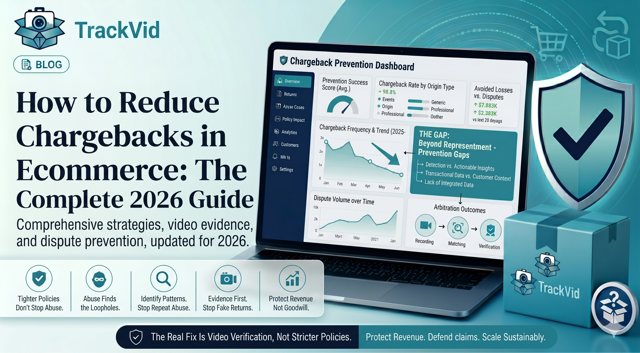
Reducing chargebacks in ecommerce requires two distinct layers. Most merchants have Layer 1. Almost none have Layer 2. That gap is where most chargeback losses live.
Why Most Ecommerce Chargeback Reduction Advice Only Fixes Half the Problem
The standard chargeback reduction playbook covers the front door: block stolen cards at checkout, authenticate high-risk transactions, flag suspicious device patterns, and monitor for card testing velocity. These tools work. They reduce the chargebacks they were designed to prevent.
The chargebacks they were not designed to prevent are a different category entirely.
According to Chargebacks911 data, friendly fraud, where a legitimate cardholder disputes a valid transaction, accounts for 60 to 80 percent of all ecommerce fraud losses. These are not stolen card transactions. They pass every checkout fraud filter cleanly because the buyer is real, the card is real, and the transaction is genuine. The fraud happens after fulfillment, when the customer files a dispute with their bank claiming the item never arrived, arrived damaged, or was not as described.
Checkout tools see nothing after the order ships. They have no mechanism to detect a false "item not received" claim or a product swap return. That is not a flaw in their design. It is a category boundary. Post-purchase fraud requires post-purchase tools.
The result is predictable. Merchants invest in checkout fraud prevention, watch their CNP fraud rate drop, and still see friendly fraud chargebacks rising because they have solved one problem while leaving the other untouched.
The two-layer framework is the complete answer to how to reduce chargebacks in ecommerce:
Layer 1 prevents chargebacks from payment fraud at checkout. Layer 2 prevents chargebacks from post-purchase fraud by creating the evidence that makes friendly fraud disputes unwinnable for the claimant.
What Chargebacks Are Actually Costing You
The headline chargeback cost is the reversed transaction. That is the visible loss. The full cost is substantially larger.
According to LexisNexis Risk Solutions, every dollar of direct chargeback loss costs US merchants approximately $4.61 in total once processing fees, operational overhead, shipping costs, and lost merchandise are factored in. A merchant losing $10,000 directly to chargebacks each month is absorbing closer to $46,000 in total monthly impact.
The dispute fees add between $20 and $100 per chargeback on top of the reversed transaction. High chargeback rates trigger card network monitoring programmes. Visa's VAMP programme, which replaced the previous US and Global Merchant Chargeback Monitoring Programs, automatically enrolls merchants who exceed 100 chargebacks monthly at a ratio above 1 percent. Entering this programme triggers intensified monitoring, potential fines, and eventually, if rates are not brought down, processor termination.
For low-volume sellers, the math is particularly unforgiving. A store processing 150 orders per month needs only two chargebacks to hit a 1.3 percent rate. A single spike during a peak sale period can push a healthy account into monitoring territory within one billing cycle.
The operational cost is the hidden layer. Every disputed transaction requires a response: gather evidence, identify the reason code, format the representment package, submit within the processor's deadline, and track the outcome. If this process is manual, it is also inconsistent. Evidence gathered under time pressure is often incomplete. Deadlines are missed during high-volume periods. Evidence submitted for the wrong reason code loses regardless of how strong the underlying case is.
Reducing chargebacks in ecommerce is therefore not just about preventing disputes from being filed. It is about ensuring that when disputes are filed, a significant percentage of them are won through representment rather than absorbed as losses.
Amsterdam Seller Sophie: 2.1% Chargeback Rate and a Visa VAMP Warning
Sophie runs a D2C fashion and accessories brand from Amsterdam, selling through her own Shopify store and two Amazon EU channels at approximately 260 orders a day. Fashion is a high-return category. She had accepted that as a structural reality of the business. What she had not anticipated was how quickly her chargeback rate would follow.
Over eight months, her monthly chargeback volume grew steadily. She had implemented Shopify's built-in fraud detection, enabled 3DS2 on high-risk transactions, and used AVS matching across all card-not-present transactions. These tools were working. Her payment fraud chargebacks, from stolen card use and CNP fraud, had dropped measurably.
Her friendly fraud chargebacks had not. Customers claiming "item not received" on orders where carrier tracking showed delivery. Customers claiming "item not as described" on products that matched her listings. Customers disputing charges weeks after delivery with no prior contact through her support channels.
Her chargeback rate reached 2.1 percent. She received a formal notification from her payment processor referencing Visa's monitoring thresholds. At 2.1 percent, she was not yet in the highest risk tier, but the trajectory was clear.
When Sophie audited her dispute win rate, she found it was 17 percent. She was filing representment on every dispute but losing the majority because her evidence package was incomplete for the specific reason codes she was receiving.
For "item not received" disputes, she had carrier tracking. But her carrier showed "delivered" without GPS confirmation or signature, and several disputes were for orders where customers claimed the package arrived empty. She had no way to prove what was inside the parcel at the point of dispatch.
For "item not as described" disputes, she had product listing screenshots. But the bank's question was not whether the listing was accurate. The question was whether the specific item in the specific order matched what the customer received. Her listing could not answer that. Her product was photographed before dispatch but not video-documented at the order level.
I had checkout fraud under control. The fraud I could not stop was from real customers who knew my evidence was weak.
When Sophie added a post-purchase documentation layer, every order was recorded during packing and the video was linked to the Order ID. When a dispute arrived for a specific order, she retrieved the exact packing video in under two minutes and submitted it as primary evidence alongside the carrier confirmation.
Her representment win rate moved from 17 percent to 71 percent within 60 days. Her chargeback rate dropped from 2.1 percent to 0.6 percent as the pattern of successful disputes changed the risk profile of her store with both her payment processor and her returning customers. The monthly cost impact dropped from €11,400 to under €3,000.
Layer 1: Pre-Purchase Chargeback Prevention
Layer 1 tools operate at and before checkout. Every ecommerce merchant needs a solid Layer 1 stack. These are the standard tools.
3DS2 authentication shifts liability for fraudulent transactions from the merchant to the card issuer when properly implemented. It is the most impactful single step for reducing CNP fraud chargebacks from stolen card use.
AVS and CVV matching catch the majority of basic credential theft attempts. A mismatch between the billing address submitted and the card's registered address is a strong fraud signal at the transaction level.
Device fingerprinting and velocity checks identify card testing patterns, where fraudsters run small transactions to verify stolen card validity before making larger purchases. Blocking these early reduces downstream fraud chargebacks.
Behavioral fraud scoring from dedicated tools like Signifyd, Riskified, Kount, or Sift assigns risk scores to transactions based on hundreds of signals across their merchant network. High-risk orders are flagged for review or declined automatically.
Chargeback alerts and pre-dispute tools via Ethoca or Verifi allow merchants to receive notification of a dispute before it becomes a formal chargeback, giving them the option to refund and avoid the fee. These services are particularly effective for merchants with high transaction volumes.
Layer 1 addresses payment fraud. It has no visibility into what happens after the order is fulfilled.
Layer 2: Post-Purchase Chargeback Prevention
Layer 2 operates after fulfillment. It is the infrastructure that makes post-purchase fraud disputes unwinnable for fraudulent claimants and recoverable for merchants on legitimate disputes.
The mechanism is order-linked packing documentation. Every order is recorded at the moment of packing, with the video automatically linked to the Order ID, SKU, and dispatch reference. The footage shows the product, its condition, the label, and the contents of the parcel before sealing.
This documentation serves two separate functions in chargeback reduction.
First, it changes who targets you. Organized refund-as-a-service operations, which automate "item not received" and "item not as described" claims at scale according to CyberSource 2026 research, specifically target merchants with weak post-purchase documentation. When a merchant consistently wins disputes with order-level video evidence, those merchants are skipped in favor of easier targets. Systematic post-purchase documentation is a structural deterrent, not just a dispute response tool.
Second, it converts unwinnable disputes into winnable ones. According to Justt.ai 2026 research, merchants who prepare properly achieve dispute win rates of 30 percent or higher, and with the right evidence matched to the right reason code, win rates reach 65 to 90 percent. The critical variable is having evidence that answers the specific question the bank is asking.
For an "item not received" dispute, the bank is asking: was the item shipped and delivered? Carrier tracking answers this.
For an "item not as described" or "wrong item received" dispute, the bank is asking: was the item described and dispatched correctly? Carrier tracking cannot answer this. Order-linked packing video can.
This is the gap. Most merchants have the first type of evidence and lack the second. Friendly fraud disputes disproportionately use "item not as described" and "wrong item" reason codes because fraudsters know that delivery confirmation alone does not answer their claim.
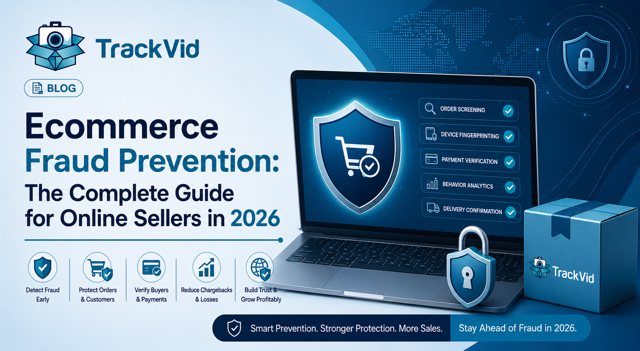
Related: Ecommerce fraud prevention: why post-purchase fraud is the gap checkout tools miss →
How to Reduce Chargebacks with a Two-Layer System
Merchants who consistently achieve chargeback rates below 0.5 percent and dispute win rates above 65 percent operate both layers simultaneously. Here is what the combined system looks like in practice.
Pre-purchase: 3DS2 on high-risk transactions, AVS and CVV matching, behavioral fraud scoring from a dedicated tool, chargeback alert enrollment through Ethoca or Verifi for proactive dispute deflection.
Post-purchase: Order-linked packing video for every fulfilled order, stored in searchable cloud indexed by Order ID. When a dispute arrives, the correct packing video for that specific order is retrieved in under two minutes and submitted as primary evidence alongside carrier documentation.
Representment workflow: Every chargeback is reviewed for reason code, matched to the correct evidence type, and responded to within the processor's deadline. Evidence is submitted as a structured package, not a folder of screenshots.
Pattern monitoring: Dispute data is reviewed monthly by SKU, customer, and reason code to identify patterns. Repeat dispute claimants are flagged. High-dispute SKUs are audited for listing accuracy. Carrier routes with high "delivered but disputed" rates are reviewed.
The merchants who reduce chargebacks most effectively are not those who block more transactions at checkout. They are those who have made post-purchase fraud economically unattractive by being able to prove exactly what was dispatched for every order.
TrackVid provides the post-purchase documentation layer for ecommerce sellers globally. It records every packing session and links each video to the Order ID, SKU, and dispatch reference at the moment of packing. Evidence is stored in indexed cloud searchable by order number. When a dispute arrives, the packing video for that specific order is retrieved and formatted as the primary representment evidence within minutes.
TrackVid works with existing warehouse cameras. Setup takes under 15 minutes.
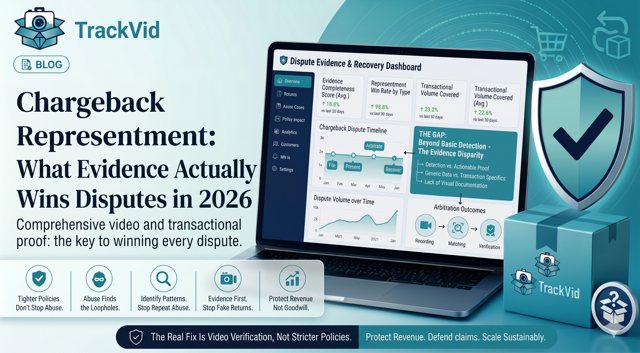
Related: Chargeback representment: how to submit evidence that actually wins →
Five Questions to Find Where Your Chargebacks Are Coming From
- What percentage of your chargebacks are from reason codes related to product condition or delivery versus unauthorized use? If more than 40 percent cite "item not as described," "wrong item," or "item not received" on orders with confirmed delivery, your losses are post-purchase in origin. Layer 1 tools will not reduce them.
- What is your current chargeback representment win rate? If your win rate on disputes filed is below 30 percent, the problem is evidence quality, not case legitimacy. The right evidence matched to the right reason code should win 65 to 90 percent of valid representments.
- Can you retrieve the packing video for any specific order in under two minutes? If evidence retrieval requires searching time-based CCTV archives or asking warehouse staff to review recordings manually, you do not have order-level documentation. You have a recording system that cannot be actioned quickly enough for dispute deadlines.
- Are you approaching or exceeding Visa's 1 percent chargeback threshold? At 1 percent and 100 disputes monthly, Visa's VAMP programme activates. The window between threshold breach and processor termination is narrow. Post-purchase documentation is the fastest lever for reducing friendly fraud dispute volume at scale.
- Have you received repeat chargebacks from the same customers on multiple transactions? Organized refund-as-a-service operations file multiple claims across merchant accounts. If pattern monitoring shows repeat claimants, your evidence infrastructure determines whether those customers continue targeting your store or move to easier targets.
Reducing chargebacks in ecommerce is a two-part problem that requires a two-part solution. The sellers who have brought their rates below 0.5 percent and their dispute win rates above 65 percent have done it by solving both parts, not just one.
TrackVid works with your existing warehouse cameras. Setup takes under 15 minutes.
Book a free TrackVid Demo Today
In one session, you will see exactly where your chargebacks are coming from, which of them are post-purchase in origin, and what order-level documentation coverage looks like across your current dispatch volume.
Frequently Asked Questions
How to reduce chargebacks in ecommerce?
Reducing chargebacks in ecommerce requires two layers. Layer 1 covers pre-purchase fraud prevention: 3DS2 authentication, AVS and CVV matching, device fingerprinting, and behavioral fraud scoring. These tools reduce chargebacks from stolen card use and CNP fraud. Layer 2 covers post-purchase fraud prevention: order-linked packing video documentation that provides evidence for "item not as described," "wrong item," and friendly fraud disputes. According to Chargebacks911, 60 to 80 percent of chargebacks are friendly fraud, post-purchase in origin. Layer 1 tools do not reduce these. Merchants who reduce chargebacks most effectively operate both layers.
Why do I keep getting chargebacks on my online store?
Persistent chargebacks despite strong checkout fraud prevention usually indicate a post-purchase fraud problem rather than a payment fraud problem. Friendly fraud, where real customers dispute valid transactions, accounts for 60 to 80 percent of ecommerce chargebacks according to Chargebacks911. These disputes pass every checkout fraud filter and originate after fulfillment. If your chargebacks cite "item not received," "item not as described," or "wrong item" on orders where delivery is confirmed, your losses are post-purchase in origin and require post-purchase documentation, not additional checkout tools.
What causes chargebacks in ecommerce?
Ecommerce chargebacks have two primary origins. Payment fraud chargebacks come from unauthorized transactions using stolen card credentials and are prevented by checkout-layer tools like 3DS2, AVS, and fraud scoring. Friendly fraud chargebacks come from legitimate customers disputing valid purchases, typically citing non-delivery, product condition, or unauthorized use. Friendly fraud now accounts for 60 to 80 percent of all ecommerce chargeback losses, according to Chargebacks911, and is growing at a projected 40 percent increase by 2026. These chargebacks are not preventable at checkout because the original transaction is genuine. They are reduced through post-purchase documentation that makes false claims unwinnable.
Does packing video help reduce chargebacks?
Yes, significantly. Order-linked packing video is the highest-impact evidence type for product dispute chargebacks including "item not as described," "wrong item received," and product condition claims, according to TrackVid's 2026 seller data. It directly and independently answers the bank's question about what was in the parcel at dispatch. Merchants using TrackVid's automated packing video system report dispute win rates of 65 to 90 percent on product disputes where packing video is submitted, compared to the industry average below 25 percent for merchants using standard documentation. Packing video reduces chargebacks in two ways: it wins disputes when they are filed, and it deters professional refund fraud operations who avoid merchants with strong documentation.
How to stop friendly fraud chargebacks?
Friendly fraud chargebacks cannot be prevented at checkout because the buyer is real and the transaction is legitimate. They are reduced through three mechanisms. First, order-linked packing video documentation that proves product condition and contents at dispatch, making false product claims unwinnable during representment. Second, prior transaction history submitted under Visa CE3.0 compelling evidence rules, which allows merchants to demonstrate that a cardholder has previously accepted identical transactions. Third, chargeback alert enrollment through services like Ethoca or Verifi, which allows merchants to resolve disputes before they become formal chargebacks. According to Justt.ai 2026 research, merchants with the right evidence for their specific reason codes achieve win rates of 65 to 90 percent on friendly fraud representments.
What evidence wins a chargeback dispute?
The evidence that wins a chargeback dispute depends on the reason code. For "item not received" disputes, carrier delivery confirmation with GPS timestamp and tracking documentation is primary. For "item not as described" and "wrong item received" disputes, order-linked packing video showing the product and contents at dispatch is the highest-impact evidence, according to TrackVid data. For unauthorized use disputes, device fingerprinting, AVS match, and prior purchase history from the same device and address are primary. The critical rule is matching evidence to reason code. Submitting delivery confirmation for an "item not as described" dispute answers the wrong question and loses regardless of how strong the underlying case is.
Chargeback rate too high what to do?
If your chargeback rate is approaching or exceeding Visa's 1 percent threshold, act on two fronts simultaneously. First, enroll in chargeback alert services like Ethoca or Verifi to deflect disputes before they become formal chargebacks, which reduces rate immediately. Second, identify whether your chargebacks are payment fraud or friendly fraud by reviewing reason codes. If more than 40 percent cite product condition or delivery disputes on confirmed-delivery orders, add post-purchase documentation infrastructure. Friendly fraud chargebacks will not respond to additional checkout tools. They respond to evidence that makes false claims unwinnable. According to Ethoca, proactive dispute deflection and representment together can reduce effective chargeback rates by 40 to 60 percent for merchants who implement both.
Best way to reduce chargebacks for a Shopify store?
For Shopify stores, the most effective chargeback reduction approach combines Shopify's native fraud analysis with post-purchase documentation. Enable Shopify Payments fraud protection and 3DS2 for high-risk orders. Add a dedicated fraud scoring tool from Signifyd or NoFraud for higher transaction volumes. Then add the missing layer: order-linked packing video documentation through TrackVid, which integrates with Shopify and records every fulfillment with the Order ID linked. When a dispute arrives, the packing video for that specific order is retrieved and submitted as representment evidence. This combination addresses both payment fraud and friendly fraud chargebacks, which together represent over 90 percent of Shopify seller chargeback volume. Learn more at trackvid.in.
Sources: Ethoca 2023 Chargeback Outlook Report, Chargebacks911 Chargeback Field Report 2026, LexisNexis Risk Solutions True Cost of Fraud Study 2024, Justt.ai Merchant Chargeback Rights February 2026, CyberSource 2026 Global Fraud Report, Merchant Risk Council 2026 Global eCommerce Payments and Fraud Report, Visa VAMP Programme documentation, Signifyd State of Commerce 2026
TrackVid is a video proof and claim management platform used by 1,100+ ecommerce sellers globally. Officially authorised by Snapdeal. Learn more at trackvid.in.
Get the Marketplace Claim Recovery Checklist
A 12-point checklist used by 1,100+ sellers to recover 85-90% of marketplace claim losses. Free, instant access.
- Marketplace-specific evidence formats (AJIO, Flipkart, Amazon, Myntra)
- Claim window deadlines for every major platform
- The 6-step process that pushes approval from 85-90%
- Common rejection reasons and how to avoid them
No spam. Unsubscribe anytime. Used by sellers at Rare Rabbit, HRX, Da Milano + 1,100 more.
Stop Losing Money to Fake Returns
Join 1,100+ sellers who recover lakhs every month with TrackVid