
For Shopify Payments merchants. Updated June 2026.
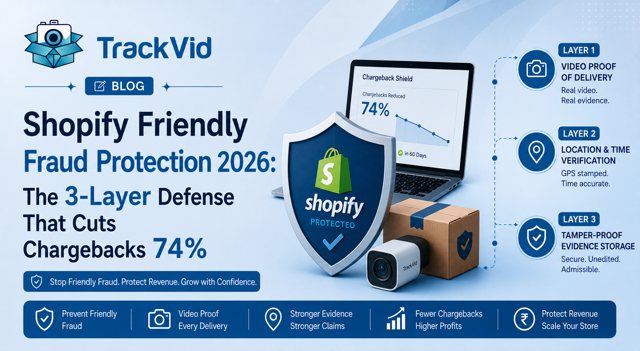
Shopify friendly fraud protection is the single most consequential unsolved problem for Shopify Payments merchants in 2026. Per Chargeflow 2026 data, friendly fraud drives 60 to 80 percent of all chargebacks on Shopify. First-party fraud jumped from 15 percent of reported cases in 2024 to 36 percent in 2025 per Mastercard, projected to rise another 40 percent into 2026. Global chargeback losses hit $132 billion in 2025.
Here is what changes everything on July 24, 2026: Mastercard Scam Monitoring goes live. Any Shopify Payments merchant whose combined refund and chargeback rate exceeds 5 percent in a rolling 30-day window (minimum 500 transactions) will be investigated by the acquiring bank. Combined with Visa's Acquirer Monitoring Program threshold dropping from 2.2 to 1.5 percent in April 2026, this is the year Shopify Payments merchants either build a working friendly fraud defense stack or lose their ability to process payments.
Manual dispute wins run under 20 percent per Chargeflow 2026. The 3-layer defense in this blog wins 70-85 percent within 60 days.
Friendly fraud does not attack your store. It attacks your evidence.
Austin D2C Apparel Merchant Marcus: How $12,600 in Monthly Losses Became $2,100 in 60 Days
Marcus runs a Shopify apparel D2C brand from Austin, Texas. Athleisure and premium loungewear. Daily volume approximately 220 orders. Average order value $124. Monthly GMV roughly $820,000.
For 18 months, his chargeback ratio had been climbing steadily. He hit 0.87 percent in March 2026 and received the first Shopify Payments warning letter, approaching the 1 percent threshold that triggers Payments account suspension.
His audit revealed the pattern. Approximately 68 percent of his chargebacks were "item not received" or "item not as described" filings from customers who had received the correct product. Buyer's remorse dressed as fraud. Wardrobing returns filed as chargebacks to skip the return process. Some cases showed the same customer email placing 3-5 orders, disputing 1-2, keeping the rest. Systematic first-party fraud, not payment fraud.
His Shopify Protect coverage handled some of it, but Protect only covers Shop Pay orders fulfilled within 7 days tracked to US addresses. It did not cover his non-Shop-Pay orders, international orders, or "item not as described" disputes.
He deployed the 3-layer Shopify friendly fraud protection stack over 45 days:
- Layer 1: Order-linked packing video on every dispatch via TrackVid, showing the specific item and shipping label at packing
- Layer 2: Adult signature required on all orders above $150, photo delivery confirmation on everything below
- Layer 3: Chargeflow dispute automation feeding the video evidence into Visa CE 3.0-formatted representments
Results in 60 days:
- Chargeback ratio: 0.87% → 0.24%
- Monthly chargeback losses: $12,600 → $2,100
- Dispute win rate: 18% → 76%
- Shopify Payments account status: off warning list within 42 days
- Chargeback volume itself: dropped 34 percent as friendly fraud operators saw wins routing against them
Ready to see what this looks like in your operation? Book a 30-minute demo and we will pull up exactly which of your recent friendly fraud losses would have been recovered.
What Friendly Fraud Actually Looks Like on Shopify (The Four Patterns)
Friendly fraud (also called first-party fraud, first-party misuse, or chargeback abuse) is when a legitimate customer disputes a legitimate transaction. The customer is real, the card is real, the order is real. The fraud is the dispute itself. Four patterns account for most Shopify cases.
Pattern 1: Buyer's remorse as INR. Customer receives the product, decides they no longer want it, files an "item not received" chargeback rather than initiating a return. Fastest-growing pattern on Shopify per Ringly 2026.
Pattern 2: Wardrobing as INR or damage. Customer buys, uses once, then files a chargeback claiming non-delivery or damage. Apparel and electronics most affected. Per Signifyd 2026, wardrobing accounts for roughly 60 percent of return-related friendly fraud.
Pattern 3: Family fraud. A spouse, teen, or family member places an order using the cardholder's payment method. The cardholder disputes as unauthorized. Genuine cases exist but a significant share is claimed retroactively when the buyer changes their mind.
Pattern 4: Subscription and repeat-purchase disputes. Customer subscribes, forgets, then disputes as "unauthorized." Or disputes a repeat purchase as duplicate billing.
All four patterns collapse against Order ID-linked packing video and signature delivery evidence. That is exactly the gap Shopify Protect does not cover.
Why Shopify Protect Alone Does Not Cover Friendly Fraud
Shopify Protect covers real fraud but has specific exclusions that leave most friendly fraud uncovered.
What Shopify Protect covers: Shop Pay orders shipped within 7 days, tracked, delivered to a US address. Eligible fraud-related chargebacks are reimbursed automatically.
What Shopify Protect does not cover:
- Non-Shop-Pay orders (a majority of most stores' volume)
- International orders
- "Item not as described" disputes (a top-3 friendly fraud reason code)
- Orders shipped later than 7 days
- Disputes categorized as first-party fraud rather than payment fraud
Per Beast Insights 2026, Shopify Protect combined with manual review covers most exposure for stores under $500K annual revenue but leaves substantial friendly fraud exposure requiring an additional evidence layer.
Shopify Protect is a necessary layer. It is not a sufficient layer.
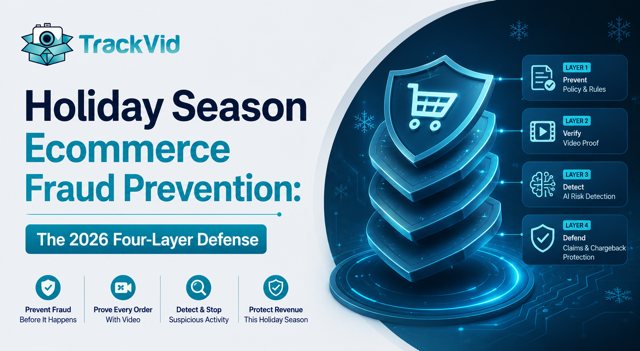
The 3-Layer Shopify Friendly Fraud Protection Stack
Effective Shopify friendly fraud protection requires three layers operating together. Each catches a different failure mode.
Layer 1: Physical Dispatch Evidence
Order ID-linked packing video showing the specific product, shipping label, and tamper-evident seal at dispatch. This is the artifact almost no store has, and every winning friendly fraud representment includes. It defeats "I never received it," "the box was empty," "wrong item inside," and "item not as described" simultaneously.
Standard warehouse CCTV cannot be tied to specific Order IDs. Card-issuing banks explicitly reject it as evidence under Visa CE 3.0 and Mastercard Compelling Evidence frameworks. Only Order ID-tagged video meets the standard.
Layer 2: Delivery Verification
Signature confirmation, adult signature above $150, and photo delivery confirmation for orders below signature threshold. USPS Signature Required, FedEx Delivery Signature Required, and UPS Signature Required all offer these services for $4-$8 per shipment.
Tracking status "delivered" without signature is weak evidence. Tracking with signature or photo is strong. Adult signature above $150 defeats family-fraud patterns because it requires an adult (21+) to physically sign, not just receive the package.
Layer 3: Dispute Automation Feeding the Evidence
Chargeflow, Justt, Kount, and similar dispute automation platforms handle response submission, format evidence per Visa CE 3.0 and Mastercard Compelling Evidence standards, and submit representments before deadline. Without physical dispatch evidence in Layer 1, these tools submit weak representments and still lose at 30-40 percent. With physical evidence, the win rate moves to 70-85 percent.
Layer 1 without Layer 3 wastes seller time on manual submissions. Layer 3 without Layer 1 automates insufficient evidence and still loses. Both layers together beat friendly fraud consistently.
What Mastercard Scam Monitoring Changes on July 24, 2026
Mastercard Scam Monitoring is a new compliance framework going live July 24, 2026. Effects on Shopify Payments merchants are direct.
The threshold: Combined refund and chargeback rate exceeding 5 percent in a rolling 30-day window (minimum 500 transactions) triggers acquirer investigation.
Who is affected: Any Shopify Payments merchant processing 500+ transactions monthly with elevated dispute activity. Apparel and electronics D2C stores highest-risk.
The consequence: Acquiring bank investigation. Depending on findings: higher processing fees, holdback reserves, card acceptance restrictions, or full suspension.
The defense: Merchants who cut chargeback volume with the 3-layer stack stay under the threshold. Merchants relying on Shopify Protect alone risk breaching it in Q3-Q4 2026 as peak season pushes dispute volume up.
Combined with Visa AMP drop: Visa dropped its Acquirer Monitoring Program threshold from 2.2 to 1.5 percent in April 2026. Successfully resolved CE 3.0 disputes are excluded from the calculation, making video-backed representment the primary lever for reducing reported dispute rate.
How TrackVid Delivers Shopify Friendly Fraud Protection Layer 1
TrackVid (trackvid.in) provides the Order ID-linked packing video that Layer 1 requires. Every packing session records the item, shipping label, calibrated scale weight, and tamper-evident seal. Tagged automatically to Order ID at packing. Retrievable in under two minutes.
For Shopify friendly fraud defense specifically:
- Order ID search: Type the disputed Order ID, retrieve dispatch video in 90 seconds
- Direct integration: Video export formatted for Chargeflow, Justt, and Shopify Payments dispute portal
- Weight archive: Every dispatched order has calibrated scale weight recorded
- Multi-platform coverage: Same infrastructure covers Shopify Payments, Stripe, PayPal, and Amazon A-to-Z
Merchants running TrackVid as Layer 1 with Chargeflow or Justt as Layer 3 report dispute win rates from under 25 to 70-85 percent within 60 days. Chargeback volume drops 20-35 percent within 90 days as first-party fraud operators reroute.
TrackVid works with existing cameras. Setup under 15 minutes. Used by 1,000+ ecommerce merchants globally.
Five Questions to Audit Your Shopify Friendly Fraud Exposure
1. What is your current chargeback ratio on Shopify Payments? Above 0.5 percent you are on the warning path. Above 1 percent Shopify suspends your Payments account.
2. What percentage of your chargebacks are "item not received" or "item not as described" reason codes? Above 60 percent indicates the majority is friendly fraud, not payment fraud, and Shopify Protect will not cover most of it.
3. Can you retrieve Order ID-linked packing video showing the specific item and shipping label at dispatch for any Order ID from the last 60 days in under five minutes? Without this, Layer 1 of the friendly fraud defense stack is not in place.
4. Do all orders above $150 use signature-required delivery? Missing signature is a top-3 reason for representment loss and defeats most family-fraud claims when present.
5. Are you approaching the 5 percent combined refund-plus-chargeback threshold that Mastercard Scam Monitoring will investigate starting July 24, 2026? If yes, the time to build the defense stack is now, not after the first acquirer letter.
TrackVid works with your existing warehouse cameras. Setup takes under 15 minutes.
Book a 30-minute demo at trackvid.in/book-demo.html
In one session, you will see exactly which of your recent friendly fraud losses would have been recovered with the correct evidence chain, and what a 76 percent dispute win rate looks like in your Shopify operation.
Frequently Asked Questions
What is friendly fraud on Shopify?
Friendly fraud on Shopify is when a legitimate customer disputes a legitimate transaction by filing a chargeback with their card-issuing bank rather than initiating a return. The customer is real, the card is real, the order is real. The fraud is the dispute itself. Four patterns account for most cases: buyer's remorse dressed as "item not received," wardrobing, family fraud, and subscription disputes. Per Chargeflow 2026, friendly fraud drives 60-80 percent of Shopify chargebacks and is rising 40 percent into 2026.
How do I stop friendly fraud on my Shopify store?
Three layers together. Layer 1: Order ID-linked packing video showing the item and shipping label at dispatch (defeats INR and NAD). Layer 2: signature-required delivery, adult signature above $150, photo confirmation below (defeats family fraud). Layer 3: dispute automation (Chargeflow, Justt) formatting evidence per Visa CE 3.0 standards. Merchants running all three report chargeback ratio drops from 0.87 to 0.24 percent within 60 days, dispute win rate improvements from under 20 to 76 percent, and chargeback volume drops of 30-35 percent.
How much does friendly fraud cost Shopify merchants?
Friendly fraud costs Shopify merchants an average of $195.20 per chargeback all-in per Beast Insights 2026, including the $15 fee, lost product, shipping, labour, and cost of goods sold. Per ClearSale 2026, the true cost is $3.75-$4.61 for every $1 of actual fraud loss. Global chargeback losses hit $132 billion in 2025 per Mastercard. A Shopify store doing $100K monthly GMV with a 0.5 percent chargeback rate absorbs roughly $9,750 in monthly true cost. At 1 percent (the Payments suspension threshold), the same store absorbs $19,500 per month.
Is Shopify Protect enough for friendly fraud?
Shopify Protect is a necessary defense layer but not a sufficient one against friendly fraud. Shopify Protect covers Shop Pay orders shipped within 7 days, tracked, delivered to a US address, and categorized as payment fraud. It does not cover non-Shop-Pay orders (a majority of most stores' volume), international orders, "item not as described" disputes (a top-3 friendly fraud reason code), orders shipped later than 7 days, or disputes categorized as first-party fraud. Per Beast Insights 2026, Shopify Protect combined with manual review covers most exposure for stores under $500K annual revenue but leaves substantial friendly fraud exposure that requires an additional physical dispatch evidence layer.
What evidence beats friendly fraud chargebacks?
Friendly fraud chargebacks are beaten by evidence tied to the specific transaction and specific reason code per Visa CE 3.0 (Compelling Evidence 3.0) and Mastercard Compelling Evidence frameworks. The strongest evidence artifacts are Order ID-linked packing video showing the specific item at dispatch, carrier tracking with signature or photo delivery confirmation, dispatch weight record from calibrated scale, and customer communication log showing pre-dispute contact history. Manual responses using only order confirmation and tracking win under 20 percent. The 4-artifact evidence chain wins 70-85 percent within 60 days. Written explanations, generic warehouse CCTV, and return policy text do not meet CE 3.0 requirements and are routinely dismissed by card-issuing banks.
How does Mastercard Scam Monitoring affect Shopify sellers?
Mastercard Scam Monitoring goes live July 24, 2026, and directly affects Shopify Payments merchants. Any merchant processing 500+ transactions monthly whose combined refund and chargeback rate exceeds 5 percent in a rolling 30-day window will be investigated by the acquiring bank. Consequences of an investigation include higher processing fees, holdback reserves, card acceptance restrictions, or full suspension of card processing. Apparel and electronics D2C stores are highest-risk categories. Combined with Visa's Acquirer Monitoring Program threshold dropping from 2.2 percent to 1.5 percent in April 2026, this makes Q3-Q4 2026 a critical compliance window for Shopify Payments merchants to build a working friendly fraud defense stack.
What happens if my Shopify chargeback rate hits 1 percent?
Shopify Payments enforces a 1 percent chargeback-to-transaction threshold. Crossing it triggers immediate account suspension, sometimes with fund retention during dispute resolution. Average retailer chargeback rate sits at 0.52 percent per Swell 2026, meaning most merchants operate close to threshold. Recovery from suspension typically takes 4-6 months and requires documented defense processes, downward-trending dispute volume, and monthly progress reports. Prevention is significantly cheaper: the 3-layer stack keeps most stores in the 0.2-0.4 percent range consistently.
Can I dispute a friendly fraud chargeback on Shopify?
Yes, all chargebacks on Shopify can be disputed through the representment process in the Shopify Payments dispute portal. Response deadline is typically 7-10 days from when the dispute appears in Shopify admin. Manual responses using only order confirmation and tracking win under 20 percent per Chargeflow 2026. Video-backed representment with Order ID-linked packing video, signature delivery proof, weight verification, and CE 3.0-formatted written statement wins 70-85 percent within 60 days. Successfully resolved CE 3.0 disputes are excluded from Visa's Acquirer Monitoring Program threshold calculations, making video-backed representment the primary lever for merchants approaching chargeback ratio limits or Mastercard Scam Monitoring thresholds.
Sources: Chargeflow Shopify Chargeback Guide 2026, Chargebacks911 Shopify Chargeback Protection Guide 2026, Beast Insights Shopify Chargeback Cost Analysis 2026, Mastercard Chargeback Field Report 2026, Signifyd State of Fraud and Returns Report 2025, Ringly Shopify Chargeback Analysis 2026, Swell Shopify Merchant Suspension Statistics 2026, Visa CE 3.0 Compendium Documentation, Mastercard Scam Monitoring Framework July 2026, TrackVid internal merchant data
TrackVid is a video proof and claim management platform used by 1,000+ ecommerce merchants globally on Shopify, Amazon, Etsy, eBay and major marketplaces. Officially authorised by Snapdeal. Learn more at trackvid.in.

Get the Marketplace Claim Recovery Checklist
A 12-point checklist used by 1,100+ sellers to recover 85-90% of marketplace claim losses. Free, instant access.
- Marketplace-specific evidence formats (AJIO, Flipkart, Amazon, Myntra)
- Claim window deadlines for every major platform
- The 6-step process that pushes approval from 85-90%
- Common rejection reasons and how to avoid them
No spam. Unsubscribe anytime. Used by sellers at Rare Rabbit, HRX, Da Milano + 1,100 more.
Stop Losing Money to Fake Returns
Join 1,100+ sellers who recover lakhs every month with TrackVid