
For Shopify Payments merchants. Updated June 2026.
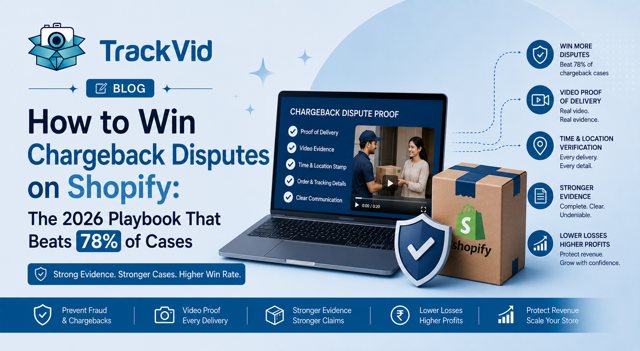
How to win chargeback disputes on Shopify comes down to a specific formula most merchants never learn. Manual dispute responses win less than 20 percent of the time per Chargeflow 2026. Merchants running the complete evidence-plus-representment playbook win 70-85 percent. The gap is not luck. It is the difference between generic order confirmations and reason-code-specific evidence tied to specific Order IDs.
The stakes have never been higher. Shopify Payments 1 percent threshold triggers account suspension. Visa's Acquirer Monitoring Program dropped to 1.5 percent in April 2026. Mastercard Scam Monitoring goes live July 24, 2026, investigating merchants with combined refund plus chargeback rates over 5 percent. Real cost per chargeback runs $195.20 all-in per Beast Insights 2026. Every dispute you lose adds to your ratio. Every one you win with CE 3.0 evidence is excluded from threshold calculations.
This blog is the complete playbook: what makes disputes winnable, the evidence hierarchy that determines outcomes, reason-code-specific response structures, prevention versus recovery balance, and what tools handle which layer.
Automation submits your dispute on time. Evidence wins it.
Chicago D2C Tech Merchant Jason: How 23% Win Rate Became 81% in 60 Days
Jason runs a Shopify D2C brand from Chicago selling home tech accessories, smart home gadgets, and premium audio. Daily volume approximately 320 orders. Average order value $178. Monthly GMV roughly $1.7 million.
His February 2026 chargeback situation was untenable. Winning 23 percent of disputes. Chargeback ratio at 0.81 percent, uncomfortably close to Shopify Payments 1 percent suspension threshold and above Visa AMP 1.5 percent. Two warning letters in the previous quarter. Monthly chargeback losses at $9,400 in lost disputes plus $3,200 in fees and processor holdbacks.
He had tried the standard fixes: fraud screening app for high-risk checkout, chargeback alert service, Shopify Protect on eligible Shop Pay orders. His dispute win rate stayed flat because none of these fixed the underlying problem: his representments did not include the evidence types card-issuing banks actually reviewed under Visa CE 3.0 and Mastercard Compelling Evidence frameworks.
His submissions included order confirmations, tracking screenshots, customer service ticket history, and general written explanations. What they did not include was Order ID-linked packing video showing the specific product being packed for the specific Order ID at dispatch.
He deployed the complete playbook over 30 days:
- Layer 1: TrackVid Order ID-linked packing video on every dispatch, tagged automatically at packing
- Layer 2: Signature delivery mandatory above $100, adult signature above $500
- Layer 3: Chargeflow dispute automation feeding TrackVid video into Visa CE 3.0-formatted representments
- Layer 4: Reason-code-specific written statements matching Visa 13.1, Mastercard 4855, Amex F29, and Discover RG standards
Results in 60 days:
- Dispute win rate: 23% → 81%
- Chargeback ratio: 0.81% → 0.19%
- Monthly loss reduction: $12,600 → $2,400
- Time from dispute notification to submitted response: 3.2 days average → 8 hours average
- Shopify Payments account status: off Visa AMP watchlist within 42 days
- Chargeback volume itself: dropped 31 percent by month four
Ready to see this in your Shopify store? Book a 30-minute demo and we will show you exactly which of your recent lost disputes would have been recovered with the correct playbook.
Why Manual Dispute Responses Lose 80% of the Time
Manual response submissions do not meet the specific evidence standards Visa CE 3.0 (Compelling Evidence 3.0) and Mastercard Compelling Evidence require.
What a losing manual response contains:
- Order confirmation email
- Tracking screenshot showing "delivered"
- General written explanation of the shipping process
- Customer service ticket history
- Store return policy text
Card-issuing banks under CE 3.0 require evidence tied to the specific transaction and reason code. Order confirmation proves the order was placed. Tracking proves a package was delivered somewhere. Combined together, they do not prove the specific product was in the specific package delivered to the specific address.
What a winning representment contains:
- Order ID-linked packing video showing specific product, shipping label, and tamper-evident seal at dispatch
- Carrier delivery proof with signature or photo confirmation
- Dispatch weight verification on calibrated scale
- Reason-code-specific written statement citing CE 3.0 requirements
- Customer communication log showing pre-dispute contact history
The gap between these two lists is where 60 percent of the win rate difference sits.
The Dispute Win Formula: Evidence + Representment + Response Window
Understanding how to win chargeback disputes on Shopify starts with the three variables that determine outcomes. Every winning dispute has all three. Every losing dispute is missing at least one.
Variable 1: Evidence quality. The specific artifacts submitted, tied to the specific Order ID, matching the specific reason code framework. Order ID-linked packing video is the highest-weighted single artifact. Combined with signature delivery proof, weight verification, and CE 3.0-formatted written statement, evidence quality alone determines 60 to 70 percent of the outcome.
Variable 2: Representment structure. The written statement organization and specific reason code citations. Visa 13.1 responses need specific CE 3.0 references. Mastercard 4855 needs Compelling Evidence references. Amex F29 requires cardholder communication history. Discover RG accepts broader evidence but still needs specific transaction linkage. Structured responses win at 70-85 percent. Unstructured responses win at 25-35 percent even with strong evidence.
Variable 3: Response window. Late submissions are automatic losses regardless of evidence quality. Shopify Payments typically allows 7-10 days from dispute notification. Best practice: set up notification alerts and respond within 24-48 hours to leave time for evidence quality control.
The formula: Winning dispute rate = evidence quality × representment structure × on-time submission. Missing any variable collapses the win rate. Optimizing all three pushes win rate to 70-85 percent within 60 days.
The Evidence Hierarchy That Wins Shopify Disputes
Card-issuing banks under CE 3.0 and Mastercard Compelling Evidence weigh evidence types in a specific hierarchy. Understanding this determines what to prioritize when time is limited.
Tier 1: Highest weight.
- Order ID-linked packing video showing specific product at dispatch
- Carrier delivery signature confirmation
- Adult signature confirmation on orders above threshold
Tier 2: Strong supporting.
- Photo delivery confirmation from carrier
- Dispatch weight on calibrated scale
- Tamper-evident seal documentation
- Pre-dispute communication log
Tier 3: Supporting context (insufficient alone).
- Order confirmation email
- Tracking screenshot
- Customer account order history
- Return policy text
Tier 4: Cited but weighed lightly.
- General warehouse photographs
- Written explanations of shipping process
- Screenshots of internal systems
The gathering priority: Always submit Tier 1 first. Never submit Tier 3 or 4 without Tier 1 or 2. Missing Tier 1 is the largest cause of dispute losses. Merchants without Order ID-linked packing video should treat this as the top priority.
Reason-Code-Specific Response Structures
Different reason codes require different emphases. The evidence hierarchy stays the same; written statement framing changes.
Visa 13.1 (Merchandise/Services Not Received): Emphasize CE 3.0 compliance. Cite evidence proving shipment, delivery, and customer-transaction linkage. Deadline 30 days network level, 7-10 days Shopify Payments.
Mastercard 4855 (Goods or Services Not Provided): Emphasize Mastercard Compelling Evidence. Same core evidence as Visa 13.1 with Mastercard-specific reason code citation. Deadline 45 days network level.
American Express F29: Amex weighs cardholder communication history and prior transaction pattern heavily. Include full customer service log, prior successful transactions, and payment method history. Deadline 20 days.
Discover RG: More merchant-friendly than Visa or Mastercard. Standard evidence chain wins consistently. Include return policy text as supporting context.
Visa 10.4 (Fraudulent Transaction / Card Absent): Focus on IP address, device fingerprint, AVS/CVV match, and 3D Secure authentication. Physical dispatch evidence supports but primary framework is fraud liability shift.
Related: Complete guide to item not received chargeback Shopify defense
Prevention vs Recovery: The Balance That Actually Works
Sustainable chargeback defense requires balancing prevention (stopping chargebacks) with recovery (winning the disputes). Merchants who over-invest in one and under-invest in the other lose money.
Pure prevention approach: Fraud screening at checkout, order-level risk scoring, restrictive policies. Prevention tools like Signifyd, NoFraud, and Kount reduce chargeback volume 30-60 percent. However, prevention alone cannot address friendly fraud (60-80 percent of Shopify chargebacks) from legitimate real customers.
Pure recovery approach: Dispute automation via Chargeflow, Justt, or manual representment. Recovery handles chargebacks that come through despite prevention. However, recovery without physical dispatch evidence wins under 30 percent regardless of automation sophistication.
The balanced approach: Prevention (reduce volume) + physical dispatch evidence (win the ones that come through) + dispute automation (submit on time) + response window discipline. This combination cuts monthly chargeback losses 70-85 percent within 60 days.
Budget allocation for Shopify Payments merchants under $10M annual revenue: 40 percent to physical dispatch evidence (TrackVid or equivalent), 30 percent to dispute automation (Chargeflow, Justt), 20 percent to fraud screening (Signifyd, NoFraud, or Shopify built-in), 10 percent to policy and training.
How TrackVid Wins the Evidence Layer of How to Win Chargeback Disputes on Shopify
TrackVid (trackvid.in) provides Order ID-linked packing video, the Tier 1 evidence artifact that wins Shopify Payments representments. Every packing session records the item, shipping label, calibrated scale weight, and tamper-evident seal. Tagged automatically to Order ID at packing. Retrievable in under two minutes.
For winning Shopify chargeback disputes:
- Order ID search: Retrieve dispatch video in 90 seconds
- CE 3.0-ready format: Videos exported with Order ID and timestamp overlay for direct dispute portal upload
- Weight verification archive: Calibrated scale weight recorded per order
- Reason-code-agnostic: Same video supports Visa 13.1, Mastercard 4855, Amex F29, Discover RG, and Visa 10.4
- Automation integration: Works alongside Chargeflow, Justt, Kount, and native dispute portal
- Multi-platform coverage: Shopify Payments, Stripe, PayPal, Amazon A-to-Z
Merchants running TrackVid as evidence layer with dispute automation as representment layer report win rate improvements from under 25 to 70-85 percent within 60 days. Chargeback volume drops 20-35 percent within 90 days.
TrackVid works with existing cameras. Setup under 15 minutes. Used by 1,000+ ecommerce merchants globally.
Five Questions to Audit Your Shopify Chargeback Win Rate Today
1. What is your current Shopify Payments chargeback dispute win rate over 90 days? Under 30 percent indicates missing Tier 1 evidence. Under 50 percent indicates missing response structure.
2. For your last 10 lost disputes, can you retrieve Order ID-linked packing video in under five minutes? Without this, you are stuck at the 20 percent manual response ceiling.
3. Do your written statements cite the specific reason code (Visa 13.1, Mastercard 4855, Amex F29, Discover RG) and CE 3.0 or Compelling Evidence framework? Generic explanations lose consistently.
4. What is your average time from dispute notification to submitted response? Above 3 days risks missing the 7-10 day window.
5. Is your Shopify Payments chargeback ratio above 0.5 percent? At 0.5 percent you are on the warning path. At 1 percent Shopify suspends your Payments account.
TrackVid works with your existing warehouse cameras. Setup takes under 15 minutes.
Book a 30-minute demo at trackvid.in/book-demo.html
In one session, you will see exactly which of your recent lost disputes would have been won with the correct evidence chain, and what a 81 percent dispute win rate looks like in your specific Shopify operation.
Frequently Asked Questions
How do I win a chargeback dispute on Shopify?
Three variables together: evidence quality, representment structure, and on-time response. Evidence quality means submitting Tier 1 artifacts (Order ID-linked packing video, carrier signature delivery confirmation) alongside Tier 2 support (weight verification, tamper-evident seal, communication log). Representment structure means CE 3.0-formatted written statement citing the specific reason code. Response window means submitting within 24-48 hours to leave room for quality control. Manual responses using order confirmation and tracking win under 20 percent. The complete playbook wins 70-85 percent within 60 days.
What is the chargeback win rate on Shopify Payments?
Varies dramatically by preparation. Manual responses with only order confirmation and tracking win under 20 percent per Chargeflow 2026. Merchants using dispute automation (Chargeflow, Justt) without physical dispatch evidence win 30-45 percent. Merchants running the complete playbook (Order ID-linked packing video, signature delivery, dispute automation, CE 3.0-formatted responses) win 70-85 percent within 60 days. The specific gap is the Order ID-linked packing video artifact most merchants do not have.
How long do I have to respond to a Shopify chargeback?
Deadlines depend on card network and reason code. Typical windows are 7-10 calendar days from when the dispute appears in Shopify admin. Visa generally allows 20 days network level. Mastercard allows 45 days network level. Amex F29 typically 20 days. Discover RG 20 days. The specific deadline is shown in the Shopify admin dispute notification. Late submissions are automatic losses regardless of evidence quality. Best practice: alerts and 24-48 hour response.
Can I appeal a lost Shopify chargeback?
Yes, through the pre-arbitration process. If the bank rules against you on first representment, escalate within 30-45 days depending on network. Pre-arbitration requires new or additional evidence not available in the first submission. If it proceeds to full arbitration, the losing party pays fees ($250-$500) plus the disputed amount. Appeals succeed at lower rates than first representments because the bank has already reviewed the case. The stronger strategy is winning the first representment with complete evidence.
What evidence wins chargeback disputes?
Evidence falls into a weighted hierarchy under Visa CE 3.0 and Mastercard Compelling Evidence. Tier 1 (highest weight): Order ID-linked packing video showing specific product at dispatch, carrier signature confirmation, adult signature above $500. Tier 2 (strong supporting): photo delivery confirmation, dispatch weight, tamper-evident seal, pre-dispute communication log. Tier 3 (necessary context): order confirmation, tracking screenshot, customer account history, return policy. Missing Tier 1 is the largest cause of losses. Merchants submitting only Tier 3 win under 20 percent. Adding Tier 1 pushes win rate to 70-85 percent within 60 days.
How do I write a Shopify chargeback response?
A 5-section written statement. Section 1: reason code header (Visa 13.1, Mastercard 4855, Amex F29, Discover RG) with transaction details. Section 2: evidence summary listing artifacts. Section 3: fact statement describing the shipment lifecycle. Section 4: reason code compliance citing how evidence meets the framework (CE 3.0 for Visa, Compelling Evidence for Mastercard). Section 5: requested outcome. Format as plain text or PDF, uploaded through Shopify Payments dispute portal alongside evidence artifacts.
Is chargeback automation software worth it for Shopify?
Chargeback automation (Chargeflow, Justt, Kount) is worth it for merchants processing more than roughly 10 chargebacks monthly, but only paired with physical dispatch evidence. Automation handles response submission, formats evidence per CE 3.0 and Compelling Evidence standards, and submits before deadline. Without physical dispatch evidence (Order ID-linked packing video), automation submits weak evidence at scale and still wins only 30-45 percent. With physical evidence, automation moves win rate to 70-85 percent while eliminating manual labor. Cost is typically success-based. For merchants under 10 chargebacks monthly, manual submission with physical evidence achieves similar win rates without automation costs.
How do I prevent chargebacks on Shopify?
Four preventive layers plus one recovery layer. Preventive: fraud screening at checkout (Signifyd, NoFraud, or Shopify built-in), order verification for high-risk transactions, restrictive shipping policies for high-value orders, clear return and refund policies. Recovery: Order ID-linked packing video plus signature delivery plus dispute automation. Prevention alone reduces volume 30-60 percent but cannot address friendly fraud from legitimate customers. Recovery handles chargebacks that come through prevention. The combined approach cuts monthly losses 70-85 percent within 60 days and drops chargeback ratios from 0.7-1.0 percent to 0.2-0.3 percent consistently.
Sources: Chargeflow Shopify Chargeback Guide 2026, Chargebacks911 Shopify Chargeback Protection Guide 2026, Beast Insights Shopify Chargeback Cost Analysis 2026, Visa CE 3.0 Compendium Documentation, Mastercard Compelling Evidence Framework 2026, American Express Merchant Dispute Guide 2026, Discover Dispute Rules 2026, Mastercard Scam Monitoring Framework July 2026, Shopify Payments Dispute Portal Documentation, TrackVid internal merchant data
TrackVid is a video proof and claim management platform used by 1,000+ ecommerce merchants globally on Shopify, Amazon, Etsy, eBay and major marketplaces. Officially authorised by Snapdeal. Learn more at trackvid.in.

Get the Marketplace Claim Recovery Checklist
A 12-point checklist used by 1,100+ sellers to recover 85-90% of marketplace claim losses. Free, instant access.
- Marketplace-specific evidence formats (AJIO, Flipkart, Amazon, Myntra)
- Claim window deadlines for every major platform
- The 6-step process that pushes approval from 85-90%
- Common rejection reasons and how to avoid them
No spam. Unsubscribe anytime. Used by sellers at Rare Rabbit, HRX, Da Milano + 1,100 more.
Stop Losing Money to Fake Returns
Join 1,100+ sellers who recover lakhs every month with TrackVid