
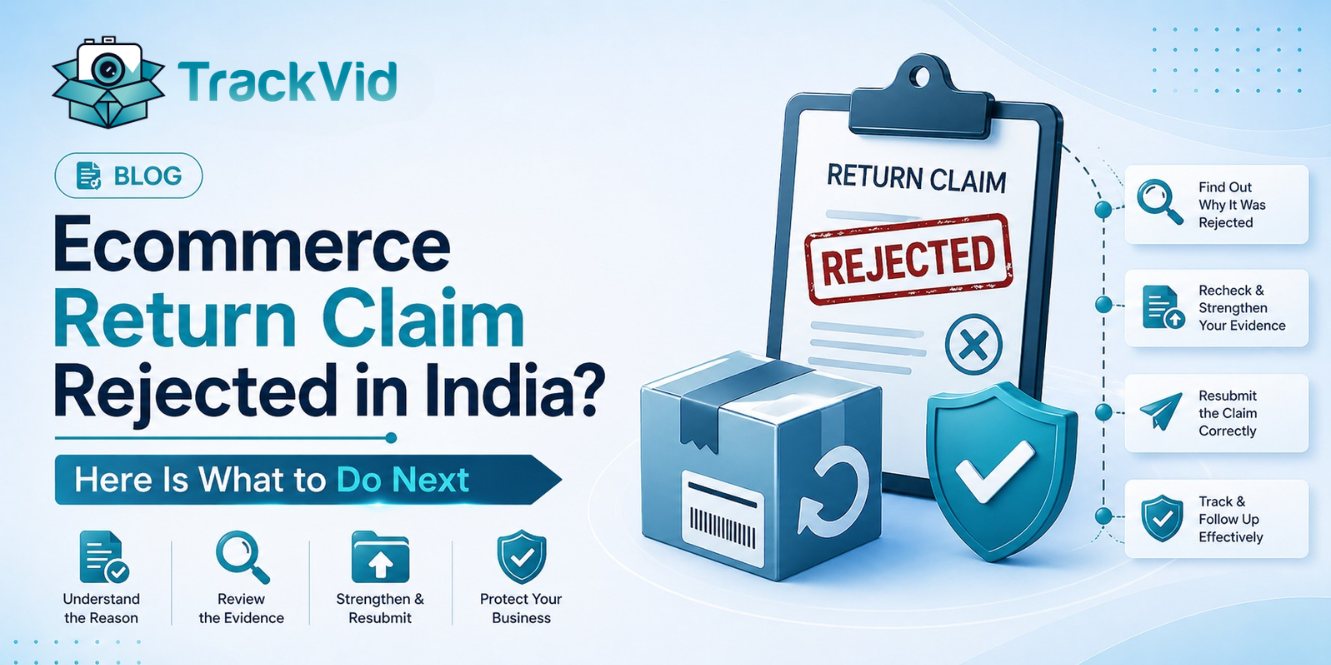
For sellers on Amazon, Flipkart, AJIO, Myntra and Meesho.
Your ecommerce return claim got rejected. The product is gone, the refund was processed to the buyer, and the platform sent you a message that says something like "insufficient evidence" or "claim does not meet policy criteria." You are reading this because you want to know if you can still do something about it.
The answer is yes, in most cases. But the window is short, and what you do in the next 24 to 48 hours determines whether you recover anything.
This guide covers the exact steps to appeal a rejected ecommerce return claim in India, how each major platform handles appeals, what evidence actually changes outcomes, and what you need to build before the next rejection happens so you do not end up back here again.
Do Not Ignore the Rejection: The Appeal Window Closes Fast
The most expensive mistake Indian sellers make after a rejected claim is waiting. They feel frustrated, they assume the platform will not reverse its decision, and they move on. That loss becomes permanent.
Every major Indian marketplace has an appeal or escalation path. None of them stay open indefinitely. Amazon India's escalation window is tight. Flipkart's portal allows re-filing within a limited period. AJIO's process requires new evidence to be submitted quickly after rejection. Meesho allows a manual review request if raised within the claim window.
The moment you receive a rejection notification, your next action needs to happen within 24 hours. Not a full appeal yet, but an assessment: what was the rejection reason, and do you have evidence you did not include in the original filing?
Most rejected claims are rejected because of one missing thing. If you can identify and add that thing, the appeal has a genuine chance.
Step 1: Read the Rejection Reason Carefully
Before you do anything else, read what the platform actually said. Not the surface message, but the specific rejection code or reason if one is provided.
"Insufficient evidence" is the most common reason and the most fixable. It means the submission did not meet the verification standard. It does not mean the claim was wrong.
"Outside claim window" means the submission came in after the platform deadline. This is harder to reverse, though not always impossible on first escalation.
"Policy violation" means something in the claim did not align with platform rules. This requires understanding which specific rule was cited before you can respond.
"Already resolved" means the platform considers the case closed on the buyer's side. This one requires direct escalation to seller support, not the standard claims portal.
Knowing the exact reason tells you what to fix in your appeal. A generic appeal that does not address the rejection reason is nearly always rejected again.
Step 2: Check What Evidence You Did Not Include
Most rejected claims were missing one critical thing: a packing video linked to the Order ID.
If your original claim included photos, a written account, and a CCTV clip but no order-linked packing video, that is almost certainly what caused the rejection. Platforms cannot independently verify the seller's account from photos alone. CCTV that is not linked to a specific order is not accepted as verifiable proof.
If you have a packing video for the disputed order that you did not include in the original filing, that is your appeal.
Pull it now. Search your recording system for the Order ID. If you can find a timestamped video showing the correct product being packed for that specific order, you have the single most powerful piece of evidence an appeal can include.
If you do not have it, your appeal options are more limited but still exist.
A Delhi Electronics Seller Who Won the Second Time
Vikram sells consumer electronics on Amazon India from Delhi. He files around 20 to 30 claims a month for wrong item returns. His first-pass approval rate had been sitting at around 25 percent for months.
After one particularly frustrating rejection, he decided to appeal instead of writing it off. The original claim had included photos of the wrong product that came back and a detailed written description. The rejection said: insufficient evidence.
He searched his CCTV system and found a clip that roughly corresponded to the order packing time. He extracted it and submitted it as additional evidence on appeal.
Rejected again. Same reason.
A colleague explained the problem. The clip showed the correct product but had no connection to the specific Order ID. The platform reviewer had no way to confirm the clip was for that order and not any other packing event.
Vikram set up a proper packing video system two weeks later. His next 12 claims on similar disputes had an 8 out of 12 approval rate on first filing. He stopped losing the second-round battles because he stopped fighting them with the wrong weapon.
How to File an Appeal on Each Platform
Amazon India
Amazon's appeal path for rejected SAFE-T claims runs through Seller Central. Go to Performance, then Account Health, then the SAFE-T claim in question. Look for the option to provide additional information or submit an appeal.
Add the packing video as your primary new evidence. Make sure the Order ID is clearly referenced in the submission. Include the parcel opening video if you have it. Write a short, factual description of the additional evidence and why it addresses the original rejection reason. Do not write long paragraphs repeating what you already said. Focus on what is new.
Amazon's review teams respond faster to specific, concise appeals with clear new evidence than to long narrative appeals that restate the original complaint.
Flipkart
For a rejected Flipkart return claim, go to the Seller Portal, find the Returns section, locate the specific order, and look for the dispute or appeal option. Flipkart allows sellers to attach new documentation to a rejected case within a limited window.
The most important addition is a packing video linked to the Order ID. Flipkart also responds well to weight discrepancy documentation when the returned item is lighter or heavier than the original product.
AJIO
AJIO is the strictest platform for appeals. If your original claim was auto-rejected because no packing video was submitted, your appeal must include an order-linked packing video or it will be rejected again.
AJIO's "CCTV required" emails have a very tight response window. If you missed it and the claim is already rejected, contact AJIO seller support directly with the packing video attached and request a manual review. This does not always succeed, but it is your best path.
For sellers who lose AJIO claims repeatedly, the only structural fix is a system that handles AJIO's video requirement automatically before disputes arise. TrackVid at trackvid.in detects AJIO's claim emails and responds with the correct order-linked video without any manual effort, so AJIO claims are never auto-rejected for missing video.
Myntra and Meesho
Myntra appeals go through the Seller Portal dispute section. Attach new evidence, specifically video proof, and submit within the appeal window. Meesho allows a manual review request through seller support if the original claim was rejected and you have new evidence. Meesho's response time is longer than Amazon or Flipkart, so file promptly.
What Evidence Actually Changes Appeal Outcomes
Appeals that succeed have one thing in common: they add evidence the original claim did not include, and that evidence is independently verifiable.
The evidence that changes outcomes, in order of impact:
Order-linked packing video. A video showing the correct product being packed, timestamped, with the Order ID, SKU, or AWB visible or referenced. This is the only evidence that independently verifies the seller's account. Everything else is supplementary.
Parcel opening video. A recording of the return parcel arriving sealed and being opened on camera, showing what came back. Combined with the packing video, this creates a before-and-after evidence chain the platform can evaluate.
Weight discrepancy proof. If the returned item weighs less than the original product, a weight record with the return parcel visible on the scale is strong supporting evidence.
Timestamped photos with Order ID. Photos of the wrong item alongside a printed or displayed Order ID, taken at the time of return receipt. These support the opening video rather than replacing it.
Appeals that fail add more of the same: additional photos that still cannot prove what was packed, longer written accounts, or CCTV footage that is still unlinked to the order. More of the same evidence that was rejected once will be rejected again.
The problem in most rejected claims is not the amount of evidence. It is the type. One order-linked packing video is worth more than fifty photos.
What to Do If the Appeal Is Also Rejected
If your appeal is rejected and you believe the claim is valid, you have two more paths.
Direct seller support escalation. On Amazon, use the Contact Us option in Seller Central and request a human review of the claim. Reference the case ID, describe the new evidence you submitted, and ask specifically why it was insufficient. This sometimes surfaces a reviewer who can override the original decision.
Consumer court for significant amounts. Under the Consumer Protection Act 2019, sellers have legal standing to file complaints against marketplace practices that result in unfair loss. For amounts above a few thousand rupees, this is a real option, though it takes months. It is more useful as a pattern over time than for individual claims.
Neither path should be your primary strategy. Your primary strategy should be building evidence that wins on first filing so that appeals become rare, not routine.
The Real Fix: Stop Needing Appeals
Every appeal is a sign that something in your evidence process failed before the return arrived.
The sellers who have moved from 20 percent claim approval rates to 60 to 70 percent rates did not get better at appeals. They got better at evidence generation. Every order packing is now recorded automatically, linked to the Order ID in real time, and retrievable in under two minutes when a dispute arises.
TrackVid builds this for Indian marketplace sellers. It records every packing automatically, links each video to the Order ID, SKU, and AWB at the moment of recording, stores everything in searchable cloud, and for AJIO sellers, detects and responds to claim emails automatically.
When your proof is structured and instant, claims are won on first filing. Appeals become the exception, not the monthly routine.
Book a free TrackVid Demo Today
In one session you will see where your current evidence gaps are and what fixing them looks like in your specific operation.
Frequently Asked Questions
My claim got rejected on Amazon, what to do?
First, read the rejection reason in Seller Central. If it says insufficient evidence, go to the SAFE-T claim and add new evidence, specifically an order-linked packing video if you have one. If you do not have a packing video, add your parcel opening video and weight discrepancy documentation. Submit the appeal through Seller Central within the appeal window. Be specific about what new evidence you are adding and why it addresses the rejection. Generic appeals that restate the original claim almost always fail.
Amazon rejected my seller claim, now what?
You have two options immediately. First, file an appeal through Seller Central with new evidence within 24 to 48 hours. Second, if the appeal is also rejected, contact Amazon Seller Support directly and request a human review, referencing the case ID. For appeals, the evidence that changes outcomes is almost always a packing video linked to the Order ID. If you did not include one in the original filing and you have one, that is your appeal. If you do not have one, your appeal odds are lower but still worth filing.
Claim rejected India, can I still get my money back?
Yes, in many cases, if you act within the appeal window. Most Indian marketplaces allow a second filing with new evidence. Amazon India allows SAFE-T appeals. Flipkart allows re-filing through the Seller Portal. AJIO allows a manual review request through seller support. Meesho allows a fresh manual review. The key is acting within 24 to 48 hours of the rejection and adding evidence that was missing from the original, particularly a packing video linked to the Order ID.
How to fight Amazon claim rejection India?
The most effective way is adding an order-linked packing video to your appeal. This is the evidence type that Amazon's SAFE-T review team gives the most weight to. Pair it with a parcel opening video showing what came back. Submit through Seller Central in the SAFE-T section, keep the written appeal short and specific, and reference the original case ID. If the appeal is also rejected, escalate through Seller Support with a request for human review.
Flipkart rejected my return claim, need help?
Go to your Flipkart Seller Portal, find the return in question under Returns, and look for the dispute or appeal option. Attach new evidence: packing video first, then opening video, then photos of the wrong item with Order ID visible. Flipkart's review team responds to structured, specific evidence. If the portal shows no appeal option, contact Flipkart Seller Support directly and request a manual review, citing the rejection reference number and the new evidence you have.
AJIO claim rejected, what to do next?
AJIO claims are rejected most often because no order-level packing video was submitted. If you have one, attach it immediately through the AJIO Seller Portal or via seller support email. AJIO has a tight window for this. If the window has passed, contact AJIO seller support directly with the packing video and order details and request a manual review. Going forward, the only structural fix for AJIO is automating the packing video submission. TrackVid at trackvid.in handles this automatically, detecting AJIO claim emails and responding with the correct video without any manual effort from your team.
Can I refile a rejected claim in India?
You cannot file a completely fresh claim on a case that was already decided, but you can appeal on most platforms. Amazon: appeal through SAFE-T within the window. Flipkart: re-file or escalate through the Seller Portal. AJIO: request manual review through seller support. Meesho: contact seller support for a fresh manual review. The critical factor in all cases is adding new evidence, specifically a packing video, that was not in the original filing. Refiling the same claim with the same evidence will result in the same rejection.
What happens after an ecommerce claim is rejected in India?
The platform closes the case on the buyer's side and processes any refund they owe. As a seller, you have a limited window to appeal, typically 24 to 72 hours depending on the platform. If you do not appeal, the loss is permanent. If you appeal with new evidence and it succeeds, you recover the disputed amount to your seller account. If the appeal also fails, you can escalate through direct seller support or, for significant amounts, through consumer court under the Consumer Protection Act 2019.
Sources: Amazon India Seller Central SAFE-T documentation, Flipkart Seller Protection Policy 2026, AJIO Seller Portal guidelines, Meesho seller support documentation, Consumer Protection Act 2019 India, TrackVid seller data.
TrackVid is a video proof and claim management platform used by 1,100+ Indian ecommerce sellers on Amazon, Flipkart, AJIO, Myntra and Meesho. Officially authorised by Snapdeal. Learn more at trackvid.in.
Get the Marketplace Claim Recovery Checklist
A 12-point checklist used by 1,100+ sellers to recover 85-90% of marketplace claim losses. Free, instant access.
- Marketplace-specific evidence formats (AJIO, Flipkart, Amazon, Myntra)
- Claim window deadlines for every major platform
- The 6-step process that pushes approval from 85-90%
- Common rejection reasons and how to avoid them
No spam. Unsubscribe anytime. Used by sellers at Rare Rabbit, HRX, Da Milano + 1,100 more.
Stop Losing Money to Fake Returns
Join 1,100+ sellers who recover lakhs every month with TrackVid