
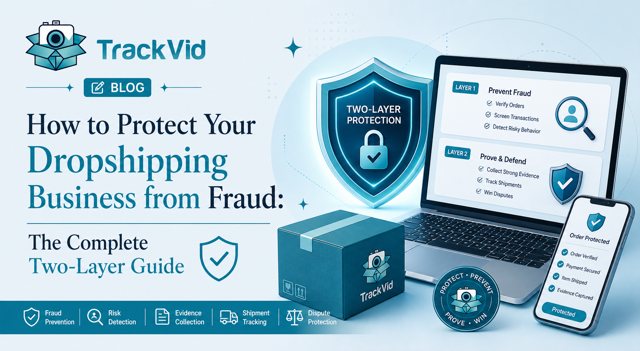
For dropshipping sellers on Shopify, WooCommerce, Amazon, eBay, and Etsy globally. Updated May 2026.
Protecting a dropshipping business from fraud requires understanding that dropshipping fraud is not one problem. It is two completely separate problems that require two completely separate solutions. The first is payment fraud: transactions made with stolen cards or compromised credentials. The second is post-purchase fraud: real customers who dispute legitimate transactions after receiving their orders. Every dropshipping fraud guide covers the first. Most cover almost none of the second.
This is not a minor omission. According to Chargebacks911, friendly fraud, which is the primary form of post-purchase fraud, accounts for 60 to 80 percent of all ecommerce chargeback losses. That means the category most guides cover in full is responsible for 20 to 40 percent of losses. The category they barely mention is responsible for 60 to 80 percent.
The complete guide to protecting your dropshipping business from fraud covers both. This is that guide.
The Fraud Landscape Every Dropshipper Faces in 2026
Before building a protection framework, understanding what you are protecting against helps prioritise which tools matter most for your specific situation.
Payment Fraud
Payment fraud occurs when someone uses a stolen card, compromised credentials, or a fraudulent account to make a purchase at your store. The buyer is not a real consenting customer. The fraud signal exists at checkout.
Payment fraud generates chargebacks that arrive quickly, usually within 30 to 60 days. They are typically flagged under "unauthorized transaction" reason codes. They are the category checkout fraud tools were designed to detect and Shopify Protect was designed to cover for eligible transactions.
According to LexisNexis Risk Solutions, card-not-present fraud costs merchants approximately $4.61 for every $1 lost in direct losses when processing fees, dispute fees, and operational overhead are included. Unchecked, payment fraud depletes margin and raises your chargeback rate toward Visa's 1 percent VAMP threshold.
Friendly Fraud and Post-Purchase Fraud
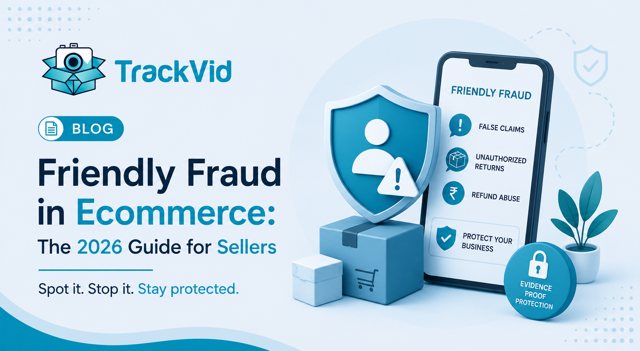
Post-purchase fraud occurs when a real, consenting customer disputes a legitimate transaction after receiving the product. The buyer used their own card. The transaction passed every fraud filter. The fraud happens after fulfillment when the customer files a dispute claiming:
Their item was never received, despite carrier confirmation of delivery. The product arrived damaged, often with fabricated or AI-altered evidence. The wrong item was sent, when in fact the correct item was dispatched. The product was not as described, based on subjective or manufactured differences from the listing.
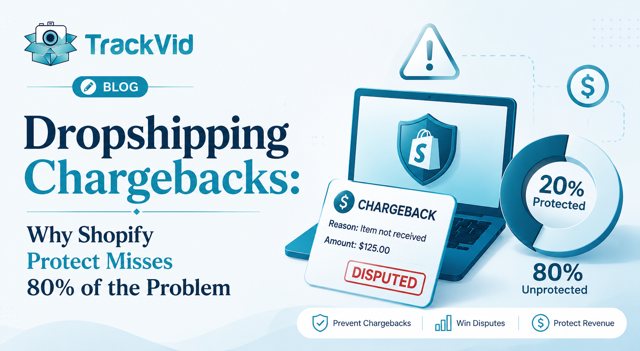
These disputes pass checkout fraud detection because the buyer is genuine. They are not prevented by 3DS2 or AVS because the transaction was legitimate. Shopify Protect explicitly does not cover "item not received" or "item not as described" reason codes. Every one of these disputes lands entirely on the dropshipper to contest.
Refund Abuse
Refund abuse is a category between payment fraud and friendly fraud. Organised Refund-as-a-Service operations file claims at scale on behalf of real buyers, systematically targeting dropshipping stores with weak post-purchase documentation. In 2026, RaaS operations have automated INR and product condition claims to the point where a single operation can generate hundreds of coordinated claims against a merchant within a short window.
According to Signifyd's State of Commerce 2026, return and refund abuse surged 64 percent between January 2024 and May 2025. The fastest-growing target profile is dropshipping stores: high volume, limited visibility into fulfillment, and weak dispatch evidence infrastructure.
Why Most Dropshipping Fraud Protection Guides Leave You Exposed
The gap in most fraud protection guides is not that they recommend the wrong tools. It is that they recommend tools that address one half of the problem and present them as a complete solution.
Shopify Protect, 3DS2, AVS matching, CVV verification, and behavioral fraud scoring are all legitimate, effective tools for payment fraud prevention. They were built for this purpose and they work.
None of them have any mechanism to prevent or win disputes from real customers who claim wrong items, damaged products, or empty boxes. The architecture of these tools ends at checkout. Fraud that occurs after checkout, which is 60 to 80 percent of fraud by chargeback volume, is architecturally outside their scope.
The result: a dropshipper who implements every recommended fraud prevention tool, reads every guide, and follows every best practice is still exposed to the majority of their fraud risk because the post-purchase layer was never addressed.
This is not a flaw in the tools. It is a category boundary. Post-purchase fraud requires post-purchase tools. Specifically, it requires documentation of what was dispatched for each specific order, so that when a buyer claims the wrong item arrived, the seller can demonstrate independently what was in the parcel.
The two-layer framework treats these as two separate problems requiring two separate solutions, rather than one problem requiring more of the same solution.
Layer 1: Pre-Purchase Fraud Protection
Layer 1 addresses payment fraud at and before checkout. These are the tools most dropshipping fraud guides cover. If you do not have them, implement them. If you do, they are working correctly for their intended category.
3DS2 Authentication
3DS2 shifts liability for fraudulent transactions from the merchant to the card issuer when properly implemented. For transactions that pass 3DS2 verification, a successful chargeback claim under "unauthorized transaction" typically returns liability to the bank. This is the most impactful single step for reducing payment fraud chargebacks.
For Shopify stores, 3DS2 is available through Shopify Payments and most major payment gateways. Enable it for all transactions, or at minimum for high-risk transactions above your average order value.
AVS and CVV Matching
Address Verification System matching checks whether the billing address submitted matches the card's registered address. CVV matching verifies the three-digit security code. Together, these screen out the majority of basic credential theft attempts where the fraudster has the card number but not the full billing details.
Configure your payment processor to flag or decline transactions where AVS and CVV do not match. Some legitimate international transactions produce false positives on AVS matching, so calibrate your threshold based on your geographic order mix.
Behavioral Fraud Scoring
Dedicated fraud scoring tools such as Signifyd, NoFraud, Kount, or Sift assign risk scores to transactions based on device fingerprinting, velocity patterns, IP reputation, and cross-merchant network signals. They identify card testing, account takeover, and organised payment fraud that passes AVS and CVV.
For dropshipping stores processing above $30K monthly, a dedicated fraud scoring tool is worth the investment. Below this threshold, Shopify Payments' built-in fraud analysis provides baseline screening.
Chargeback Alert Enrollment
Services from Ethoca and Verifi intercept disputes before they become formal chargebacks. When a buyer initiates a dispute with their bank, you receive a notification and can choose to refund proactively, avoiding the chargeback fee and the rate impact. For payment fraud disputes, proactive refund via alert is often more economical than formal representment.
Layer 2: Post-Purchase Fraud Protection
Layer 2 addresses friendly fraud, refund abuse, and post-purchase disputes after checkout. This is the layer most dropshipping fraud guides do not cover. It is where 60 to 80 percent of chargeback losses originate.
The mechanism of Layer 2 is dispatch documentation: creating independent, verifiable records of what was packed and dispatched for every specific order, stored in a searchable format indexed by Order ID.
Why Dispatch Documentation Is the Core of Layer 2
Every post-purchase dispute, regardless of the specific claim type, comes down to one question: what was in the parcel that was dispatched for this specific order? A buyer claiming wrong item, damaged product, empty box, or not as described is making a claim about order-specific contents.
The evidence that wins these disputes is not your listing (which proves your catalogue). It is not your supplier's product photos (which prove what you sourced). It is not your tracking confirmation (which proves delivery). It is footage of the specific product being placed in the specific parcel for the specific Order ID, recorded at the moment of dispatch.
This is why Layer 2 evidence is called dispatch documentation rather than shipping documentation. Shipping documentation covers what happened in transit. Dispatch documentation covers what was in the parcel at the moment it left your hands. The former is largely covered by carriers. The latter is your responsibility.
What Order-Linked Packing Video Looks Like in Practice
For dropshippers using a 3PL or self-managed warehouse, order-linked packing video is created by recording every packing session with a camera that automatically tags each recording to the Order ID being packed. The footage shows the product, the label, the condition, and the placement in the parcel before sealing. It is stored in indexed cloud, retrievable by Order ID in under two minutes when a dispute arrives.
When a dispute arrives for order 10421 claiming wrong item or empty box, the packing video for order 10421 is retrieved and submitted as primary evidence alongside whatever carrier documentation applies. The combination addresses both the delivery question (carrier) and the contents question (packing video).
For supplier-direct dropshipping with no physical handling, requiring suppliers to produce Order ID-linked packing video for high-value orders as part of your fulfillment agreement is the supply chain version of the same protection.
Barcelona Seller Isabel: How Both Layers Together Changed Her Fraud Rate
Isabel runs a beauty and wellness dropshipping brand from Barcelona on Shopify, selling primarily to buyers in Spain, France, and the UK. She dispatches approximately 150 orders per day through a 3PL warehouse near Valencia. Average order value €58.
For the first year of her business, she had implemented Layer 1 thoroughly: Shopify Payments with 3DS2 enabled, NoFraud for behavioral scoring on high-risk transactions, and AVS matching configured for all European card transactions. Her payment fraud rate was 0.18 percent. She considered her fraud protection complete.
Her overall chargeback rate was 1.3 percent. She was over Visa's VAMP threshold.
When she reviewed the full breakdown, the picture was clear. Payment fraud chargebacks accounted for 0.18 percent of transactions , well managed by her Layer 1 tools. Friendly fraud and refund abuse chargebacks accounted for 1.12 percent of transactions , almost entirely unaddressed by any tool she had.
The 1.12 percent was concentrated in three reason codes: "item not as described" (44 percent of her friendly fraud chargebacks), "item not received" with delivery confirmation on record (33 percent), and "wrong item received" (23 percent). Every one of these was a Layer 2 problem. Every one was outside the scope of every tool she had implemented.
I had the checkout layer fully protected. I had not known the post-purchase layer existed as a separate problem. I thought if I stopped fraud at checkout, I had stopped fraud. That turned out to be wrong for most of my actual losses.
After Isabel added Layer 2, implementing TrackVid at her 3PL, every order had an Order ID-linked packing video. Her "item not as described" representment win rate moved from 12 percent to 68 percent. Her wrong item representment win rate moved from 9 percent to 73 percent. Her "arrived empty" INR representment win rate moved from 14 percent to 71 percent.
Combined with her existing Layer 1 tools, her total chargeback rate fell from 1.3 percent to 0.41 percent within 90 days. She exited VAMP monitoring. Her Layer 1 tools continued doing exactly what they were always doing. Layer 2 closed the gap they could never reach.
The Complete Two-Layer Action Plan
Step 1: Audit your current fraud breakdown by category
Before adding any new tools, identify what percentage of your chargebacks are Layer 1 problems (unauthorized transaction, card fraud) versus Layer 2 problems (item not as described, wrong item, item not received on confirmed delivery, damaged product). If you do not know this number, pull your last 90 days of chargeback reason codes and categorise them. This audit determines where to invest first.
Step 2: Implement Layer 1 if not already complete
Enable 3DS2 for all or high-risk transactions. Configure AVS and CVV matching. Add a behavioral fraud scoring tool if your volume justifies it. Enroll in Ethoca or Verifi for pre-dispute resolution on eligible transactions.
Step 3: Implement Layer 2 at your warehouse or 3PL
Set up order-linked packing video at every packing station. Camera positioned to clearly show product label and condition. Recording automatically tagged to Order ID at the moment of packing. Evidence stored in indexed cloud, retrievable by Order ID in under two minutes. TrackVid provides this setup in under 15 minutes using existing warehouse cameras.
Step 4: Build your representment process
For Layer 1 disputes: compile device fingerprint, AVS match, prior purchase history, and delivery confirmation. For Layer 2 disputes: retrieve packing video for the specific Order ID and submit alongside carrier documentation in a structured rebuttal package.
Step 5: Monitor by layer separately
Track your Layer 1 chargeback rate and your Layer 2 chargeback rate separately. Blended rates hide which category is driving your exposure. Monthly review of reason code breakdown tells you whether one layer is weakening and needs attention.
Related: Dropshipping chargebacks: why Shopify Protect misses 80% of the problem →
Related: Dropshipping return fraud: fake damage, wrong items, and the triple-loss structure →
How TrackVid Provides Layer 2 for Dropshipping Businesses
TrackVid is the Layer 2 infrastructure for dropshipping businesses using 3PL and warehouse fulfillment. Every packing session is recorded and linked to the Order ID, SKU, and dispatch reference at the moment of packing. Videos are stored in indexed cloud, searchable by order number. When a Layer 2 dispute arrives for any reason code , item not as described, wrong item, damaged product, or empty box INR , the packing video for the specific order is retrieved and submitted as primary representment evidence.
For dropshipping businesses, TrackVid closes the evidence gap that makes post-purchase fraud disputes structurally unwinnable without dispatch documentation. It is the one operational change that specifically addresses the 60 to 80 percent of fraud losses that no checkout tool can reach.
TrackVid works with existing warehouse cameras. Setup takes under 15 minutes. Layer 2 protection is active from the first packing session after activation.
Schedule a free demo at trackvid.in/book-demo.html
Five Questions to Know Where Your Dropshipping Fraud Protection Has Gaps
- What percentage of your chargebacks are in Layer 2 reason codes? "Item not as described," "wrong item received," "damaged product," and "item not received" on confirmed-delivery orders are all Layer 2. If these account for more than 40 percent of your chargebacks, adding more Layer 1 tools will not reduce your rate.
- Do you have Layer 1 tools fully implemented? 3DS2, AVS, CVV, fraud scoring, and pre-dispute alerts. If any of these are missing, add them. But understand that completing Layer 1 will not address Layer 2 losses.
- Are you above 0.7 percent chargeback rate? Above 0.7 percent, both layers need urgent attention. Above 1 percent, you are already in Visa VAMP monitoring territory. The fastest lever for reducing rate if your Layer 2 losses dominate is implementing dispatch documentation, not adding checkout tools.
- When a Layer 2 dispute arrives, what evidence do you currently submit? If the answer is listing screenshots, tracking confirmation, and a written account, you are submitting evidence for a category other than the dispute you received. This is the most common preventable representment failure.
- Have you calculated the full cost of a single fraudulent return in your business? Revenue reversal plus supplier cost plus processing fee equals the true per-incident loss, which is typically 130 to 140 percent of the selling price. Multiplying this by your monthly Layer 2 dispute volume gives you the accurate cost figure. Most dropshippers who calculate this number for the first time significantly revise their assessment of whether the problem warrants a dedicated solution.
Frequently Asked Questions
How to protect my dropshipping business from fraud?
Protecting a dropshipping business from fraud requires two separate layers. Layer 1 covers pre-purchase payment fraud: enable 3DS2 authentication, configure AVS and CVV matching, add behavioral fraud scoring for high-volume stores, and enroll in pre-dispute resolution through Ethoca or Verifi. Layer 2 covers post-purchase fraud, which accounts for 60 to 80 percent of ecommerce chargeback losses according to Chargebacks911: implement order-linked packing video documentation at your warehouse or 3PL through TrackVid, so every dispute has specific dispatch evidence. Most dropshipping fraud guides cover Layer 1 only. Implementing both layers is what actually protects your dropshipping business from the full fraud landscape.
What are the biggest fraud risks in dropshipping?
The biggest fraud risks in dropshipping are post-purchase friendly fraud chargebacks, which account for 60 to 80 percent of ecommerce chargeback losses, return fraud including fake damage claims and wrong item swap returns, and organised Refund-as-a-Service operations that file coordinated INR and product condition claims at scale against stores with weak dispatch documentation. Payment fraud from stolen cards, while significant, is the smaller category and the one most commonly addressed by existing tools. Dropshippers are specifically targeted for post-purchase fraud because they typically lack the order-level dispatch documentation that makes these disputes contestable.
How to protect my Shopify dropshipping store from fraud?
Protecting a Shopify dropshipping store from fraud combines Shopify's built-in tools with additional layers. For payment fraud: enable Shopify Payments with 3DS2, use Shopify's fraud analysis, and consider adding NoFraud or Signifyd for higher volumes. For post-purchase fraud, which Shopify Protect explicitly does not cover for "item not received" or "item not as described" reason codes: implement order-linked packing video documentation through TrackVid at your warehouse or 3PL. This covers the dispute types that Shopify Protect cannot reach and provides the evidence needed to win Layer 2 chargebacks through representment.
What is post-purchase fraud in dropshipping?
Post-purchase fraud in dropshipping occurs when real customers dispute legitimate transactions after receiving their orders, claiming non-delivery, damaged product, wrong item received, or item not as described. Unlike payment fraud, these buyers used their own cards and the transactions were genuine. The fraud happens after the order ships. Post-purchase fraud includes individual friendly fraud by customers who want refunds without returning goods, wardrobing, serial return abuse, and organised Refund-as-a-Service operations that file coordinated claims at scale. Post-purchase fraud accounts for 60 to 80 percent of ecommerce chargeback losses according to Chargebacks911, and is not prevented by checkout fraud tools because the original transaction was legitimate.
Does Shopify protect dropshipping businesses from all fraud?
Shopify Protect covers eligible chargebacks from fraudulent transactions where the card was used without the cardholder's knowledge. It does not cover chargebacks citing "item not received" or "item not as described." These exclusions encompass the majority of dropshipping chargeback losses because they are the reason codes used in friendly fraud and post-purchase disputes, which account for 60 to 80 percent of ecommerce chargebacks. Dropshippers who rely on Shopify Protect as their complete fraud protection are therefore unprotected against most of their actual losses. Layer 2 dispatch documentation through TrackVid addresses the categories Shopify Protect explicitly excludes.
How to prevent chargebacks in dropshipping?
Preventing chargebacks in dropshipping requires operating both fraud protection layers. Layer 1 prevention: 3DS2 authentication, AVS and CVV matching, behavioral fraud scoring, and pre-dispute alert enrollment reduce chargebacks from payment fraud. Layer 2 prevention: order-linked packing video documentation at your warehouse deters post-purchase fraud by making disputes unwinnable for fraudulent claimants, which causes organised fraud operations to deprioritise your store. According to TrackVid data, merchants who implement dispatch documentation see Layer 2 dispute volumes decrease over time as fraud operations identify and redirect to less-documented targets, reducing chargeback rates beyond what individual dispute wins account for.
What is the difference between payment fraud and friendly fraud in dropshipping?
Payment fraud in dropshipping occurs when stolen cards or compromised credentials are used to make purchases. The buyer is not the legitimate cardholder. These chargebacks arrive quickly, are flagged as "unauthorized transaction," and are what checkout fraud tools and Shopify Protect are designed to prevent. Friendly fraud occurs when the legitimate cardholder disputes a genuine transaction after delivery, typically claiming non-delivery, wrong item, or product condition issues. These buyers used their own cards and the transactions were legitimate. Friendly fraud accounts for 60 to 80 percent of ecommerce chargeback losses and is not preventable at checkout because no fraud signal exists there. It requires post-purchase dispatch documentation as the defence layer.
Two-layer fraud protection for dropshipping: what does it look like?
Two-layer dropshipping fraud protection combines checkout and post-purchase tools. Layer 1: 3DS2 authentication, AVS and CVV matching, behavioral fraud scoring, and Ethoca or Verifi pre-dispute alerts. These cover payment fraud from stolen card use and unauthorised transactions. Layer 2: order-linked packing video documentation through TrackVid, which creates independently verifiable dispatch records for every order and provides the evidence needed to win "item not as described," "wrong item received," and product condition chargeback disputes. Layer 1 addresses 20 to 40 percent of fraud losses. Layer 2 addresses the remaining 60 to 80 percent. Both layers are needed for complete protection.
Sources: Chargebacks911 Chargeback Field Report 2026, LexisNexis Risk Solutions True Cost of Fraud 2024, Shopify Protect policy 2026, Signifyd State of Commerce 2026, CyberSource 2026 Global Fraud Report, Visa VAMP Programme documentation, TrackVid internal seller data
TrackVid is a video proof and claim management platform used by 1,100+ ecommerce sellers globally. Officially authorised by Snapdeal. Learn more at trackvid.in.
Get the Marketplace Claim Recovery Checklist
A 12-point checklist used by 1,100+ sellers to recover 85-90% of marketplace claim losses. Free, instant access.
- Marketplace-specific evidence formats (AJIO, Flipkart, Amazon, Myntra)
- Claim window deadlines for every major platform
- The 6-step process that pushes approval from 85-90%
- Common rejection reasons and how to avoid them
No spam. Unsubscribe anytime. Used by sellers at Rare Rabbit, HRX, Da Milano + 1,100 more.
Stop Losing Money to Fake Returns
Join 1,100+ sellers who recover lakhs every month with TrackVid