
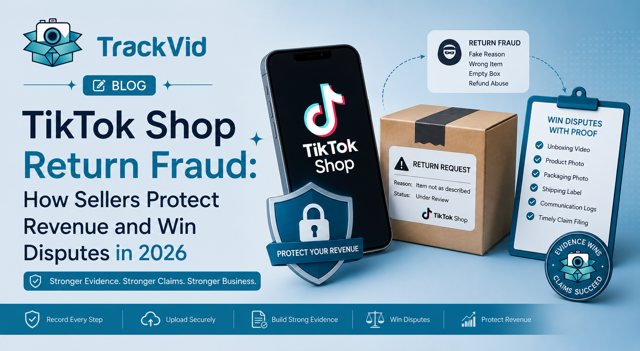
For sellers on TikTok Shop, Shopify, Amazon and other global marketplaces. Updated June 2026.
TikTok Shop return fraud is rising in step with the platform's growth, and the sellers losing the most are the ones treating every refund as a cost of doing business instead of a dispute they can win. TikTok Shop return fraud covers empty-box returns, item-not-received claims on delivered orders, and used-product returns dressed up as defects. With TikTok Shop global GMV reaching $64.3 billion in 2025, up 94 percent year on year across 16 markets according to Momentum Works, the scale of orders now makes the platform a target for organized refund abuse.
The wider backdrop is severe. Return fraud costs retailers more than $100 billion a year, and roughly 9 percent of all returns are confirmed fraudulent, according to the National Retail Federation. Around 45 percent of consumers admit to some form of return fraud or policy abuse, and abusive returns surged 64 percent between January 2024 and May 2025, according to Signifyd. For a fast-scaling channel, that is a problem arriving early.
Why TikTok Shop Return Fraud Is Growing So Fast
The growth itself is the vulnerability. TikTok Shop is projected to push past $110 billion in global GMV in 2026, the US market alone reached $15.1 billion in 2025, and more than 15 million sellers are now active on the platform. Fraud follows volume, and impulse-driven social commerce attracts buyers who test return policies aggressively.
Three patterns show up most often.
The first is the item-not-received claim on an order that was delivered. The buyer says nothing arrived, requests a refund, and keeps the product. On a card dispute this becomes friendly fraud, which is one of the most common dispute types in ecommerce.
The second is the empty-box or wrong-item return. The buyer returns an empty package or a different, cheaper item, and the refund is processed before anyone inspects what came back.
The third is wardrobing, where a buyer uses a product and returns it as defective within the window. Apparel is the most exposed category, and apparel happens to be one of TikTok Shop's largest, led by womenswear and beauty.
Returns will always happen. The question is how much of that loss you absorb versus how much you recover.
How TikTok Shop Disputes and Chargebacks Actually Work
Winning a dispute on TikTok Shop is a documentation exercise on a clock. Sellers who understand the mechanics recover far more than sellers who react emotionally to each refund.
When a buyer files a chargeback, the seller must respond in Seller Center within seven calendar days of the chargeback notification. Miss that window and TikTok Shop charges the account the disputed amount. There is also a fee of around $10 per chargeback when the platform appeals on the seller's behalf, regardless of outcome, though that fee can be waived when documentation supports an unauthorized-payment finding.
The evidence that moves a dispute is specific. Useful documentation includes the full order confirmation with device or IP data, proof that the delivery address matched the billing address, prior purchase history from the same buyer, and proof of fulfillment and delivery. This category of strong, verifiable evidence is what card networks call compelling evidence, and it is the difference between a won representment and a write-off.
The gap most sellers have is the fulfillment side. They can show the order and the tracking, but they cannot show what was actually placed in the box. That is exactly where item-not-received and empty-box claims slip through.
A Dispute-Ready Process: What to Have Before the Claim
Fighting TikTok Shop return fraud after a dispute opens is too late to start gathering evidence. The sellers who recover build the file before the order even ships. Here is the evidence stack that wins, in the order it matters.
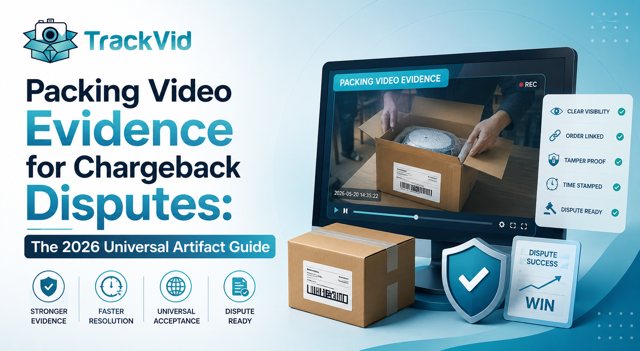
- Order-linked packing video. A clip showing the correct, undamaged item being sealed against the specific order number. This is the single strongest piece, because it answers item-not-received, empty-box, and wrong-item claims at once.
- Proof of delivery. Carrier confirmation and tracking that shows the parcel reached the buyer's address.
- Address and identity match. Evidence the delivery address matched the billing address, plus device or IP data from the order.
- Buyer history. Prior purchases from the same account that show an established, legitimate relationship.
- Invoice and order confirmation. The full transaction record tying the amount to the items.
Submit that stack inside the seven-day window and you are presenting compelling evidence, the standard that card networks and TikTok Shop reward. Submit only tracking and an order confirmation, and you will keep losing item-not-received disputes that you could have won.
The practical problem is item one. Most sellers have items two through five already. Almost none capture what went into the box, which is why TikTok Shop return fraud keeps working against stores that otherwise document everything. Closing that one gap changes the win rate more than any other single step.
A dispute-ready store also benefits from deterrence. Once buyers see that a store contests claims with proof rather than refunding on request, the volume of opportunistic attempts falls. The proof does double duty: it wins the disputes you fight, and it discourages the ones that never get filed.
A D2C Operator's Story: Turning Refunds Into Won Disputes
Daniel runs a D2C apparel and accessories brand selling on TikTok Shop and Shopify, shipping about 400 orders a day from a single fulfillment space. As his TikTok Shop sales climbed through 2025, so did the refunds, and a growing share of them felt wrong.
His problem was that he could not contest them with anything solid. Buyers claimed items never arrived or arrived as the wrong product, and Daniel had tracking that showed delivery but nothing showing what he had shipped. He was approving refunds he suspected were TikTok Shop return fraud simply because fighting them without proof was a losing effort.
He was writing off roughly $8,000 a month in suspect refunds and chargebacks, on top of the products themselves.
What changed was capturing the one thing he had been missing: the contents of each box at the moment of packing, linked to the order. With an order-linked packing video, his disputes stopped being his word against the buyer's. He could show the correct item, sealed and labeled, going out against that order number, and submit it inside the seven-day window.
As Daniel put it, "Once I could show what went in the box, the refunds I used to eat became disputes I won."
Within two months his successful dispute rate climbed sharply, and the volume of opportunistic item-not-received claims dropped once buyers learned his store contested them with proof.
What TikTok Shop Return Fraud Costs Sellers
The damage from TikTok Shop return fraud is larger than the refund line suggests, because each lost dispute carries three separate costs.
The first is the refund itself. The second is the product, which a fraudulent buyer keeps. The third is the dispute fee, since TikTok Shop charges around $10 per chargeback when it appeals on the seller's behalf, regardless of the outcome. A single fraudulent order can cost a seller the sale price, the cost of goods, and a fee, all at once.
Scale makes this material. With more than 15 million sellers now active and US shops alone jumping to roughly 475,000 by mid-2025, the platform's rapid expansion means even a low fraud rate translates into a high absolute number of disputes. The broader market sets the pace: U.S. retail returns reached $849.9 billion in 2025, online return rates now sit above 20 percent, and around 9 percent of returns are confirmed fraudulent, according to the National Retail Federation.
For a store doing a few hundred orders a day, a return fraud rate in that range is not a rounding error. It is a recurring monthly write-off that compounds as volume grows. The sellers who treat it as unavoidable absorb the full cost. The sellers who treat each suspect claim as a winnable dispute recover most of it, which is the entire difference in margin between two otherwise identical stores.
How TrackVid Gives TikTok Shop Sellers Compelling Evidence
The sellers who beat return fraud are not arguing harder after the dispute. They are capturing proof before it happens. TrackVid (trackvid.in) is a video proof and claim management platform that does exactly that.
TrackVid records every packing automatically and links each video to the order, the SKU, and the tracking number at the moment of packing, then stores it in searchable cloud so any order's clip is retrievable in minutes. For a TikTok Shop return fraud dispute, that clip is the compelling evidence the process rewards: it shows the correct, undamaged item being sealed against a specific order, which answers item-not-received, empty-box, and wrong-item claims directly.
Because the proof is captured at the source rather than reconstructed after the fact, it holds up across platforms, so the same packing video supports a TikTok Shop dispute, a Shopify Payments dispute, or a card chargeback representment. Used by more than 1,100+ sellers, TrackVid replaces the guesswork of contesting refunds with a documented, repeatable process. See this Related: guide to winning ecommerce chargeback disputes and this Related: ecommerce fulfillment proof guide.
Sellers who move from tracking-only evidence to structured packing proof commonly raise dispute success from a minority of cases to the large majority, according to TrackVid data.
Five Questions to Test Your TikTok Shop Fraud Exposure
1. When a buyer says an order never arrived, can you show what you actually packed for that order?
Tracking proves delivery. It does not prove contents.
2. Can you pull the packing video for any order number within the seven-day chargeback window?
If retrieval takes hours, you will miss the window on busy weeks.
3. Do you know your monthly write-off to refunds you suspect are fraudulent?
If you cannot name the figure, you cannot tell how much is recoverable.
4. Are you submitting compelling evidence, or only the order confirmation and tracking?
Order plus tracking alone loses item-not-received disputes.
5. If your TikTok Shop volume doubled next quarter, would your dispute process still hold?
Fraud scales with GMV. A manual process does not.
Schedule a free demo at trackvid.in/book-demo.html
In one session, you will see exactly where your recoverable revenue is going and what a structured proof system looks like in your specific operation. TrackVid works with your existing warehouse cameras. Setup takes under 15 minutes.
Frequently Asked Questions
How do I fight TikTok Shop return fraud?
Respond to the dispute inside the seven-day window with compelling evidence, not just tracking. Strong proof includes order confirmation, address match, buyer history, and an order-linked packing video showing the correct item shipped. That fulfillment proof is what defeats item-not-received and empty-box claims.
Customer says item not received but tracking shows delivered. What can I do on TikTok Shop?
Submit proof of delivery plus an order-linked packing video showing the correct item sealed against that order, within the seven-day chargeback window. Tracking alone often loses these disputes because it proves a parcel moved, not what was inside it.
How do I win a TikTok Shop chargeback?
File your response in Seller Center within seven calendar days and include compelling evidence: full order details with device or IP data, address match, prior purchase history, and fulfillment proof. Missing the window means TikTok Shop charges your account the disputed amount automatically.
What is the TikTok Shop empty box return scam?
A buyer returns an empty or wrong package and receives a refund before the return is inspected. The defense is proof of what you originally shipped, which is why an order-linked packing video, like the one TrackVid captures, settles these cases.
Is return fraud really that common in ecommerce?
Yes. Return fraud costs retailers more than $100 billion a year and about 9 percent of returns are confirmed fraudulent, according to the National Retail Federation, while abusive returns rose 64 percent between January 2024 and May 2025, according to Signifyd.
What is the best proof for TikTok Shop disputes?
Order-linked packing video is the strongest single piece of evidence because it shows the correct, undamaged item sealed against a specific order. TrackVid produces that proof automatically and stores it searchable by order number, so it is ready inside the dispute window.
How can I stop fake returns on TikTok Shop as a seller?
You cannot stop buyers from trying, but you can make fraud unprofitable by contesting it with proof. Sellers who consistently submit packing video evidence see opportunistic claims drop, because buyers learn the store wins disputes, according to TrackVid seller data.
Sources: Momentum Works (TikTok Shop 2025 GMV and growth), TikTok Shop Seller Center chargeback policy (seven-day window, per-chargeback fee, evidence requirements), National Retail Federation (return fraud cost and fraudulent return rate), Signifyd (return abuse surge and apparel abuse), TrackVid seller data (dispute success rates).
TrackVid is a video proof and claim management platform used by 1,100+ ecommerce sellers worldwide. It records order-linked packing video that wins marketplace and chargeback disputes. Learn more at trackvid.in.
Get the Marketplace Claim Recovery Checklist
A 12-point checklist used by 1,100+ sellers to recover 85-90% of marketplace claim losses. Free, instant access.
- Marketplace-specific evidence formats (AJIO, Flipkart, Amazon, Myntra)
- Claim window deadlines for every major platform
- The 6-step process that pushes approval from 85-90%
- Common rejection reasons and how to avoid them
No spam. Unsubscribe anytime. Used by sellers at Rare Rabbit, HRX, Da Milano + 1,100 more.
Stop Losing Money to Fake Returns
Join 1,100+ sellers who recover lakhs every month with TrackVid