
For supply chain, operations and legal leaders at brands and 3PLs. Updated September 2026. This is general information, not legal advice; consult counsel for your specific contract and jurisdiction.
Direct Answer
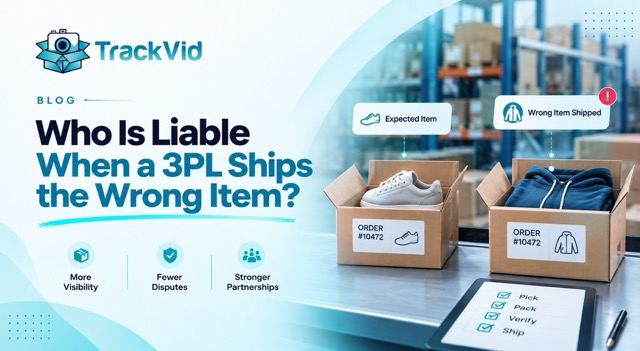
When a 3PL ships the wrong item, liability depends on three separate questions that most brands accidentally treat as one. First, was it actually the 3PL's error, as opposed to a brand-side inventory or listing mistake, a carrier mishandling in transit, or a false customer claim? That is a factual question decided by evidence, not by assumption. Second, if the 3PL was at fault, its liability is real under warehouse law, since a 3PL holding your goods is legally a bailee with a duty of reasonable care, but that liability is almost always capped by contract, commonly at $0.25 to $0.50 per pound of the item, which is far below the retail value of most ecommerce goods. Third, if the wrong item went to a retailer rather than an end consumer, the retailer will likely also issue its own chargeback against the brand directly, which is a completely separate process from whatever the brand recovers from the 3PL. Answering "who is liable" well means answering all three, not settling for the first one that feels satisfying.
Quick Answer: What Do Most Brands Get Wrong Here?
Two things. First, they assume that if the 3PL is liable, they get made whole. They usually do not, because standard 3PL liability caps pay a fraction of a lightweight, high-value item's actual worth, and that gap is the brand's problem unless separately insured. Second, when the wrong item went to a retailer, brands sometimes think winning the internal liability argument with their 3PL also resolves the retailer's chargeback. It does not. The retailer chargeback and the brand-3PL liability question are two different disputes with two different counterparties, and one can be won while the other is lost.
Who Is Liable When a 3PL Ships the Wrong Item, Legally?
Who is liable when a 3PL ships the wrong item starts with custody. When a 3PL takes custody of a brand's inventory, it becomes what warehouse law calls a bailee: a party holding someone else's property, with a legal duty to exercise reasonable care over it. This is not a marketing term. It is the actual legal basis for 3PL liability in the United States, and it is why a 3PL can be held responsible for shipping the wrong item, damaging goods, or losing inventory through its own negligence.
What this duty does and does not mean. The 3PL cannot contractually disclaim its obligation of reasonable care entirely; that duty exists regardless of what the contract says. What the 3PL can do, and what nearly every 3PL contract does, is contractually limit the dollar amount it pays out when that duty is breached. That limitation is legally permitted under warehouse law and is standard commercial practice, not a red flag on its own. It becomes a problem only when a brand does not realize how low that limit typically sits relative to the actual value of what was shipped.
Where this liability actually applies. Warehouse legal liability, sometimes called bailee coverage, is what answers for a 3PL's negligence while goods are in its custody at the facility, including packing errors like shipping the wrong item. This is distinct from cargo insurance, which covers goods in transit once a carrier has them, and distinct from general liability, which excludes damage to property in the 3PL's care, custody or control entirely. A wrong-item shipment error, the mistake happening during pick and pack, sits squarely in warehouse legal liability territory, not the other two.
What Are the Three Questions Everyone Conflates?
Answering who is liable when a 3PL ships the wrong item means separating these is the single most useful thing a brand or 3PL can do when a wrong-item dispute happens.
Question 1: Whose error was it? This is the first half of who is liable when a 3PL ships the wrong item.
Not every wrong-item shipment is a 3PL packing error. It can also be a brand-side listing or inventory mismatch (the wrong SKU was mapped to the order in the first place), a carrier-side mix-up (rare, but it happens with multi-parcel shipments), or a false claim from a return-fraud attempt where nothing was actually wrong. Liability only attaches to whoever actually made the mistake, and that is a factual question, not a default assumption in either direction.
Question 2: If the 3PL was at fault, how much does its liability actually pay?
This is where most brands are surprised. 3PL liability for proven negligence is real, but it is capped by contract, and the industry-standard cap is far below what most ecommerce brands assume. The next section covers this in detail, because the gap between "the 3PL is liable" and "we get made whole" is usually the most expensive misunderstanding in this entire topic.
Question 3: If the wrong item went to a retailer, is there also a retailer chargeback?
Yes, almost always, and it is a separate process. If a brand ships product to Walmart, Target or another retail partner and the wrong item or wrong quantity arrives, the retailer's own vendor compliance program will very likely issue a chargeback against the brand directly, regardless of whether the error was the brand's or the 3PL's. Whatever the brand recovers or fails to recover from its 3PL under their service agreement has no bearing on the retailer's own chargeback process, which the brand must dispute separately and directly with the retailer.
Why treating these as one question causes real financial damage. A brand that establishes clean proof its 3PL was at fault, and stops there, has solved question one and possibly reduced its exposure on question two, but has done nothing about question three if a retailer was involved. All three need to be worked, and they need different evidence, different counterparties and often different teams.
Who Is Liable When a 3PL Ships the Wrong Item, and What Does It Pay?
This is the number most brands do not ask about until after an incident, and it changes the entire economics of "who is liable."
The industry-standard limitation of liability is commonly $0.25 to $0.50 per pound of the affected goods, triggered when the loss is due to the 3PL's proven negligence or willful misconduct. This figure is not designed to reimburse the retail value of the goods. It is designed to cap the 3PL's exposure to a level its own insurance can realistically underwrite, since a warehouse holding goods worth many multiples of its own revenue on that account cannot obtain insurance for the full value of everything under its roof.
What this means in practice for ecommerce goods specifically. A pound-based cap is brutal for exactly the category most ecommerce brands sell: lightweight, high-value items. A $180 pair of sneakers weighing one pound recovers roughly fifty cents under a standard cap if the 3PL is found liable. A $40 t-shirt weighing four ounces recovers a few cents. The cap was built around bulk commodity freight economics, not apparel, electronics or beauty products, and the mismatch is the brand's problem unless addressed directly in the contract or through separate insurance.
Warehouse law permits this, with one boundary. Contractual limitation of liability by weight, by package, by occurrence or as a multiple of the storage rate is commercially standard and legally permitted. What is not permitted is a contract term that disclaims the 3PL's underlying duty of reasonable care altogether. The 3PL can limit what it pays. It cannot contract its way out of the duty to take reasonable care of your goods in the first place.
How brands actually close this gap. Two ways, usually combined. First, negotiate a higher contractual liability cap for specific high-value SKUs, which most 3PLs will do for a fee or a rate adjustment. Second, and more commonly, the brand carries its own inventory or cargo insurance that covers the difference between what the 3PL's cap would pay and the goods' actual value, treating the 3PL's liability coverage as a floor rather than full protection.
Proving Root Cause: Who Is Liable When a 3PL Ships the Wrong Item?
This is the evidence question, and it is the one that actually determines the outcome of questions one and two above.
| Error type | Who is typically liable | What resolves it |
|---|---|---|
| 3PL packed the wrong SKU | 3PL, under bailee liability | Order-level packing evidence showing what was actually scanned and placed in the carton |
| Brand's system sent the wrong SKU to the pack instruction | Brand, not the 3PL | Order and inventory system records showing what instruction the 3PL actually received |
| Carrier swapped or mishandled parcels in transit | Carrier, under its own liability terms | Chain-of-custody and tracking records showing the parcel left the facility correctly |
| Customer or downstream party falsely claims wrong item | No one, this is a fraud or error claim, not a fulfillment failure | Dispatch evidence showing the correct item was in fact packed and sealed |
The asymmetry that catches most operations off guard. Without evidence, disputes default to whoever has the weaker negotiating position or the less complete paper trail, not to whoever actually made the mistake. This is true whether the dispute is between a brand and its 3PL, or between a brand and its retail customer. Evidence does not just help win disputes. It is what makes the liability framework described above function as intended, rather than collapsing into negotiation.
5 Steps to Determine Who Is Liable When a 3PL Ships the Wrong Item
Step 1: Pull the Order-Level Evidence First, Before Any Conversation
Before assigning blame in either direction, retrieve whatever packing-level evidence exists for that specific order: video, photos, scan logs, or system records showing what was picked, packed and shipped. Conversations that start before the evidence is pulled tend to anchor on assumption rather than fact, and are hard to walk back once a position is taken.
Step 2: Establish Which Row of the Table You Are In
Using the evidence, determine whether this was a 3PL packing error, a brand-side system or listing error, a carrier issue, or a claim with no fulfillment failure behind it at all. This single determination decides everything that follows.
Step 3: If the 3PL Was at Fault, Check the Contract's Liability Cap Before Assuming Recovery
Locate the limitation of liability clause and calculate what it actually pays for this specific item at its actual weight. Do this before promising a customer, a retailer or an internal stakeholder a specific recovery number, since the contractual cap is very likely lower than the item's retail value.
Step 4: If a Retailer Received the Wrong Item, File That Dispute Separately and Immediately
Do not wait for the brand-3PL liability question to resolve before addressing a retailer chargeback. The retailer's dispute window is running on its own clock regardless of what is happening internally, and missing it forfeits the dispute entirely, independent of who was ultimately at fault.
Step 5: Close the Loop With a Process Fix, Not Just a Payment
Whichever party was at fault, use the evidence gathered to fix the underlying process gap: a listing error gets corrected at the source, a packing error gets addressed with the specific station or shift involved, a carrier issue gets escalated with the carrier directly. The financial resolution and the process fix are both necessary, and neither substitutes for the other.
Talk through a recent wrong-item dispute and see how order-level evidence would have changed the conversation. 15 minutes. No commitment.
What a Good 3PL Contract Should Specify
If you are negotiating or renegotiating a 3PL agreement, these are the liability-specific terms worth getting in writing rather than assuming.
- The exact per-pound or per-occurrence liability cap, and whether it can be increased for specific high-value SKU categories
- What counts as proof of the 3PL's negligence, and whether the contract specifies what evidence is required or accepted, since a cap that pays out only on proven fault is meaningless without an agreed evidentiary standard
- Whether the 3PL is contractually required to maintain order-level packing evidence, and for how long, since a liability clause with no evidence obligation behind it is difficult to enforce in either direction
- How chargebacks from a retail customer are allocated between brand and 3PL, separate from the general liability cap, since retailer chargebacks and internal liability are different pools of risk
- Insurance minimums for warehouse legal liability and cargo coverage, confirmed directly with the 3PL's carrier rather than taken on the 3PL's word
- What happens once goods leave the facility, since liability commonly transfers to the carrier at that point, and the contract should be explicit about where the 3PL's responsibility ends
Where TrackVid Fits
Who is liable when a 3PL ships the wrong item is, at bottom, a question about evidence, and that is the question TrackVid's core capability was built around: what actually happened at the pack station for a specific order.
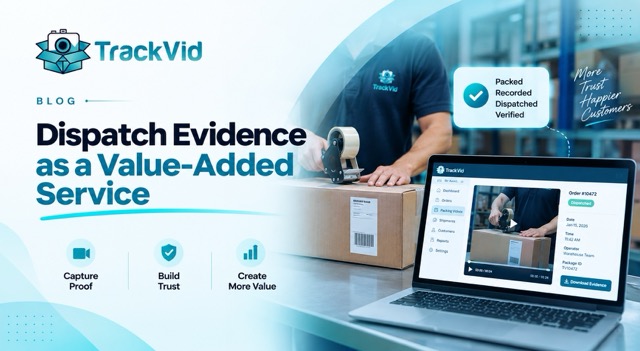
TrackVid is a video proof and claim management platform used by 1,100+ ecommerce sellers and fulfillment operations, and is an authorized VMS partner for Snapdeal. Its core function, order-level video evidence linked to the order ID, AWB and SKU, captured automatically as each order is packed, is exactly the evidence class that Question 1 above depends on: was the correct item actually packed, and if not, at which point did the error happen.
What this proves directly, based on proven deployments:
- What was actually placed in the carton, resolving the brand-versus-3PL root cause question with a record rather than a claim
- Return-side video capture, so a downstream wrong-item complaint can be checked against what was actually received back, closing false-claim disputes
- Automated claim filing on supported marketplace channels once a claim is warranted, and return reconciliation surfacing wrong-item and missing-item cases that would otherwise go unfiled
A live example from a marketplace deployment: 94,904 packing videos captured across 95,836 tracked orders, with 868 claims filed against that evidence, many of them exactly this dispute type, wrong item or missing item, and approval moving from 42.3 percent to 60.3 percent within a month of systematic capture.
What TrackVid does not do. It does not adjudicate liability, calculate a contractual payout, or replace warehouse legal liability insurance; those remain contract and insurance matters between the parties involved. What it provides is the evidence those determinations depend on. It also does not, today, extend that evidence into a retailer's own PO or ASN systems for a big-box vendor compliance chargeback specifically; that would need confirming directly if it is your use case.
See order-level evidence retrieval for a wrong-item scenario on real data. 15 minutes. No commitment.
Read Next in This Series
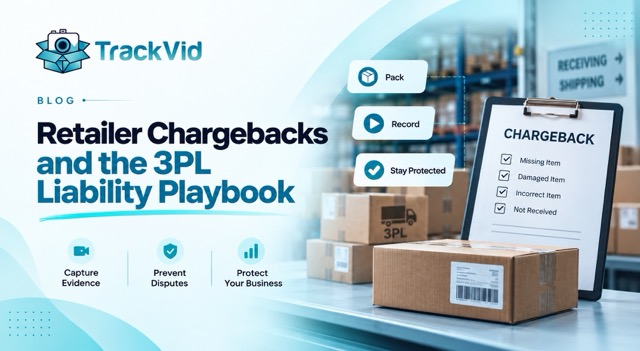
- Retailer Chargebacks and the 3PL Liability Playbook, the broader hub covering chargeback programs across every major retailer
- How to Dispute a Walmart Chargeback, the detailed playbook if the wrong item went to Walmart specifically
Frequently Asked Questions
Who is liable when a 3PL ships the wrong item?
Depends on whether the error was actually the 3PL's. If the 3PL packed the wrong SKU due to its own negligence, it is liable as a bailee under warehouse law, but that liability is typically capped by contract, commonly at $0.25 to $0.50 per pound, well below the item's retail value for most ecommerce goods.
Is a 3PL responsible for shipping errors?
Yes, when the error results from the 3PL's own negligence, such as packing the wrong item or mishandling goods in its custody. This responsibility exists under warehouse bailee law regardless of contract language, though contracts commonly limit the dollar amount the 3PL actually pays.
How much does a 3PL have to pay for a mistake?
Usually far less than the item's value. The industry-standard limitation of liability is commonly $0.25 to $0.50 per pound, which severely underpays lightweight, high-value goods like apparel, electronics or beauty products relative to their retail price.
What is a bailee in logistics?
A bailee is a party holding someone else's property with a legal duty of reasonable care over it. A 3PL becomes a bailee the moment it takes custody of a brand's inventory, which is the legal basis for holding it liable for negligence such as shipping the wrong item.
How do you prove a 3PL was at fault for a wrong-item shipment?
With order-level evidence, ideally video or photographic proof of what was actually picked, packed and sealed for that specific order, plus system records showing what instruction the 3PL received. Without this evidence, fault typically defaults to negotiation rather than fact.
Does 3PL insurance cover the full value of my product?
Rarely. Standard warehouse legal liability coverage pays out to the contractual cap, commonly $0.25 to $0.50 per pound, not the product's retail value. Brands typically close this gap with their own inventory or cargo insurance covering the difference.
What happens when a 3PL ships the wrong item to a retailer?
Two separate things happen. The retailer will likely issue its own chargeback against the brand directly through its vendor compliance program, and separately, the brand may seek recovery from its 3PL under their service agreement if the 3PL was at fault. These are different processes with different counterparties and neither resolves the other.
Can I sue my 3PL for a shipping error?
Legally possible if the 3PL breached its duty of reasonable care, but most contracts include a limitation of liability clause capping recoverable damages well below actual product value, and courts generally enforce these caps when they meet the applicable standard. Review the contract with counsel first.
Can a 3PL contract eliminate its liability entirely?
No. Warehouse law does not permit a 3PL to disclaim its underlying duty of reasonable care by contract. What it can do, and what standard contracts do, is limit the dollar amount paid when that duty is breached, commonly by weight, by occurrence, or as a multiple of the storage rate.
Who is liable once a package leaves the 3PL's facility?
Liability commonly transfers to the carrier once goods leave the warehouse, though this should be explicitly stated in the 3PL contract rather than assumed. A wrong-item error that originated during packing remains the 3PL's responsibility even if the parcel is already in carrier custody by the time the error is discovered.
Sources: UCC Article 7 (warehouse receipts, limitation of liability) and commentary; warehouse legal liability and bailee insurance guidance from Weber Logistics, MetsCube, Red Stag Fulfillment, WarehouseQuote and Warehouse Guard Insurance, 2025-2026; TrackVid platform data across 1,100+ ecommerce sellers and fulfillment operations; enterprise marketplace deployment data (94,904 packing videos, 95,836 tracked orders, 868 claims filed)
This article explains general industry practice and is not legal advice. Liability outcomes depend on the specific contract, jurisdiction and facts involved; consult a qualified attorney before relying on any of this for a specific dispute or negotiation.
TrackVid is a video proof and claim management platform for ecommerce operations, 3PLs and fulfillment centers, providing order ID-linked dispatch evidence to establish what was actually packed and shipped. Learn more at trackvid.in.
Get the Marketplace Claim Recovery Checklist
A 12-point checklist used by 1,100+ sellers to recover 85-90% of marketplace claim losses. Free, instant access.
- Marketplace-specific evidence formats (AJIO, Flipkart, Amazon, Myntra)
- Claim window deadlines for every major platform
- The 6-step process that pushes approval from 85-90%
- Common rejection reasons and how to avoid them
No spam. Unsubscribe anytime. Used by sellers at Rare Rabbit, HRX, Da Milano + 1,100 more.
Stop Losing Money to Fake Returns
Join 1,100+ sellers who recover lakhs every month with TrackVid