
For D2C brand founders, ecommerce operators, and marketplace sellers running cash on delivery. Updated August 2026.
Direct Answer
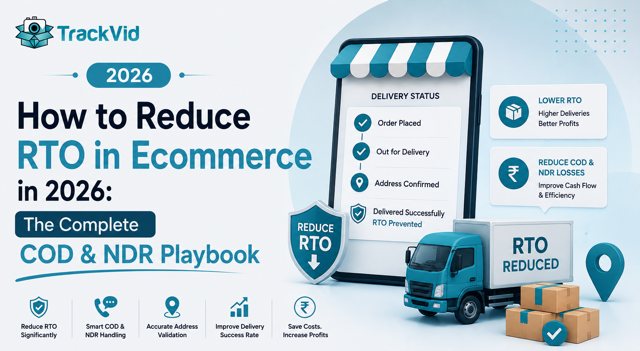
To reduce RTO in ecommerce, verify every COD order at checkout with address quality scoring and OTP, run pre-dispatch WhatsApp or IVR confirmation on all COD orders, act on every NDR within 24 hours with structured re-delivery workflow, apply customer risk scoring against serial refusal patterns, and reconcile every return to detect fake "customer not available" scans. Brands running this 5-step framework cut RTO rates 30 to 45 percent within 90 days.
The Problem: RTO Is the Silent Margin Killer in COD Ecommerce
The average ecommerce return-to-origin (RTO) rate consumes 20 to 30 percent of cash-on-delivery orders across most D2C brands, with underperforming brands crossing 40 percent. Every RTO parcel costs approximately ₹100 to ₹250 in stacked losses, factoring forward shipping, reverse shipping, repackaging, inventory lock for 1 to 2 weeks, and COD remittance delays. A brand shipping 1,000 COD orders per day at 30 percent RTO absorbs recurring monthly losses in the six-figure range, before counting the lost sale itself.
The response most brands try first is to disable COD entirely or add heavy prepaid discounts. Both approaches fail predictably. Disabling COD collapses total orders by 30 to 50 percent because a majority of buyers in COD-heavy markets still prefer or require it. Heavy prepaid discounts train the customer base to expect them permanently, damaging future margin. Neither addresses the underlying problem.
The underlying problem is not COD itself. It is that most brands treat every COD order the same way, ship without verification, and react to NDRs only after RTO is inevitable. RTO reduction is an operational discipline, not a policy switch. Brands that treat it as ongoing ops discipline consistently move RTO rates from 30 percent territory to sub-15 percent within 90 days.
Across the TrackVid platform, which processes packing video across 1,100+ sellers and integrates return reconciliation data from all major couriers, we consistently observe that brands adopting Order ID-linked dispatch verification combined with return reconciliation see RTO-related loss drop 35 to 50 percent within 90 days. A significant portion of that improvement comes from a category most brands never measure: fake "customer not available" NDR scans that the courier network occasionally marks against orders that were never actually attempted. Return reconciliation catches these systematically, and dispatch evidence defends every disputed refund.
RTO is not a customer behavior problem. It is a verification, timing, and reconciliation problem.
What Is RTO in Ecommerce?
RTO stands for Return to Origin. It is the courier event where a parcel that was dispatched to a customer comes back to the seller's warehouse without being delivered. RTO happens when delivery is attempted and fails (customer not available, refused, wrong address), when a customer cancels after dispatch, when a customer refuses to pay on delivery (COD refusal), or when the courier cannot complete delivery within their maximum attempt policy.
RTO is different from a return. A return is a delivered order that the customer sends back afterward. An RTO is an undelivered order that comes back before ever reaching the customer.
Cost structure of one RTO order:
- Forward shipping (already paid)
- Reverse shipping (charged back to seller)
- Repackaging labor and materials
- Inventory locked for 1 to 2 weeks in the reverse leg
- COD remittance delay (cash flow impact)
- Warehouse handling on receipt
- Potential quality damage during round trip
Combined all-in cost per RTO parcel typically runs ₹100 to ₹250 depending on product category and shipping zone, before counting the lost sale itself.
RTO Rate Benchmark by Category (2026 Data)
A good RTO rate depends on category and payment mix. Below the category benchmark, you are outperforming peers. Above it, you have structural improvement opportunity.
| Category | COD RTO Average | Best-in-Class | Prepaid RTO Average | Warning Level |
|---|---|---|---|---|
| Fashion & Apparel | 25-35% | Under 15% | 4-8% | Above 35% |
| Beauty & Personal Care | 18-28% | Under 12% | 3-6% | Above 30% |
| Footwear | 30-40% | Under 20% | 5-10% | Above 40% |
| Electronics Accessories | 20-30% | Under 15% | 4-7% | Above 30% |
| Home & Kitchen | 15-25% | Under 10% | 3-5% | Above 25% |
| Jewellery | 12-20% | Under 8% | 2-5% | Above 22% |
| Baby & Kids | 20-28% | Under 12% | 4-6% | Above 30% |
| Sports & Fitness | 22-32% | Under 15% | 4-8% | Above 32% |
Why Is My RTO Rate So High?
RTO rates rise for four root causes, and the mix determines your fix. Across the TrackVid platform, we observe the following distribution of RTO reasons on COD orders:
The 4 Root Causes of RTO:
- Customer refused delivery (35-45% of COD RTOs). Customer changed mind, product no longer wanted, price found cheaper elsewhere, or genuine buyer's remorse.
- Customer unavailable (25-35% of COD RTOs). Customer not at address during attempted delivery, phone unreachable, no one to receive parcel.
- Wrong or incomplete address (15-25% of COD RTOs). Incorrect pincode, missing landmark, apartment number missing, or address not deliverable by courier.
- Fake orders and first-party fraud (5-15% of COD RTOs). Competitor sabotage orders, test orders never intended to be received, or serial abusers with confirmed patterns.
The remaining balance covers legitimate carrier issues (weather, courier hub problems) and duplicate orders.
The critical insight from platform data: customer-unavailable and wrong-address RTOs are largely preventable through verification and confirmation workflows. These two categories combined represent 40 to 60 percent of most brands' COD RTOs, and they respond fastest to structural intervention. Customer-refused RTOs require prepaid conversion incentives and improved product accuracy. Fake orders require customer risk scoring and dispatch evidence.
Difference Between RTO, NDR, and RTS
These three terms are often conflated. Understanding the sequence is critical.
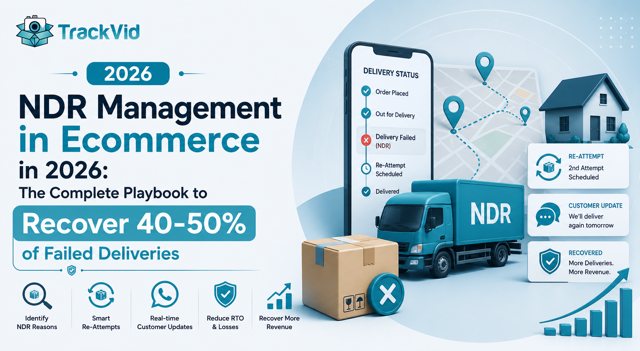
NDR (Non-Delivery Report): The courier raises an NDR when a delivery attempt fails. NDR is a RECOVERY opportunity, not a lost order. The typical window to act is 24 to 48 hours before the courier makes a second or third attempt.
RTS (Return to Sender): Some couriers use RTS as an interim status when a parcel is on its way back but not yet returned to the seller warehouse. Some regions use RTS and RTO interchangeably.
RTO (Return to Origin): The final event where the undelivered parcel physically returns to the seller warehouse. Once RTO is triggered, forward and reverse shipping costs are locked in.
The critical operational insight: NDR is where RTO is prevented. Most brands ignore NDRs and only see the problem after RTO. Industry data consistently shows 40 to 50 percent of NDR orders are recoverable with a same-day, structured follow-up workflow. Brands that build NDR management as a Tier 1 operational discipline convert failed attempts into successful deliveries before the parcel gets returned.
The 5-Step Framework to Reduce RTO in Ecommerce
Step 1: Verify Every COD Order at Checkout
Prevention is significantly cheaper than reaction. The moment to catch RTO risk is BEFORE the order enters your dispatch queue.
Address quality scoring. Deploy address parsing that flags incomplete addresses (missing pincode, unclear landmarks, no apartment number). Flag high-RTO pincodes based on your own 90-day RTO history. If a pincode has historically returned 40 percent or more of COD orders, new orders from it deserve extra verification before dispatch.
Phone number verification. OTP verification at checkout via SMS or WhatsApp. Rejected OTP attempts are your first fraud signal.
COD value thresholds. Orders above a category-specific threshold (typically the top 20 percent by value) get mandatory pre-dispatch confirmation. Small-ticket COD orders often clear without verification friction. High-value COD orders warrant it.
Bulk order flags. Five units of the same SKU going COD to one address is either a genuine reseller or a fraud setup. Verify before shipping.
Repeat cancellation pattern. The same phone number with multiple recent cancellations or refusals across your store is your serial abuser fingerprint.
Industry analysis consistently shows that orders triggering three or more risk flags account for over 80 percent of confirmed fake COD orders. Build your verification rules around flag combinations, not individual signals.
Step 2: Pre-Dispatch Confirmation on Every COD Order
This is the single highest-return step in the framework and the one most brands underinvest in. Every COD order should receive an automated confirmation attempt BEFORE dispatch. The channel hierarchy that works:
WhatsApp confirmation first (60-70 percent response rate). Auto-send within 15 minutes of order placement with order details, COD amount, and a one-tap "Yes, confirm" button.
SMS confirmation second (30-40 percent response rate). Reply-YES-to-confirm format for non-responders.
IVR call third (20-30 percent pickup rate). Automated voice call for high-value orders.
Human callback fourth (75-85 percent pickup rate). Reserved for top 10-15 percent AOV orders that failed all automated channels.
Critical rule: Confirming just 10 percent of COD orders (asking them to reconfirm or switch to prepaid) can cut COD RTOs by 15 to 20 percent. Full confirmation on 100 percent of orders can cut COD RTOs by 25 to 35 percent.
Prepaid conversion incentive. Offer a small discount (typically 3-5 percent) for switching to prepaid at confirmation. Prepaid orders have RTO rates 4 to 6 times lower than COD. Prepaid conversion is the single strongest RTO killer available.
Step 3: Real-Time NDR Management Within 24 Hours
Every NDR is a recovery opportunity that expires within 24 to 48 hours before the parcel enters the RTO leg. Most brands miss the window.
Automated NDR triage within 4 hours of failed attempt:
- WhatsApp message to customer with re-delivery instructions and one-tap actions
- SMS with reschedule link
- Call from customer support for high-value orders
Use NDR reason codes to diagnose. "Customer not available" needs a reschedule message. "Wrong address" needs address correction. "COD refusal" needs a callback with retention offer or prepaid conversion incentive. Different reasons need different responses; treating them the same wastes the 24-hour window.
Set maximum delivery attempts. After 3 failed attempts, push for prepaid conversion or initiate reverse pickup. Endless attempts compound cost without improving conversion.
Target: convert 30 to 40 percent of NDR orders to successful delivery before they become RTO. Brands achieving this convert failed attempts into recovered revenue instead of write-offs.
Step 4: Deploy Customer-Level Risk Scoring
The serial COD refuser cohort (3-8 percent of your customer base) drives disproportionate RTO loss and needs different treatment than your normal customer base.
Track per-customer signals over rolling 90 and 365 day windows: COD refusal rate above 50 percent, multiple recent cancellations, address changes across orders, phone number reuse across accounts, high-RTO pincodes.
Policy differentiation. Standard customers get frictionless COD. Flagged customers get manual review, mandatory OTP, COD unavailable until first prepaid completion, or COD capped at a low threshold. Legal when applied consistently and disclosed.
Blacklist patterns, not customers. Blocking a specific phone-address-pincode pattern with 3+ RTO events in 90 days is defensible; blocking a specific customer permanently is legally messy.
Step 5: Reconcile Every Return to Detect Fake NDR Attempts
This is the step most brands never implement, and it accounts for 8-15 percent of preventable RTO loss.
Courier delivery agents are sometimes incentivized on delivery volume, not delivery success. A minority mark "customer not available" scans on parcels they never actually attempted, because the failed attempt still counts toward route completion. This pattern is documented across major couriers globally in COD-heavy markets.
Return reconciliation catches these: match every NDR-flagged order against actual GPS attempt data, cross-reference against dispatch evidence, flag suspicious patterns (fake NDRs from same hub, scans marked at 2 AM, GPS miles from delivery address), file automated claims for confirmed fake attempts, detect empty-box returns via dispatched-weight vs return-weight mismatch.
Across the TrackVid platform, sellers deploying return reconciliation recover 8 to 15 percent of their previous "unrecoverable" RTO loss because a meaningful percentage of RTOs were fake NDR events the seller never had visibility into. WROGN's pilot data showed the recovery pattern clearly across 868 claims filed against 8 marketplaces, with claim approval moving from 42.3 percent to 60.3 percent within a month of systematic reconciliation deployment.
Case Study: D2C Brand, 34% to 18% RTO Rate in 90 Days
A women's fashion and lifestyle D2C brand on the TrackVid platform started 2026 with a 34 percent RTO rate on their COD orders (approximately 70 percent of total volume). RTO reasons: 42 percent customer refused, 28 percent customer unavailable, 18 percent wrong address, 12 percent fake or first-party fraud. Combined RTO loss represented 8.4 percent of gross revenue.
Days 1-14: RTO data audit. Identified top 30 high-RTO pincodes representing 47 percent of RTO events. Cross-referenced customer database for serial refusers (5.8 percent of base driving 34 percent of RTOs).
Days 15-30: Deployed WhatsApp pre-dispatch confirmation on 100 percent of COD orders. Added 4 percent prepaid conversion discount at confirmation. Enabled real-time NDR workflow with 4-hour auto-triage.
Days 31-60: Implemented customer risk scoring with COD disabled for flagged patterns. Onboarded return reconciliation module. Started auto-filing claims for confirmed fake NDR attempts.
Days 61-90: Layered Order ID-linked dispatch video for post-RTO empty-box detection. Added WhatsApp packing video share on borderline orders.
Results at day 90:
- Blended RTO rate dropped from 34 percent to 18 percent (down 47 percent)
- COD refusal RTOs dropped 41 percent (Step 2 pre-dispatch confirmation impact)
- Customer unavailable RTOs dropped 52 percent (Step 3 real-time NDR management)
- Wrong address RTOs dropped 68 percent (Step 1 address quality scoring)
- Fake NDR attempts recovered: 11 percent of previously "unrecoverable" RTOs (Step 5)
- Prepaid share of orders rose from 30 percent to 42 percent (Step 2 prepaid conversion)
- Total RTO-related cost dropped from 8.4 percent of GMV to 4.1 percent
- Net margin improved 4.3 percentage points
The single largest contribution came from Step 2 (pre-dispatch confirmation) plus Step 3 (real-time NDR management) working together, accounting for approximately 60 percent of the total RTO reduction. Step 5 (return reconciliation) delivered pure recovery of previously written-off loss.
How to Reduce RTO on COD Orders Specifically
COD orders are the acute pain center of RTO. The 5-step framework applies fully, but three additional tactics work specifically for COD.
Prepaid conversion at confirmation. Every pre-dispatch confirmation message includes a prepaid switch option with small incentive (3-5 percent discount). Convert 15 to 25 percent of COD orders to prepaid at this touchpoint. Prepaid RTO is typically 4-6 times lower than COD RTO across every category.
COD limits by risk profile. New customer first order: COD available up to a modest threshold. Repeat customer with prepaid history: full COD access. Flagged customer with refusal history: COD unavailable, prepaid only.
Delivery-time COD verification. For high-value COD orders, integrate courier partner APIs for OTP-at-doorstep verification. Adds friction, but the parcels that survive it deliver at 90+ percent conversion.
Brands running the full COD-specific tactic set consistently see COD RTO rates drop from 30-plus percent territory to 12-18 percent range within 90 days.
Where TrackVid Fits in Your RTO Reduction Stack
The 5-step framework works. Steps 1 through 4 need a shipping platform layer (Shiprocket, Shipway, Shipmozo, Vamaship, EasyEcom, or your logistics stack). Step 5 (return reconciliation and dispatch evidence) is where TrackVid becomes decisive.
TrackVid is a video proof and claim management platform used by 1,100+ ecommerce sellers on Shopify, WooCommerce, Amazon, Flipkart, Myntra, AJIO, Nykaa, Meesho, and Snapdeal. Officially authorized by Snapdeal. Brands using TrackVid include Rare Rabbit, Wrogn, The Indian Garage Co, The Bear House, HRX, Nike, Jordan, Tommy Hilfiger, and Snitch.
For RTO reduction specifically, TrackVid delivers:
- Order ID-linked dispatch video at every packing station without workflow changes. Ties every video to Order ID, SKU, and tracking reference at packing. Retrievable in under 2 minutes.
- Return reconciliation module that scans return delivery logs across major couriers and flags weight mismatches, suspicious NDR patterns, GPS-inconsistent scans, and fake "customer not available" attempts. This is the Step 5 layer most brands never have.
- Auto-files claims on marketplaces for RTO disputes (Myntra, AJIO, Nykaa, Meesho, Snapdeal), cutting manual filing from 15-20 minutes to under 30 seconds per claim. 90 percent plus claim win rate across the platform.
- WhatsApp packing video share at dispatch for high-AOV COD orders. Trust artifact that reduces customer refusal on delivery (a portion of "customer refused" RTOs are customers uncertain if the correct item is arriving).
- Serial returner and RTO abuser detection backed by per-order video evidence. Customer risk scoring becomes defensible when backed by evidence, not just refusal statistics.
- Post-RTO empty-box detection. When an RTO parcel returns lighter than dispatch weight, TrackVid flags the mismatch for investigation before you restock.
WROGN's pilot data shows the pattern clearly. Across 95,836 tracked orders and 868 claims filed, systematic dispatch evidence combined with return reconciliation moved claim approval from 42.3 percent (June) to 60.3 percent (July) within a single month.
In a 30-minute call, our team walks through your specific RTO reason distribution, quantifies your recoverable loss from fake NDR attempts alone, and shows you exactly how return reconciliation integrates with your existing shipping platform. No commitment, no obligation.
5-Question RTO Audit
1. What percentage of your COD orders currently RTO? If above 25 percent, structural intervention across Steps 1 through 3 is required. Marginal tactics will not close the gap.
2. For your last 100 NDRs, how many did you actually contact within 4 hours of the failed attempt? If below 60 percent, Step 3 real-time NDR management alone will recover 15 to 25 percent of your current RTO volume.
3. What is your current prepaid share of total orders? If below 40 percent in a COD-heavy market, Step 2 prepaid conversion at pre-dispatch confirmation is your fastest RTO killer.
4. For your last 100 RTOs marked "customer not available," have you audited whether the courier actually attempted delivery? If no, you are likely absorbing 8 to 15 percent of RTO loss from fake NDR scans that reconciliation would recover.
5. For your last 100 RTOs, do you have dispatch weight and Order ID-linked packing video? Without both, empty-box return fraud (RTO parcels arriving lighter than dispatch weight) goes undetected and unrecovered.
See exactly where your recoverable RTO loss is and what a return reconciliation system looks like in your specific operation. 30 minutes. No commitment.
Frequently Asked Questions
What is RTO in ecommerce?
RTO stands for Return to Origin. It is the courier event where a dispatched parcel returns to the seller warehouse without being delivered to the customer. RTO happens when delivery is attempted and fails, when the customer refuses delivery or COD payment, when the address is incorrect or incomplete, or when the courier exhausts maximum attempts. RTO is different from a return: a return is a delivered order the customer sends back afterward, while RTO is an undelivered order that comes back before reaching the customer.
What is a good RTO rate in ecommerce?
A good RTO rate depends on category and payment mix. On COD orders, fashion best-in-class sits under 15 percent (versus 25-35 percent average). Beauty best-in-class sits under 12 percent (versus 18-28 percent average). Jewellery best-in-class sits under 8 percent (versus 12-20 percent average). Prepaid RTO across all categories runs 3-8 percent regardless of category. If your COD RTO exceeds category average, structural improvement is possible.
Why is my RTO rate so high?
RTO rates rise for four root causes: customer refused delivery (35-45 percent of COD RTOs), customer unavailable during attempt (25-35 percent), wrong or incomplete address (15-25 percent), and fake orders or first-party fraud (5-15 percent). Customer-unavailable and wrong-address categories are largely preventable through verification workflows. Customer-refusal responds to prepaid conversion. Fake orders respond to customer risk scoring and dispatch evidence.
How to reduce RTO on COD orders specifically?
Reduce COD RTO through three specific tactics beyond the general framework. First, pre-dispatch WhatsApp confirmation on 100 percent of COD orders with prepaid conversion incentive (3-5 percent discount) at that touchpoint. Second, COD availability tied to customer risk profile (new customers capped at modest threshold, flagged customers on prepaid only). Third, delivery-time OTP verification for high-value COD orders. Brands running the full COD tactic set consistently move COD RTO from 30-plus percent to 12-18 percent within 90 days.
What is the difference between RTO, NDR, and RTS?
NDR (Non-Delivery Report) is raised by the courier when a delivery attempt fails; it is a recovery opportunity with a 24-48 hour window. RTS (Return to Sender) is an interim status in some courier systems when a parcel is on its way back but not yet returned. RTO (Return to Origin) is the final event where the parcel physically returns to the seller warehouse. NDR is where RTO is prevented; 40-50 percent of NDR orders are recoverable with same-day structured follow-up.
How to prevent fake COD orders?
Prevent fake COD orders through checkout-time risk scoring using flag combinations: incomplete addresses, high-RTO pincode history, phone numbers with prior cancellations across your store, bulk identical SKU orders to one address, and repeated cancellation history. Orders triggering three or more flags account for over 80 percent of confirmed fake orders. Combined with OTP verification at checkout and pre-dispatch confirmation, fake COD order rates drop 60 to 75 percent within 60 days.
Does address verification reduce RTO?
Yes. Address quality scoring at checkout reduces wrong-address RTOs by 50 to 70 percent within 60 days. Deploy address parsing that flags incomplete addresses (missing pincode, unclear landmarks, no apartment number), cross-reference against your own historical high-RTO pincode data, and require manual verification on orders from pincodes with 40 percent or higher RTO history. Wrong-address RTOs typically represent 15-25 percent of total COD RTOs, so address verification alone can move total RTO rate by 3-5 percentage points.
What is the cost per RTO order?
The all-in cost per RTO parcel typically runs ₹100 to ₹250 depending on product category and shipping zone. The stack includes forward shipping (already paid), reverse shipping (charged back to seller), repackaging labor and materials, inventory locked for 1-2 weeks in the reverse leg, COD remittance delays affecting cash flow, warehouse handling on receipt, and potential quality damage during round trip. This cost excludes the lost sale value itself.
How does return reconciliation reduce RTO loss?
Return reconciliation catches fake NDR attempts that courier delivery agents occasionally mark on parcels they never actually attempted (motivated by route completion metrics). The reconciliation process matches every NDR-flagged order against GPS attempt data, cross-references against dispatch evidence, and flags suspicious patterns (multiple fake NDRs from the same hub, GPS-inconsistent scans, attempts marked at unusual hours). Across the TrackVid platform, return reconciliation recovers 8-15 percent of previously "unrecoverable" RTO loss because a meaningful share of RTOs are fake NDR events sellers never had visibility into.
How long does it take to reduce RTO rate?
Structural RTO rate reduction operates on a 90-day timeline. Weeks 1-2: RTO data audit, high-RTO pincode identification, serial refuser detection. Weeks 3-4: pre-dispatch confirmation deployment (fastest single lever). Weeks 5-8: real-time NDR management workflow with 4-hour auto-triage. Weeks 9-12: customer risk scoring and return reconciliation. Brands running the full framework see RTO rates drop 30-45 percent by day 90. Fashion and COD-heavy brands typically see faster gains (day 45-60) because Steps 2 and 3 compound fastest in high-volume COD categories.
Sources: Shipmozo NDR Management Analysis 2026, Shipway RTO Reduction Report 2026, Egrow Complete Guide to Reducing RTO 2026, HillTeck D2C RTO Guide 2026, CODCourierService D2C Guide 2026, TrackVid platform data across 1,100+ sellers, WROGN pilot data (94,904 videos, 95,836 tracked orders, 868 claims filed)
TrackVid is a video proof and claim management platform used by 1,100+ ecommerce sellers on Shopify, Amazon, eBay, Flipkart, Myntra, AJIO, Nykaa, Meesho, Bol.com, Zalando, MyDeal, PayPal, and Snapdeal. Officially authorized by Snapdeal. Brands trusting TrackVid include Rare Rabbit, Wrogn, The Indian Garage Co, The Bear House, HRX, Nike, Jordan, Tommy Hilfiger, and Snitch. Learn more at trackvid.in.
Get the Marketplace Claim Recovery Checklist
A 12-point checklist used by 1,100+ sellers to recover 85-90% of marketplace claim losses. Free, instant access.
- Marketplace-specific evidence formats (AJIO, Flipkart, Amazon, Myntra)
- Claim window deadlines for every major platform
- The 6-step process that pushes approval from 85-90%
- Common rejection reasons and how to avoid them
No spam. Unsubscribe anytime. Used by sellers at Rare Rabbit, HRX, Da Milano + 1,100 more.
Stop Losing Money to Fake Returns
Join 1,100+ sellers who recover lakhs every month with TrackVid