
For sellers on Amazon, Flipkart, AJIO, Myntra, Meesho, Shopify and global marketplaces. Updated June 2026.
Direct Answer
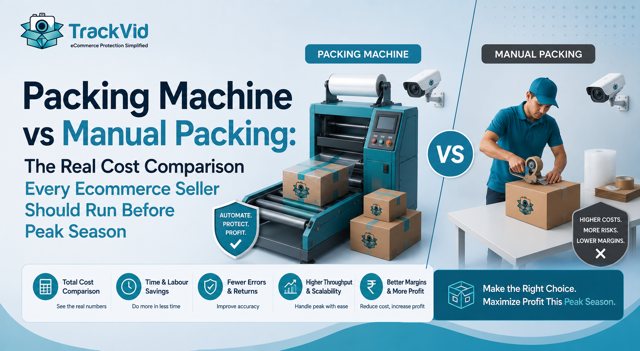
The comparison is usually made on wages against machine cost, which is the wrong number. The full comparison includes mispack rate, the claims lost to missing evidence, how each option behaves at peak, and the headcount you no longer need to recruit and train each season.
The packing machine vs manual packing decision is usually made on the wrong number. Sellers compare the monthly wage bill of a packing team against the cost of a machine and decide from there. But wages are only one line in the real comparison, and often not the deciding one. The full packing machine vs manual packing cost comparison for ecommerce has to include throughput, errors, claim losses, and how each option behaves when your volume spikes.
This is an honest head-to-head. It covers where manual packing genuinely wins, where a machine wins, and how to work out which is cheaper for your specific operation, without a single figure of machine pricing, because the decision should come from your own numbers.
Where Manual Packing Actually Wins
A fair comparison starts by admitting what manual packing does well, because for many sellers it remains the right answer.
Manual packing has almost no upfront cost. You need people, bags, labels, and tape, and you can start today. That matters when cash is tight or the business is young.
It is flexible. A human packer handles irregular products, mixed order types, fragile items, and one-off exceptions without reconfiguration. If your catalogue is varied and unpredictable, that adaptability is real value.
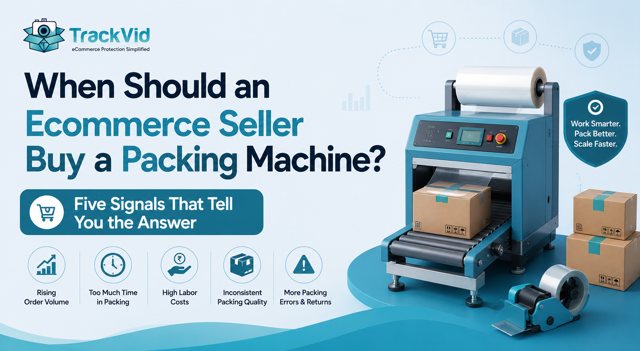
And at low volume it is simply cheaper. Below roughly 150 orders a day, the cost of a small team is lower than the investment and running cost of automation, and the throughput of a machine is wasted on volume that does not need it.
If that describes your operation, the honest answer is that a packing machine is not your priority yet. Fix your process, keep packing manually, and revisit this when your volume climbs.
Where a Packing Machine Wins
The machine's advantages show up as you scale, and they are not only about speed.
At higher volume, the cost per packed order diverges sharply. Manual packing scales linearly: every additional 80 to 100 orders a day needs another packer. A machine has a largely fixed running cost whether it packs 200 or 600 orders a day, so the cost per order falls as volume rises. This is the crossover that makes automation cheaper past a certain point.
The machine removes the error categories that cost money. Label printing, label application, and sealing become deterministic, so the wrong-label and weak-seal errors that drive returns at high volume are eliminated at the source. Every avoided error is avoided rework, which is labour you get back.
It is consistent. A machine does not slow in the third shift or make more mistakes after six hours or fumble under sale-season pressure. Its output at 600 orders is the same quality as at 200. Manual teams cannot hold that line through fatigue and peak stress.
And on integrated machines, it captures proof, which manual packing can never do at scale. More on that below, because it is the dimension most comparisons ignore entirely.
The Head-to-Head
Here is the comparison across the dimensions that actually determine cost.
| Dimension | Manual packing | Automatic packing machine |
|---|---|---|
| Cost per order at scale | Rises with volume, one packer per 80 to 100 daily orders | Largely fixed, falls as volume rises |
| Throughput ceiling | Limited by headcount you can hire and train | High and consistent, limited by feed speed |
| Error rate | Rises with fatigue, shifts, and temporary staff | Low and stable, labelling and sealing deterministic |
| Consistency | Varies by shift, fatigue, and peak pressure | Same output at 200 or 600 orders a day |
| Dispatch proof | None at scale, CCTV not order-linked | Order-linked video on every order (integrated version) |
| Scaling method | Add people, each with wage, training, attrition | Increase feed speed, no proportional headcount |
| Upfront cost | Minimal | Higher, recovered through savings over time |
| Best for | Low volume, irregular products, flexibility | High volume, consistency, error and claim reduction |
Related: How to reduce pick and pack labour cost before you decide
A Hyderabad Seller Who Modelled Both
Ravi runs a D2C apparel operation out of Hyderabad, shipping around 400 orders per day across his own store, Amazon, and Myntra.
Rather than decide on instinct, he built the comparison properly. On the manual side, he counted his five packers and a supervisor at roughly Rs 1.1 lakh a month, then added the rework from a 2.5 percent error rate and the claim losses he could not contest because he had no dispatch proof. On the machine side, he modelled one operator, near-zero labelling and sealing errors, and the claim recovery that order-linked video would make possible.
The wage gap was significant on its own. But that was not what decided it. When he added the claim losses to the manual column, losses that existed only because manual packing produced no order-linked proof, the real cost of staying manual was far higher than the wage line suggested.
"I went in expecting the comparison to be about salaries. It was not. The salaries were the obvious part. The real difference was the claims I kept losing because manual packing left me with nothing to prove what I shipped. That column does not exist on the machine side, and that is what made the decision."
Ravi's model is the one every seller should build. Not wages versus machine, but the full cost of each option including the errors and the claim losses that only one side of the comparison carries.
The Dimension Most Comparisons Ignore: Proof
Here is where packing machine vs manual packing stops being a close call for high-volume sellers.
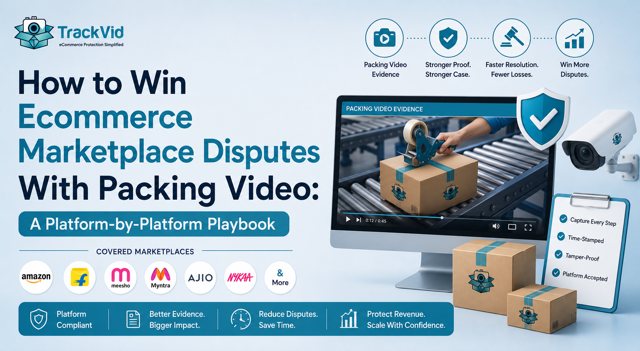
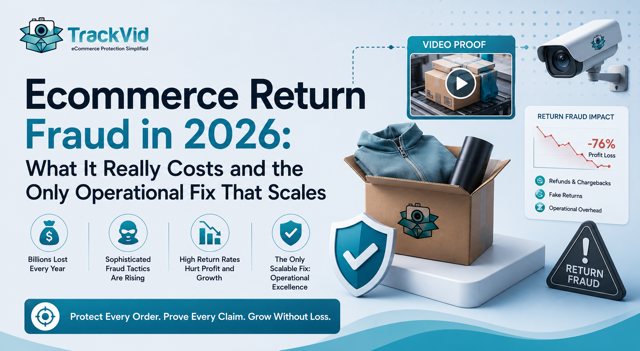
Manual packing generates no order-linked proof of what you shipped. When a buyer files a fake return, an empty-box claim, or a false damage dispute, you have nothing structured to submit, and raw CCTV is rejected by marketplace portals because it is not order-linked. So the claim is lost, and that loss is a cost of manual packing that never appears in the wage comparison.
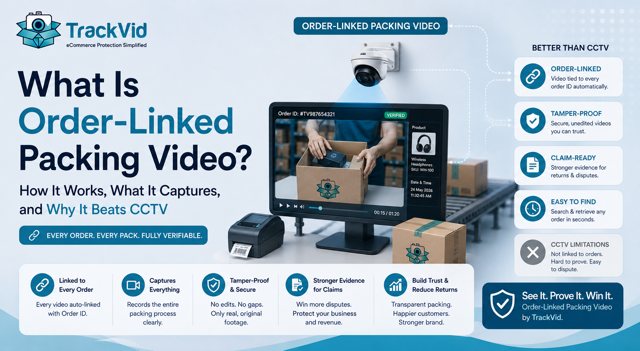
An integrated packing machine films the pack at dispatch and links the video to the Order ID automatically. That dispatch proof wins the wrong-item, empty-box, not-received, and false-damage claims that make up most return losses. It is a cost the machine removes that manual packing cannot, and for sellers with meaningful dispute losses, it often matters more than the labour savings.
This is why the honest comparison is not wages versus machine cost. It is the full cost of manual, including unrecoverable claims, versus the full cost of automation, including the claims it lets you win back.
Related: How order-linked packing video wins the disputes manual packing loses
How TrackVid Fits the Comparison
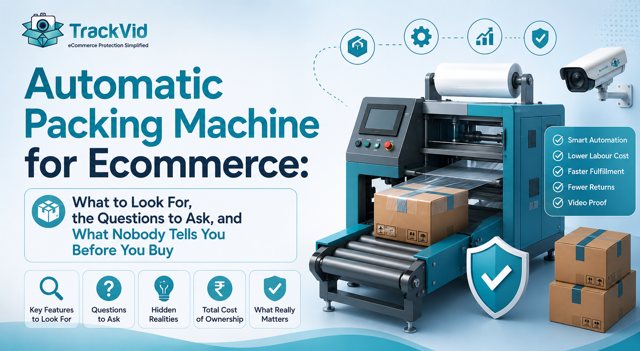
TrackVid's automatic packing machine is built to win exactly the dimensions where manual packing loses at scale: cost per order, consistency, and proof.
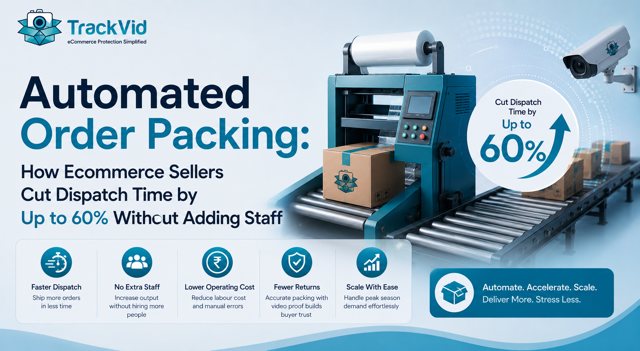
One operator runs the full scan, print, apply, seal, and convey line, so your cost per order stops climbing with volume. Labelling and sealing are deterministic, so the error rework disappears. And on the integrated version, built-in cameras film the pack at dispatch and link the video to the Order ID, AWB, and SKU, so you have order-linked proof on every order, the one thing manual packing can never deliver.
That proof is not a side feature. TrackVid's platform is already used by 1,100+ Indian ecommerce sellers, who report claim win rates of 90 percent or above on disputes where packing video is submitted, against an industry average under 25 percent without structured proof, according to TrackVid data. Building that into the packing line is what turns the comparison decisively against manual packing once your volume and dispute losses are high enough.
The machine comes in two versions: the Integrated Machine, with cameras and the full platform, and the Auto Packing Machine, the same automation, TrackVid-ready, for adding proof later. It is pre-launch in India, with early access open to a limited first production batch.
Related: Join the early access waitlist for the TrackVid packing machine
How to Decide for Your Operation
Run the comparison the way Ravi did, with your real numbers.
If you are under 150 orders a day with an irregular catalogue, manual packing is likely still cheaper and more flexible. Stay there and improve your process.
If you are above 300 orders a day with a packing team of four or more, model the full cost of both sides. Include wages, rework from your actual error rate, and the claim losses you cannot contest today. If the full cost of manual is higher than the full cost of automation over a reasonable period, the machine is cheaper, and the proof advantage widens the gap further.
Between 150 and 300, it depends on your error rate and dispute losses. Measure them before deciding, because those two numbers often tip the comparison.
Related: When should you actually buy a packing machine? Five signals
Join the early access waitlist for the TrackVid automatic packing machine
Takes 30 seconds. No spam. We only contact you about early access and demos.
Related: A full buyer's guide to choosing an automatic packing machine
Frequently Asked Questions
Is a packing machine cheaper than hiring packers? At high volume, usually yes. Manual packing scales linearly, adding one packer for every 80 to 100 additional orders per day, so the cost keeps climbing. A packing machine has a largely fixed running cost regardless of whether it packs 200 or 600 orders a day, so the cost per order falls as volume rises. Below roughly 150 orders a day, manual is typically cheaper. Above 300 with a team of four or more, the machine usually wins once you include error rework and claim losses.
Packing machine vs manual packing: which is better for ecommerce? It depends on your volume, catalogue, and dispute losses. Manual is better at low volume and for irregular products, because it is flexible and has minimal upfront cost. A packing machine is better at high volume, where it delivers lower cost per order, consistent throughput, fewer errors, and, on integrated machines, order-linked dispatch proof that manual packing cannot provide. Model the full cost of both, not just wages.
Packing machine ya manual packing kaunsa better hai? Yeh aapke volume, products, aur claim losses pe depend karta hai. Manual packing kam volume aur irregular products ke liye better hai, kyunki woh flexible hai aur upfront cost kam hai. Packing machine zyada volume pe better hai, jahan cost per order kam hoti hai, throughput consistent rehti hai, errors kam hote hain, aur integrated machine pe har order ki order-linked dispatch proof milti hai jo manual packing nahi de sakti. Sirf salary mat compare karo, dono ka pura cost model karo.
How do I compare the cost of manual and automated packing? Build both columns fully. For manual, add packer wages, the rework labour from your error rate, and the claim losses you cannot contest without dispatch proof. For automated, add the running cost of one operator, the reduced error cost, and the claim revenue you recover with order-linked video. Compare the totals over a defined period, not just the wage line against the machine, because the hidden costs of manual often change the answer.
Does automated packing actually reduce errors compared to manual? Yes, in the specific stages it controls. Label printing, label application, and sealing become deterministic on a machine, so the wrong-label and weak-seal errors that rise with fatigue and temporary staff in manual packing are removed. It does not eliminate picking errors, which are a separate step, but the label-and-seal errors that drive a large share of returns at high volume are largely eliminated.
When does a packing machine become worth it versus staying manual? Generally above 300 orders per day with a packing team of four or more, the labour savings alone justify it. But the crossover comes earlier if your error rate is high or you are losing significant money to claims you cannot contest, because a machine reduces both and manual packing addresses neither. Below 150 orders a day, manual almost always remains the more sensible choice.
What does manual packing cost that does not show up in wages? Two things. Rework, because every packing error is paid for twice, once to pack it wrong and once to handle the return and repack it. And claim losses, because manual packing produces no order-linked proof, so fake returns and false damage claims go uncontested or get rejected. Both are real costs of manual packing that never appear on the payroll but belong in any honest comparison.
Sources: IBEF India ecommerce fashion return rate data; NRF return-fraud research; TrackVid seller data on claim win rates; general warehouse operations benchmarks on packing labour and throughput.
TrackVid is a video proof and claim management platform used by 1,100+ Indian ecommerce sellers on Amazon, Flipkart, AJIO, Myntra and Meesho. Officially authorised by Snapdeal. Learn more at trackvid.in.


Get the Marketplace Claim Recovery Checklist
A 12-point checklist used by 1,100+ sellers to recover 85-90% of marketplace claim losses. Free, instant access.
- Marketplace-specific evidence formats (AJIO, Flipkart, Amazon, Myntra)
- Claim window deadlines for every major platform
- The 6-step process that pushes approval from 85-90%
- Common rejection reasons and how to avoid them
No spam. Unsubscribe anytime. Used by sellers at Rare Rabbit, HRX, Da Milano + 1,100 more.
Stop Losing Money to Fake Returns
Join 1,100+ sellers who recover lakhs every month with TrackVid