
For sellers on Amazon, Flipkart, AJIO, Myntra, Meesho, Shopify and global marketplaces. Updated June 2026.
If your packing team is the thing standing between you and your next level of growth, you already understand the problem. Ecommerce packing automation is the category of equipment and systems that removes manual labour from the seal, label, and convey steps of order fulfilment. According to PMMI 2026 data, the global ecommerce packing machine market is growing at a 7.4 percent CAGR through 2033, driven almost entirely by one thing: sellers running out of people to pack at the speed their order volume demands.
This is not a technology guide. It is a practical answer to the question every high-volume seller eventually asks: when does automation pay off, and what exactly does it do?
What Ecommerce Packing Automation Actually Does
Let's start with what it is, because the term gets used loosely.
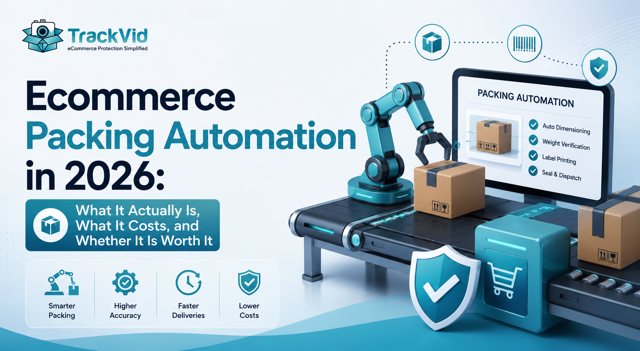
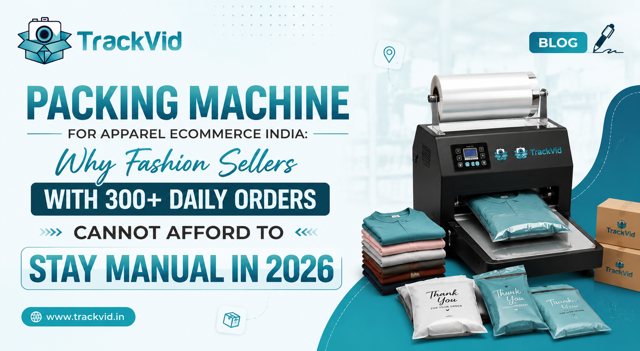
Ecommerce packing automation covers any system that removes a manual step from the order packing process. That can mean a machine that prints and applies shipping labels automatically, a system that seals courier bags without a packer touching a tape gun, or a fully integrated line that reads an order barcode and completes the entire pack without a second human touch.
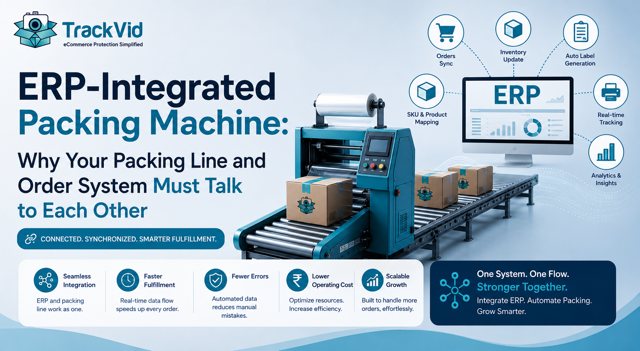
The version that matters most for sellers processing hundreds of orders per day is the all-in-one automated packing machine. When an order barcode is scanned, the machine pulls the order details from your ERP, prints the correct shipping label, applies it to the courier bag, seals the bag, and sends the parcel down the line. One packer feeds the line. The machine does the rest.
That shift, from five manual steps to one human action, is what changes your economics.
A manual packing station processes roughly 60 to 80 orders per packer per hour, depending on category and bag type. An automated line running soft goods like apparel processes significantly more, consistently, without fatigue affecting the afternoon shift.
The other thing automation does that manual packing cannot: it eliminates the error categories that cost you money. Wrong label applied to the wrong order. Seal not closed properly, triggering a tamper claim on delivery. Label printed correctly but never applied because the packer was rushing. Each of these is a manual step that automation removes entirely.
Why Manual Packing Breaks at Scale
Most sellers start with manual packing because it is flexible and cheap. A small team, some courier bags, a label printer on the desk, and a tape gun. It works at 50 orders a day.
At 200 orders a day, the cracks appear. You are hiring a second and third packer. Shift overlap creates label printing conflicts. One rushed packer applies the wrong AWB to an order and you spend three days tracking the complaint. During the Big Billion Day or a festive sale, you bring in temporary staff who make more errors than experienced packers, and your SLA compliance drops at exactly the moment it matters most.
At 400 to 600 orders a day, manual packing becomes your growth ceiling. You cannot hire fast enough during spikes. Trained packers leave and you lose institutional knowledge. Your dispatch cut-off time creeps earlier every week because packing takes longer. And across all of this, the cost per packed order keeps climbing as wages rise.
According to IBEF data, India's fashion ecommerce return rate runs at 25 to 35 percent. A significant portion of those returns are triggered by packing errors: wrong item, wrong size, label on the wrong parcel. Every one of those returns costs you the product, the reverse logistics, and the re-fulfilment. Automation removes the human error from each of those steps.
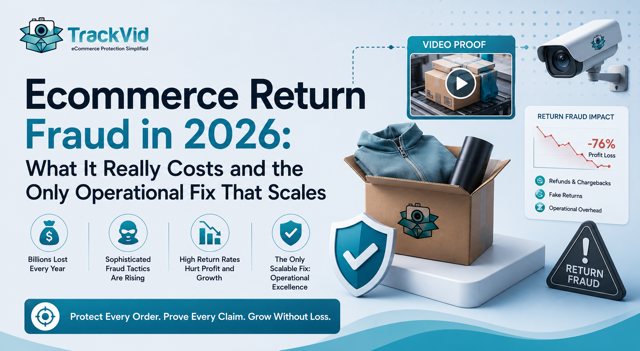
The third thing that breaks at scale: proof. When a buyer files a fake return or a damage claim, your ability to contest it depends on showing exactly what was packed and dispatched for that specific order. Manual packing generates no structured proof. Raw CCTV records continuously but is not linked to any Order ID, not searchable, and rejected by marketplace claim portals as insufficient evidence.
This is where the conventional analysis of packing automation undersells what it actually delivers.
The Surat Seller Who Found the Real Cost
Priya runs an ethnic wear label out of Surat, shipping around 380 orders per day across AJIO, Flipkart, and her own D2C store.
For two years, her packing team of seven processed orders manually. Each packer had a label printer, a stack of courier bags, and a sealing machine. The system worked, mostly, until sale season.
During the Myntra EORS in June 2025, her team processed 650 orders in a single day with temporary staff brought in for the week. In the three weeks that followed, she received 47 dispute claims she could not contest. Wrong items sent due to label mix-ups. Packages with weak seals arriving damaged. Three claims of empty boxes she was almost certain were fake but could not prove.
Her total unrecovered loss from those three weeks was approximately Rs 1.1 lakh. Not in goods alone. In the time her operations manager spent trying to reconstruct what happened from photos, WhatsApp messages, and partial CCTV footage that the platform would not accept as evidence.
"We knew exactly what had happened on most of those orders. But knowing and proving are completely different things. We could not show what was in the bag at the moment of sealing. That was the gap."
Priya's situation is standard for sellers at her scale. The loss is not the result of fraud or negligence. It is the result of a manual system that generates no structured, order-level evidence of what was packed.
How Automated Packing Machines Work: The Full Line
For sellers considering automated packing, here is the exact sequence of what happens on an automated packing line:
Step 1: Scan
The packer or the conveyor presents the order. The machine reads the barcode, whether that is the order barcode on the product, the invoice, or a pick list. The order details pull from your ERP or order management system in real time. No manual data entry.
Step 2: Print
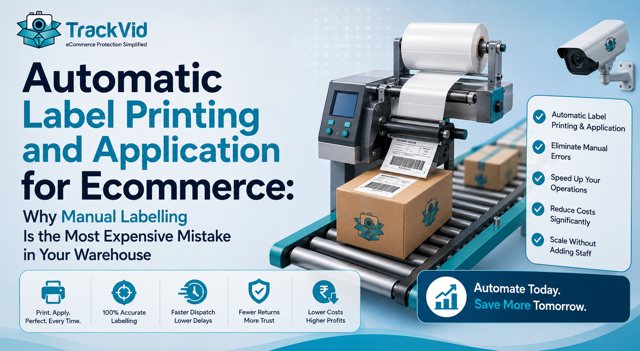
The machine prints the correct shipping label for that specific order: the right AWB, the right address, the right courier. Because it pulls from your ERP, the label is always matched to the correct order. The human error of picking the wrong pre-printed label is removed entirely.
Step 3: Apply
The label is applied to the courier bag automatically, in the correct position. No peeling, no misalignment, no label placed on the wrong parcel because a packer grabbed the wrong one from a stack.
Step 4: Seal
The courier bag is sealed cleanly and consistently. Consistent seal quality means no tamper-evident failures during transit, which is one of the more common triggers for fraudulent damage claims.
Step 5: Convey
The finished parcel moves off the line, ready for carrier pickup. Your team manages volume, not repetition.
Step 6 (on the integrated version): Film and link
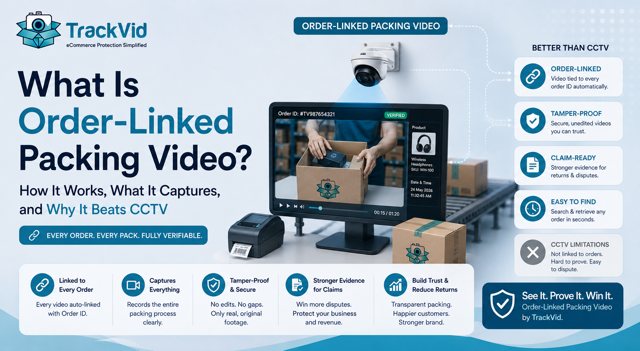
This is the step that a standard packing machine does not have. On the TrackVid integrated machine, built-in cameras film the entire packing sequence and link that video to the Order ID, AWB, and SKU at the moment of recording. The video is stored in searchable cloud and retrievable by Order ID in under two minutes.
One operator. One pass. Packed, labelled, sealed, and evidenced.
What Packing Automation Costs You and What It Saves
Let's be specific, because most coverage of this topic stays vague.
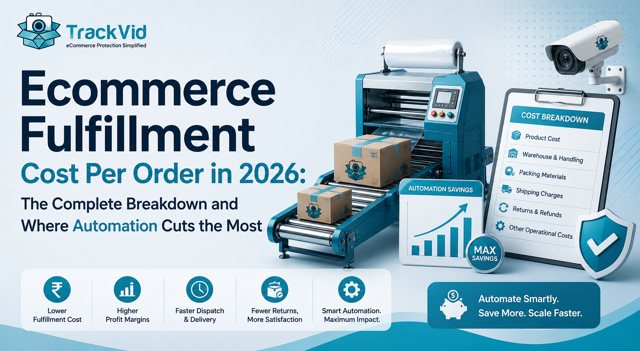
The costs of running a manual packing operation at 400 orders per day in India typically include: four to six trained packers at Rs 15,000 to Rs 22,000 per month each; a supervisor; label printers and consumables; courier bags and sealing tape; and the hidden cost of errors, returns and unrecovered claims.
Across a month at that volume, you are looking at a wage line of Rs 80,000 to Rs 1.2 lakh, before errors. At a 3 percent packing error rate on 12,000 monthly orders, you have 360 error events per month. Even if only a third of those become claims and you recover half of those claims, the unrecovered loss is material.
Automated packing removes or reduces each of these lines:
- Wage line drops because one operator runs the line.
- Error rate drops because label printing, application, and sealing are deterministic, not human.
- Claim losses drop because you now have structured dispatch proof for every order, and marketplaces accept order-linked video where they reject raw CCTV.
The break-even point varies by your current wage costs, error rate, and the volume of claims you are currently writing off. Sellers processing 300 or more orders per day with current packing teams of four or more people typically see a clear financial case. Those at lower volumes may not.
This is worth calculating before making any decision. The five-question diagnostic below helps you run that check.
The TrackVid Integrated Machine
The sellers building resilient fulfilment operations at scale are doing two things at once: reducing the labour cost of packing, and building proof into the line from day one.
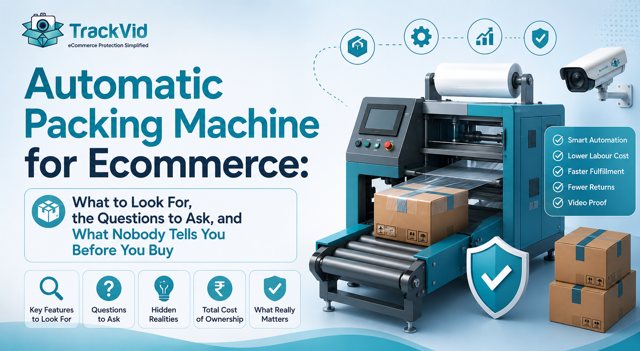
TrackVid's automatic packing machine is the only machine in the India market that does both on a single line. It handles the full scan-print-apply-seal-convey sequence with one operator, and on the integrated version, the built-in cameras record the pack at dispatch and link that video to the Order ID for the TrackVid video and claim platform.
Most packing machines only save you labour. This one also builds your claim evidence as it works. When a wrong-item dispute, an empty-box claim, or a false damage allegation arrives, the answer is a search, not a scramble. The packing video is indexed, retrievable in under two minutes, and in the format marketplaces accept, not raw CCTV footage that gets rejected before a human reviews it.
TrackVid's packing video and claim platform is already used by 1,000+ Indian ecommerce sellers to win disputes. Sellers using the platform report claim win rates of 90 percent or above on disputes where packing video is submitted, according to TrackVid data. The integrated machine puts that evidence infrastructure directly into the packing line, removing the separate camera setup entirely.
The machine is available in two versions:
TrackVid Integrated Machine: Full packing automation, built-in cameras, and the TrackVid video and claim platform included. Pack and prove on one line.
Auto Packing Machine: The same packing automation without cameras, TrackVid-ready, so you can add order-linked video proof when you are ready.
The machine is pre-launch in India. Early access is currently open to a limited first production batch.
Related: Join the early access waitlist for priority allocation from the first batch
Related: How claim management works when you have order-linked video
Related: How packing automation and video proof work together to win every return claim
Five Questions to Know If Automation Is Right for Your Operation
1. How many orders per day does your team pack manually right now? Under 150 per day: automation may not be the right investment yet. Above 300 per day: the financial case is almost always positive when you factor in wages and error losses.
2. What is your current packing error rate as a number, not a feeling? If you cannot answer this question precisely, you are absorbing losses you have not measured. Most sellers who calculate this for the first time find the real number is higher than they assumed.
3. How many return or damage claims did you fail to contest last month because you had no dispatch proof? If the answer is more than five, you are funding disputes you could have won. Order-linked dispatch video closes that gap.
4. During your last sale season spike, did your packing team hold SLA compliance? If your answer is no or partially, you are experiencing the capacity ceiling that automation is built to remove.
5. If your order volume doubled tomorrow, would your current packing setup scale without a proportional wage increase? A manual packing team scales at roughly one new packer per 80 to 100 additional daily orders. An automated line scales by increasing feed speed, not headcount.
If your answers reveal gaps in two or more of these areas, ecommerce packing automation is worth a serious evaluation.
Join the early access waitlist for the TrackVid automatic packing machine
Takes 30 seconds. No spam. We only contact you about early access and demos.
Related: What a video management system does for ecommerce claims
Frequently Asked Questions
What is ecommerce packing automation? Ecommerce packing automation refers to machines and systems that remove manual labour from the order packing process. A fully automated packing line reads the order barcode, prints and applies the correct shipping label, seals the courier bag, and conveys the finished parcel, without a separate human action for each step. The goal is higher throughput, fewer errors, and lower per-order packing cost.
Is packing automation worth it for small ecommerce sellers? It depends on your order volume. Below 150 orders per day, the investment is unlikely to pay back quickly enough to justify it. Above 300 orders per day, the combination of wage savings, reduced packing errors, and lower claim losses typically makes a clear financial case. Calculate your actual cost per packed order including wages, errors, and unrecovered claims before comparing it to the cost of automation.
How does packing automation work in an ecommerce warehouse? An automated packing machine reads the order barcode, pulls order data from your ERP system, prints the correct shipping label, applies it automatically, seals the courier bag, and sends the parcel down the line. The entire sequence happens in one pass with one operator feeding the line. On integrated machines, cameras also film the pack and link the video to the Order ID for dispute evidence.
Automatic packing machine kya hota hai? Automatic packing machine ek aisi machine hai jo ecommerce orders ko automatically pack karti hai. Jab order ka barcode scan hota hai, machine apne aap sahi label print karti hai, use courier bag pe laga deti hai, bag seal karti hai, aur parcel conveyor pe bhej deti hai. Ek packer line feed karta hai aur machine sab kuch karti hai. Isse packing staff ki zarurat kam ho jaati hai aur packing errors bhi ghatt jaate hain.
Packing automation kitne orders pe chahiye (when should I consider it)? Generally, sellers processing 200 or more orders per day start seeing the financial case clearly. By 300 to 400 orders per day, the wage savings alone from reducing a five-person packing team to one or two operators typically covers the investment within a defined period. But volume is not the only factor. If your current packing team is generating significant errors or you are writing off uncontested claims because you have no dispatch proof, the case can exist at lower volumes too.
Packing machine vs manual packing: which is actually better for ecommerce? Manual packing is more flexible and lower upfront cost. It works well at low volumes and handles irregular products easily. Automated packing is better at scale. It delivers consistent throughput, lower error rates, and, on integrated machines, structured dispatch evidence on every order. The correct answer depends on your volume, your error rate, and how much revenue you are currently losing to uncontested claims.
What is the best automatic packing machine for ecommerce sellers in India? The TrackVid automatic packing machine is the only machine in the India market that combines full packing automation, built-in cameras, and order-linked video proof on one line. It handles courier and poly bags up to 45 cm wide, connects to your ERP, and is built for apparel and soft goods, which are the highest-return-rate categories in Indian ecommerce. It is currently in early access for the Indian market. You can join the waitlist at trackvid.in/automatic-packing-machine.html.
Sources: PMMI Packaging Machinery Manufacturers Institute 2026 data; IBEF India ecommerce fashion return rate data; ANAROCK-ET Retail India ecommerce market size projections; TrackVid seller data on claim win rates; India Reverse Logistics Market Report 2027 projections.
TrackVid is a video proof and claim management platform used by 1,000+ Indian ecommerce sellers on Amazon, Flipkart, AJIO, Myntra and Meesho. Officially authorised by Snapdeal. Learn more at trackvid.in.

Get the Marketplace Claim Recovery Checklist
A 12-point checklist used by 1,100+ sellers to recover 85-90% of marketplace claim losses. Free, instant access.
- Marketplace-specific evidence formats (AJIO, Flipkart, Amazon, Myntra)
- Claim window deadlines for every major platform
- The 6-step process that pushes approval from 85-90%
- Common rejection reasons and how to avoid them
No spam. Unsubscribe anytime. Used by sellers at Rare Rabbit, HRX, Da Milano + 1,100 more.
Stop Losing Money to Fake Returns
Join 1,100+ sellers who recover lakhs every month with TrackVid