
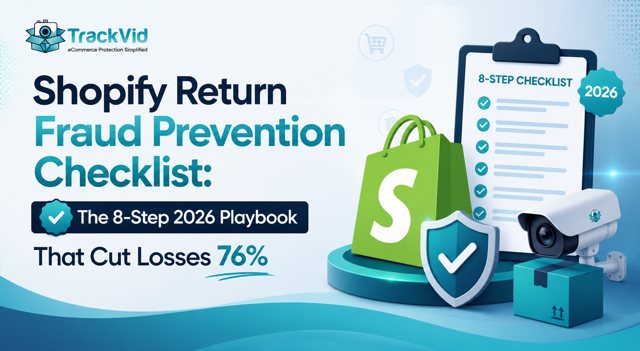
For Shopify Payments merchants. Updated June 2026.
A working Shopify return fraud prevention checklist is the difference between absorbing return fraud as an unavoidable cost and actively catching 60-80 percent of it before the refund goes through. Per NRF 2026, return fraud cost US retailers approximately $103 billion in 2024. Per Signifyd 2026, wardrobing alone accounts for 60 percent of return-related friendly fraud. Per Beast Insights 2026, real cost per lost return dispute runs $195.20 all-in.
The 8-step playbook in this blog cuts monthly return fraud losses by 70-85 percent within 60 days. It works across all nine documented patterns, integrates with Shopify Payments dispute defense, and requires no engineering. What it requires is policy structure, inspection infrastructure, and dispatch evidence documentation running together consistently.
Manual return processing at most Shopify stores catches under 5 percent of return fraud. The customer files, ships back, warehouse processes without inspection because they cannot prove the return is fraudulent. This blog fixes that.
Every legitimate return deserves speed. Every fraudulent return deserves inspection.
Seattle Home and Outdoor Merchant Lauren: $9,800 Monthly Loss to $2,300 in 60 Days
Lauren runs a Shopify D2C home and outdoor gear brand from Seattle. Camping gear, home organization, lifestyle accessories. Daily volume approximately 190 orders. Average order value $118. Monthly GMV roughly $670,000.
Her return rate had climbed to 28 percent by early 2026. Monthly return fraud loss was approximately $9,800 across five patterns her team identified only after month-end audits. Wardrobing on camping gear ($2,400/month), empty box returns on electronics ($1,800), substitute-item returns ($1,200), serial returner abuse from four customer emails ($2,100), and bracket-buying abuse on home organization products ($2,300).
The five patterns were not being caught at return receipt. Warehouse team lacked infrastructure: visual inspection only, no weight comparison, no dispatch photograph reference, no serial returner flagging. Refunds processed in 24-48 hours per stated policy.
She deployed the 8-step checklist over 30 days:
- Policy tightening (14-day window, condition clauses, $18 restocking fee)
- Return inspection protocol at controlled station
- TrackVid Order ID-linked packing video on dispatch
- Weight verification against dispatch record on return receipt
- Serial returner flagging in Shopify customer records
- Refund hold protocol on flagged patterns
- Return rejection with photographic evidence
- Chargeback response protocol for retaliation disputes
Results in 60 days:
- Monthly return fraud loss: $9,800 → $2,300
- Overall return rate: 28% → 17% (fraudulent returns dropped out)
- Wardrobing return catches: 3% → 31% (caught at inspection)
- Empty box detection: 0% → 89% (weight verification)
- Serial returner accounts identified and flagged: 12
- Chargeback ratio: 0.58% → 0.16%
Lauren's month-four analysis showed something significant. Return fraud attempts themselves dropped 40 percent as flagged serial returners stopped ordering from her store and word appeared to spread through return-abuse communities that her returns were being inspected.
Ready to see this in your Shopify operation? Book a 30-minute demo and we will pull up the exact return fraud detection workflow for a recent return.
The 9 Return Fraud Patterns on Shopify (Complete Taxonomy)
Understanding the patterns is the foundation of the Shopify return fraud prevention checklist. Nine distinct patterns account for approximately 95 percent of return fraud on Shopify Payments stores.
Pattern 1: Wardrobing. Buy, use once (event, season), return as new with tags removed or reattached. 60 percent of return fraud per Signifyd 2026. Apparel and formalwear most affected.
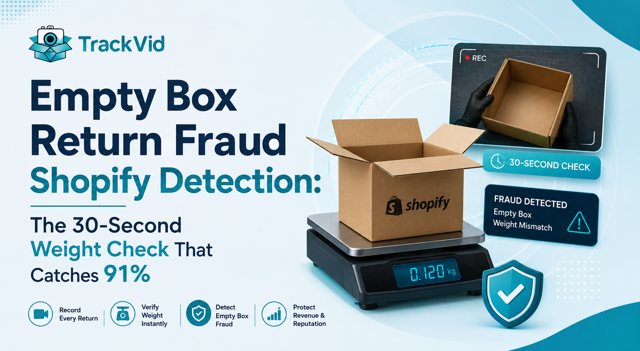
Pattern 2: Empty box returns. Customer files return, ships empty packaging back. Weight comparison catches this in under 30 seconds. Common on electronics.
Pattern 3: Substitute item returns. Customer ships back a cheaper substitute while keeping the original. Weight plus visual inspection catches most. Common on consumer electronics and premium beauty.
Pattern 4: Bracket buying abuse. Customer orders multiple sizes with intent to return most. Apparel primary category.
Pattern 5: Serial returner abuse. Same customer, email, address with 40-60 percent return rate on 5+ monthly orders. Uses merchant as free trial service.
Pattern 6: Family-fraud returns. Household member placed the order. Cardholder returns it while disputing the original charge as unauthorized.
Pattern 7: Bricking. Customer damages the item and returns it claiming manufacturer defect. Consumer electronics and small appliances most affected.
Pattern 8: Loyalty and refund fraud. Customer files chargeback while retaining item, or files return after successful chargeback (double-dip).
Pattern 9: Return-shipping fraud. Fake return tracking or empty-weight package. Return appears in transit but nothing arrives.
All nine collapse against the same defensive infrastructure: policy structure, inspection protocol, and dispatch evidence documentation. That is what the checklist provides.
The 8-Step Shopify Return Fraud Prevention Checklist
Follow the checklist in order. Each step compounds on the previous. Implementing steps 1-4 catches roughly 40 percent of fraud. Adding steps 5-8 catches 70-85 percent.
Step 1: Tighten the Return Policy Structure
The policy is the first line of defense. Four clauses stop 30-40 percent of casual return fraud at policy level.
Required elements:
- 14-day return window from delivery (not 30). Shorter windows drop event-wardrobing exposure 60-70 percent
- Original condition clause with specific examples ("no signs of wear, damage, alteration, deodorant marks, makeup residue, fragrance")
- Original tags intact requirement
- Buyer covers return shipping via insured tracking with signature confirmation
- $15-$25 restocking fee on eligible returns
- Personalised, custom, sale, and final-sale items non-returnable
- Condition verification against dispatch documentation clause
Step 2: Build the Return Inspection Station
Every return opened at a controlled physical station on camera. Same station, lighting, camera angle every time. Requires consistent process, not expensive equipment.
Elements:
- Fixed camera with recording
- Bright consistent lighting (LED daylight temperature)
- Calibrated scale
- Neutral background inspection surface
- Barcode scanner tied to Shopify admin
- Reference monitor for dispatch photograph comparison
Step 3: Verify Weight Against Dispatch Record
Every return weighed on calibrated scale, compared to dispatch record. Catches empty box and substitute item returns in under 30 seconds.
Weight variance above 5 percent triggers escalation. Empty box returns show 15-25 percent of dispatch weight. Substitute item returns show 20-40 percent variance. Legitimate returns show under 5 percent.
Step 4: Deploy Order ID-Linked Dispatch Documentation
Order ID-linked packing video showing item condition, weight, and shipping label at dispatch, retrievable in under two minutes. This is the reference evidence that makes inspection decisions defensible against chargeback retaliation.
Standard warehouse CCTV is not sufficient because it cannot be tied to specific Order IDs. Only Order ID-linked video meets the evidence standard for both return inspection reference and Shopify Payments dispute defense.
Step 5: Flag Serial Returners in Shopify Customer Records
Every customer with 30+ percent return-to-order ratio on 5+ orders gets flagged in their Shopify customer note. Flagged customers on future orders trigger enhanced inspection and optionally require prepaid returns.
Flagging combined with communicated policy ("customers with high return rates may be subject to enhanced verification") drops repeat serial returner activity 40-60 percent as these customers switch stores.
Step 6: Refund Hold Protocol on Flagged Patterns
Refunds do not process automatically on flagged returns (serial returner, weight variance, condition failure, missing tags). Held returns require manual review with dispatch photograph, weight record, and inspection video before decision.
Standard hold 24-48 hours, communicated to buyer as "processing your return, we will complete within 2 business days." Legitimate holds resolve quickly; fraudulent holds resolve with rejection or reduced refund.
Step 7: Reject Returns With Photographic Evidence
Failed inspection triggers rejection protocol. Return-to-buyer with tracking. Rejection notice with specific reason and photographic documentation of the condition issue. Rejected returns should be logged in the customer's Shopify record for future reference.
The photographic rejection evidence is critical because rejected buyers frequently retaliate with "item not as described" chargebacks. The dispatch photograph plus rejection documentation defeats these disputes at 70-85 percent.
Step 8: Response Protocol for Retaliation Chargebacks
When a rejected buyer files a chargeback, response kicks in immediately. Dispute automation (Chargeflow, Justt) formats response with CE 3.0-compliant evidence: dispatch video, weight record, inspection video, rejection documentation, return-to-buyer tracking.
Chargebacks from rejected fraudulent returns win at 70-85 percent with complete evidence versus under 20 percent for merchants relying on written explanations.
What Signals to Flag at Return Receipt
Beyond the checklist, specific signals warrant enhanced inspection or refund hold.
Condition signals:
- Skin oils on collars, cuffs, hairlines
- Makeup residue on necklines
- Deodorant marks under arms
- Sweat stains and body oils
- Sole scuffs on footwear
- Fragrance (perfume, smoke, cooking)
- Altered stitching where tags were reattached
Packaging signals:
- Missing original tags or reattached with different thread
- Missing original packaging (polybag, tissue, brand seals)
- Different packaging tape or seal than dispatched
- Damaged or missing manual, warranty card
Weight and physical signals:
- Weight below 90 percent of dispatch (empty box or missing components)
- Weight above 110 percent of dispatch (substitute item added)
- Damage inconsistent with transit patterns
- Item does not match dispatch photograph
Related: Complete wardrobing return fraud Shopify defense guide
How TrackVid Supports the Shopify Return Fraud Prevention Checklist
TrackVid (trackvid.in) provides Order ID-linked packing video that anchors Step 4 of the checklist. Every packing session records the item, shipping label, calibrated scale weight, and tamper-evident seal. Tagged automatically to Order ID at packing. Retrievable in under two minutes.
For return fraud prevention:
- Reference at inspection: Retrieve dispatch video and weight record by Order ID in 90 seconds
- Return dispute defense: Dispatch video plus rejection documentation wins "item not as described" chargebacks at 70-85 percent
- Return video linking: Return inspection video linked to same Order ID creates before-and-after evidence chain
- Weight archive: Every dispatched order has calibrated scale weight for Step 3 verification
- Multi-platform: Same infrastructure supports Shopify Payments, Stripe, PayPal, and Amazon A-to-Z
Merchants running TrackVid as Step 4 with the full 8-step checklist report monthly return fraud losses dropping 70-85 percent within 60 days. Return fraud attempts drop 30-40 percent within 90 days as serial returners switch stores.
TrackVid works with existing cameras. Setup under 15 minutes. Used by 1,000+ ecommerce merchants globally.
Five Questions to Audit Your Shopify Return Fraud Exposure Today
1. What percentage of returns are opened on camera at a controlled station with weight verification against dispatch record? Below 100 percent leaves most return fraud undetected.
2. Can you identify your top 10 serial returner emails and their return-to-order ratios? Serial returners show 40-60 percent return rates versus 5-10 percent for legitimate customers.
3. For your last 10 return rejections, do you have photographic evidence that would defend against an "item not as described" chargeback? Rejected returns without evidence become chargebacks you lose.
4. Does your return policy specify "tags intact," "no signs of wear," and specific examples of unacceptable condition? Vague "gently used" language is not legally enforceable.
5. Can you retrieve Order ID-linked dispatch documentation for any Order ID from the last 60 days in under five minutes? Manual CCTV searching does not meet inspection or dispute deadlines.
TrackVid works with your existing warehouse cameras. Setup takes under 15 minutes.
Book a 30-minute demo at trackvid.in/book-demo.html
In one session, you will see exactly which of your recent return fraud losses would have been caught with the correct checklist deployed, and what a 76 percent loss reduction looks like in your Shopify operation.
Frequently Asked Questions
What are the types of return fraud on Shopify?
Nine patterns account for approximately 95 percent of return fraud. Pattern 1: wardrobing (60 percent per Signifyd 2026). Pattern 2: empty box returns. Pattern 3: substitute item returns. Pattern 4: bracket buying abuse. Pattern 5: serial returner abuse. Pattern 6: family-fraud returns. Pattern 7: bricking (damage claiming defect). Pattern 8: loyalty and refund fraud (chargeback while keeping item). Pattern 9: return-shipping fraud (fake tracking). All nine collapse against policy structure, inspection protocol, and dispatch evidence.
How do I create a return fraud prevention plan?
An 8-step checklist. Step 1: tighten policy (14-day window, condition clauses, $15-$25 restocking fee). Step 2: build return inspection station (fixed camera, consistent lighting, calibrated scale). Step 3: verify weight against dispatch record on every return. Step 4: deploy Order ID-linked dispatch documentation retrievable in 90 seconds. Step 5: flag serial returners in Shopify customer records. Step 6: implement refund hold protocol on flagged returns. Step 7: reject failed inspections with photographic evidence. Step 8: response protocol for retaliation chargebacks. Merchants running all 8 steps report monthly return fraud losses dropping 70-85 percent within 60 days.
What is the return fraud rate in 2026?
Per NRF 2026, return fraud cost US retailers approximately $103 billion in 2024, roughly 13.7 percent of all returns. Per Signifyd 2026, 60 percent of return-related friendly fraud is wardrobing. Per Beast Insights 2026, real cost per lost return dispute is $195.20 all-in. Apparel has the highest return rate at 24.4 percent versus 8-12 percent for other categories. Merchants running standard "30-day free returns" without inspection absorb 8-15 percent of revenue in return-fraud losses.
How do I identify a serial returner on Shopify?
Serial returners show 40-60 percent return-to-order ratios on 5+ orders versus 5-10 percent for legitimate customers. Access customer-level return analytics through Shopify admin or return apps like Loop or AfterShip Returns. Signals: same email placing multiple orders per month, consistent "not as described" or "size wrong" reasons, returning higher-value items while keeping lower-value ones, repeat use of specific return codes. Flag in Shopify customer note; trigger enhanced inspection on future orders.
What are the signs of return fraud at receipt?
Signs of return fraud at receipt fall into three categories. Condition signals: skin oils on collars, makeup residue on necklines, deodorant marks under arms, sweat stains, sole scuffs on footwear, fragrance (perfume, smoke, cooking odours), altered stitching where tags were reattached. Packaging signals: missing original tags, tags reattached with different thread, missing original packaging (polybag, tissue, brand seals), different packaging tape than dispatched, damaged or missing product manual and care instructions. Weight and physical signals: weight below 90 percent of dispatch (empty box), weight above 110 percent (substitute item added), damage inconsistent with transit patterns, item does not match dispatch photograph on specific features.
How do I stop empty box returns?
Stopping empty box returns on Shopify requires two specific tools. First: calibrated scale weight verification at return receipt, comparing to dispatch weight record. Empty box returns show as 15-25 percent of dispatch weight (packaging only), which triggers immediate rejection. Second: Order ID-linked packing video showing the specific item packed at dispatch, retrievable at inspection for reference. Combined with weight verification, empty box detection rate moves from near 0 percent (uninspected) to 89 percent (with the protocol deployed). Rejected empty box returns should trigger customer flagging in Shopify records and photographic documentation of the empty packaging for chargeback defense if the buyer retaliates.
Can I ban customers who commit return fraud?
Yes, Shopify merchants can decline future orders through customer blocking in Shopify admin. Best practice: flag serial returners in Shopify customer notes before banning, giving 1-2 warnings. If pattern continues, block future orders. Document block criteria (return-to-order ratio, specific fraud events, dispatch photograph mismatches) to defend against complaints. Tools like Signifyd Order Insights or NoFraud automatically flag high-risk customers at checkout based on historical patterns.
How much does return fraud cost Shopify merchants?
Return fraud costs Shopify merchants 8-15 percent of monthly revenue on average. Per NRF 2026, US retailers lost approximately $103 billion in 2024. A Shopify store doing $500K monthly GMV with a 30 percent return rate and 40 percent fraudulent returns absorbs $50K-$75K in monthly hidden losses across refunded fraud, refurbishment, restocking labour, and retaliation chargebacks. The 8-step checklist cuts these losses 70-85 percent within 60 days.
Sources: NRF Retail Returns Landscape Report 2026, Signifyd State of Fraud and Returns Report 2025, Chargebacks911 Return Fraud Analysis 2026, Corso Post-Purchase Resource Center Returns Fraud Guide 2026, Ringly Shopify Return Fraud Playbook 2026, Beast Insights Shopify Chargeback Cost Analysis 2026, Shopify Payments Documentation, TrackVid internal merchant data
TrackVid is a video proof and claim management platform used by 1,000+ ecommerce merchants globally on Shopify, Amazon, Etsy, eBay and major marketplaces. Officially authorised by Snapdeal. Learn more at trackvid.in.


Get the Marketplace Claim Recovery Checklist
A 12-point checklist used by 1,100+ sellers to recover 85-90% of marketplace claim losses. Free, instant access.
- Marketplace-specific evidence formats (AJIO, Flipkart, Amazon, Myntra)
- Claim window deadlines for every major platform
- The 6-step process that pushes approval from 85-90%
- Common rejection reasons and how to avoid them
No spam. Unsubscribe anytime. Used by sellers at Rare Rabbit, HRX, Da Milano + 1,100 more.
Stop Losing Money to Fake Returns
Join 1,100+ sellers who recover lakhs every month with TrackVid