
For operations leaders at 3PLs, fulfillment centers and ecommerce brands. Updated September 2026.
Direct Answer
Packing video software records the packing of each order and links the footage to that order's ID, so the video can be retrieved later by order number rather than by scrolling through a timeline. It exists because warehouse CCTV cannot answer the only question that matters in a dispute: what was actually in this specific box. The best packing video software for a warehouse or 3PL captures every order automatically rather than on a sample, triggers from the shipping label scan rather than a manual button, retrieves in under two minutes by order ID, records calibrated weight alongside the video, retains footage long enough to cover every claim window you face, and works with your existing cameras and WMS rather than replacing them. The single criterion most buyers overlook is whether the software only stores proof or actually files the claim, because storage saves you arguments while filing recovers money.
Quick Answer: What Should You Look For?
Judge packing video software on eight things: order ID linking rather than timestamp search, automatic capture on every order, a trigger tied to the label scan, retrieval in under two minutes, calibrated weight recorded with the video, retention tuned to your longest claim window, integration that sits alongside your WMS rather than replacing it, and whether the platform files disputes or only stores evidence. Throughput and camera quality matter far less than buyers expect. Almost every option on the market records adequate video. The differences that decide outcomes are how fast you can find a specific order and what the system does once you have found it.
What Is Packing Video Software?
Packing video software records the pack-out of each order and ties that recording to the order ID, so it can be retrieved later by order number, SKU or tracking reference rather than by time and camera location.
The mechanism is simple and the indexing is the whole product.
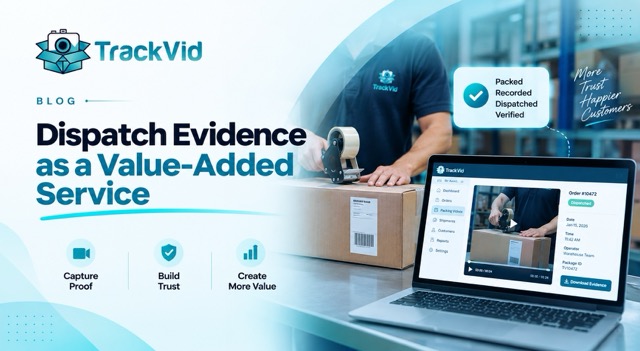
A camera sits above the pack station. Recording triggers when the shipping label barcode is scanned. The camera captures the items going into the carton, the quantity, the condition, and the carton being sealed. The clip is tagged with the order ID and stored. Weeks later, when a customer or a client says the box arrived short, wrong or empty, someone types the order number and watches what actually happened.
Why the indexing matters more than the video. Most warehouses already have cameras. What they do not have is a way to connect a specific complaint to a specific parcel. CCTV is organized by time and place. A dispute is organized by order. Bridging those two things manually means someone estimating when a parcel was likely packed and scrubbing through footage looking for a box that resembles the one in question. At any volume, that is not a process. It is a reason to just refund.
What the category is genuinely used for:
- Defending wrong item, missing item and shortage claims
- Defeating empty box and swap fraud on returns
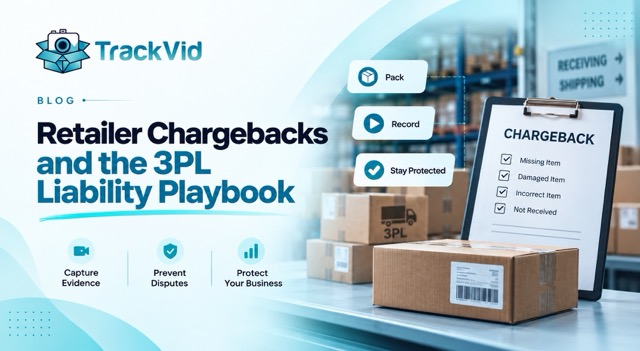
- Resolving chargebacks and retailer deductions with documentation
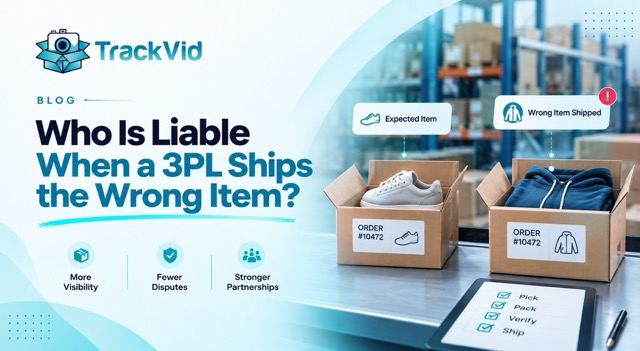
- Settling liability between a brand and its 3PL
- Packing quality audits and packer coaching
- Meeting client or retailer audit requirements
Is It the Same as a Video Management System (VMS)?
No, and this confusion costs buyers real money, so it is worth being precise.
A Video Management System means security surveillance software. Milestone XProtect, Genetec Security Center, Avigilon, Verkada, Eagle Eye and similar platforms. That is a mature multi-billion dollar category built to manage camera fleets, detect intrusion, control access and support investigations. It is excellent at what it does.
What a security VMS is built around is time and location. You ask it what happened at loading dock two between 2pm and 3pm. It answers well.
What a dispute asks is completely different. You ask what was inside order 4471983. A security VMS has no concept of an order. The footage may well exist, but there is no path from an order number to the frames that show it, other than a human estimating and searching.
To confuse matters further, VMS also commonly means Vendor Management System, which is contingent workforce and staffing procurement software and has nothing to do with either video or warehouses.
The practical guidance. If your goal is site security, theft detection or access control, buy a security VMS. If your goal is proving what went into a specific box so you can win a dispute, that is a different product category, and searching for "VMS" will send you to the wrong vendors. Some operations need both, and they do not replace each other.
The Five Ways Warehouses Capture Packing Proof
Most buyers arrive believing the choice is between having a system and not having one. In practice there are five approaches, and four of them are already in use somewhere in your building.
| Approach | What it proves | Where it fails | Best for |
|---|---|---|---|
| Warehouse CCTV | That activity occurred at a place and time | No order ID link. Retrieval means manual scrubbing. Retention often too short for claim windows | Site security, theft, safety |
| Barcode scan verification only | That a barcode was scanned at pack | Proves a scan, not contents. A scanned item can still be swapped or omitted before sealing | Accuracy control, not dispute defense |
| WMS photo capture module | A still image at a point in the workflow | Single frames miss sequence and quantity. Often sampled rather than universal. Rarely retained to claim-window length | Light QA on high-value SKUs |
| DIY camera plus manual filing | Whatever the operator remembered to record | Coverage gaps, no indexing, no retention policy, and it collapses at peak volume | Very small operations, temporarily |
| Purpose-built packing video software | Order ID-linked video of contents, quantity, condition and seal | Costs money, and capability varies widely between vendors | Any operation where disputes cost more than the software |
And the fifth row hides the real decision. Purpose-built packing video software is now a category with several vendors, and their capabilities differ more than their marketing does. The next section is how to tell them apart.
What to Look For: 10 Evaluation Criteria
Use these as a scoring sheet. They are ordered by how much they affect outcomes, not by how often vendors mention them.
1. Order ID linking, not timestamp search. This is the entire premise. If retrieval requires knowing roughly when a parcel was packed, you have bought CCTV with extra steps. Ask to see a live retrieval by order number.
2. Coverage on every order, not a sample. Sampled capture fails in the only way that matters: the order you need is the one that was not recorded. Fraud and error select for the gaps.
3. Automatic trigger, not a manual step. Recording should start from the label scan. Anything requiring a packer to press a button will be skipped under pressure, and pressure is exactly when you need coverage.
4. Retrieval time under two minutes. During a dispute wave, retrieval time is a throughput number, not a convenience. At 300 open disputes, a ten-minute process is 50 hours of work and cases get dropped. Dropped cases are losses.
5. Calibrated weight captured with the video. This is the criterion most often missing and it closes an entire fraud category. A parcel dispatched at 1.4kg and returned at 200g is a resolved case, not an investigation. Video alone cannot do this.
6. Retention tuned to your longest claim window. Map every window you face before buying: retailer chargeback disputes commonly allow 15 to 30 days from posting, card disputes can arrive months after the transaction, and marketplace windows range from 24 hours to 7 days. Retention shorter than your longest window makes the system decorative.
7. Whether it files claims or only stores proof. This is the criterion that separates a record-keeping tool from a recovery system, and most buyers never ask it. Storage means you can win an argument if someone has time to have it. Filing means the dispute is submitted inside the window automatically. At volume those are different businesses.
8. Return-side capture as well as dispatch. Dispatch proof shows what left. Return proof shows what came back. You need both ends to close an empty box or swap case by reconciliation instead of by argument.
9. Works with existing cameras and sits alongside your WMS. A solution that requires replacing cameras or migrating your WMS will not get approved and should not. The capture layer should add proof without changing the packing workflow.
10. Access control and sharing. You will be sending clips to clients, retailers and payment processors. Permissions, expiring links and an audit of who viewed what stop a proof system from becoming a data problem.
What matters less than vendors imply: resolution beyond what is needed to read a label, AI scene analysis, and dashboards. These are real features. They are not what decides whether you win a dispute.
What Does Packing Video Software Cost?
Pricing in this category is not published consistently, so evaluate the structure rather than hunting for a number.
The four models you will encounter:
- Per pack station, per month. Simple to forecast, punishes seasonal operations that staff up temporary stations
- Per order or per video captured. Scales with volume, which is fair, but model your peak month rather than your average or the invoice will surprise you
- Flat platform fee with station tiers. Predictable, usually favours higher volumes
- Hardware bundled or separate. Whether cameras are included materially changes the comparison, so normalize this before comparing quotes
The costs that do not appear on the first quote:
- Storage and retention beyond the default. Ask what it costs to retain for your longest claim window rather than the standard period. This is the most common surprise
- Integration effort with your WMS, OMS or shipping software
- Additional stations during peak, and whether you can add and remove them seasonally
- Support response time during your peak weeks, which is when a failure actually costs you
How to frame the buying decision internally. Do not compare the price against your software budget. Compare it against what you currently write off. Pull three months of claims, deductions and refunds where the reason code was wrong item, missing item, shortage or damage. That number is what the software is competing against, and for most operations at any scale it makes the decision straightforward.
Which Option Fits Your Operation?
Honest guidance, including when not to buy.
Under roughly 50 orders a day, with rare disputes. Do not buy packing video software yet. A phone camera on high-value orders and a disciplined packing checklist will cover you. Revisit when disputes become routine rather than occasional.
A growing brand shipping 100 to 1,000 orders a day. The category earns its place here, usually paying back on refund abuse and wrong item claims alone. Prioritize criteria 1, 2, 3 and 6. Filing automation matters less if you sell direct and dispute volume is manageable by hand.
A 3PL serving multiple brand clients. Prioritize criteria 1, 4, 7, 8 and 10 above everything else. You are not only defending your own losses, you are defending liability allocation with clients, and you will be sharing evidence externally constantly. Multi-client separation and permissions are not optional.
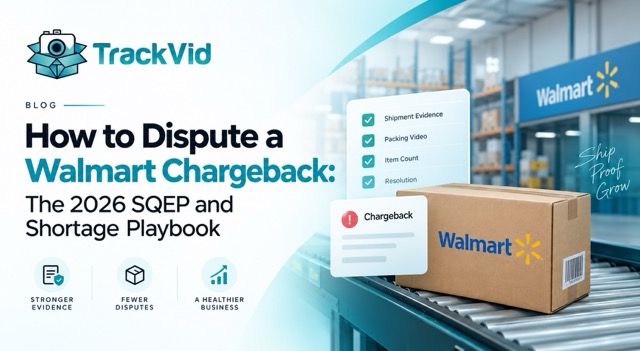
Any operation supplying big-box retail. Criterion 6 governs. Retailer dispute windows and documentation requirements should drive your retention and your evidence format. Retailer dispute processes commonly ask for the PO, BOL, POD, ASN records and photos, and packing proof is the piece most suppliers cannot produce at order level.
High-value or high-fraud categories. Electronics, jewelry, beauty, collectibles. Criteria 5 and 8 become decisive, because empty box and swap claims are the dominant loss type and weight reconciliation is what closes them.
Operations with a seasonal peak. Ask specifically about seasonal station scaling and peak-week support before signing. A system that is excellent in March and unsupported in November is worse than nothing, because you will have built process dependency on it.
Where TrackVid Fits
TrackVid is a video proof and claim management platform used by 1,100+ ecommerce sellers and fulfillment operations. It runs across Shopify, WooCommerce, Amazon and major marketplaces, and is an authorized VMS partner for Snapdeal.
Against the ten criteria above:
- Order ID-linked capture on every order, triggered automatically from the label scan with no added step for the packer and no workflow change
- Retrieval in under two minutes by order ID, SKU or tracking reference
- Return-side capture as well as dispatch, so both ends of the chain are documented
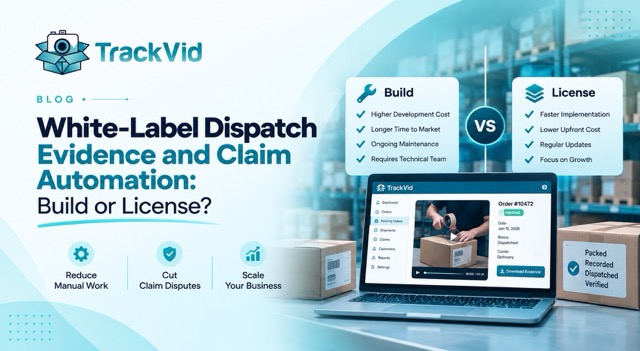
- Automated claim filing, not storage alone. This is the criterion we would point a buyer at hardest, because it is where the category divides. Filing across supported channels takes roughly 30 seconds against 15 to 20 minutes manually, which is the difference between defending every dispute and defending the ones you had time for
- Return reconciliation that surfaces claims which would otherwise expire unfiled, including cases nobody knew existed
- Works with existing warehouse cameras, sitting alongside your WMS rather than replacing it, with no hardware swap required
Scale reference: a single enterprise deployment captured 94,904 packing videos across 95,836 tracked orders, with 868 claims filed from that evidence and approval rates moving from 42.3 percent to 60.3 percent within one month of systematic capture.
Where we would tell you to look elsewhere. If your goal is site security, theft detection or access control, buy a security VMS instead. If you ship under 50 orders a day with rare disputes, you do not need this yet. If your only problem is packing accuracy rather than dispute defense, barcode scan verification is cheaper and sufficient.
Bring three months of claims data and we will work out what dispatch evidence would have recovered. 15 minutes. No commitment.
Five Questions to Ask Any Vendor
1. Show me a live retrieval by order ID, on an order I pick, timed. Anything over two minutes will not survive a dispute wave.
2. What percentage of orders are captured, and what happens on the ones that are not? Sampled coverage fails on exactly the order you need.
3. What is the retention period, and what does it cost to extend it to cover my longest claim window? Get the second number in writing.
4. Does the platform file disputes, or only store evidence? If it only stores, who on my team is doing the filing and inside what window?
5. Can you capture and reconcile weight between dispatch and return? Without it, empty box claims stay arguments rather than closed cases.
See order ID retrieval, weight reconciliation and automated filing on real data. 15 minutes. No commitment.
Frequently Asked Questions
What is packing video software?
Software that records the pack-out of each order and links the footage to that order's ID, so it can be retrieved by order number rather than by time and camera. It exists because warehouse CCTV is indexed by time and location while disputes are indexed by order, and bridging that manually is impractical at volume.
Is packing video software the same as CCTV?
No. CCTV records continuously by camera and time, so answering "what was in order 4471983" means estimating when it was packed and scrubbing footage. Packing video software links each clip to an order ID, making retrieval a search rather than an investigation. Retention periods also differ, since CCTV is often too short for claim windows.
Is packing video software the same as a Video Management System?
No. A VMS means security surveillance software such as Milestone, Genetec or Avigilon, built for camera fleet management, intrusion detection and access control. It has no concept of an order. VMS also commonly means Vendor Management System, which is staffing procurement software. Searching "VMS" will return the wrong category entirely.
What should I look for in packing video software?
Order ID linking rather than timestamp search, capture on every order rather than a sample, an automatic trigger from the label scan, retrieval under two minutes, calibrated weight recorded with the video, retention covering your longest claim window, integration alongside your WMS, and whether the platform files disputes or only stores evidence.
How much does packing video software cost?
Pricing is rarely published. Models are per station per month, per order captured, flat platform fee with station tiers, or bundled with hardware. Normalize whether cameras are included before comparing quotes. Ask separately about retention beyond the default period, which is the most common cost surprise.
Do I need packing video for every order?
Yes, if dispute defense is the goal. Sampled capture fails predictably, because the order you need proof for is the one that was not recorded. Fraud and error select for gaps. Selective capture on high-value SKUs only makes sense when the goal is quality auditing rather than dispute evidence.
Can packing video software integrate with my WMS?
Good options sit alongside your WMS rather than replacing it, adding a capture layer without changing the packing workflow. Ask specifically whether the integration writes the video link back to the order record in your WMS, OMS or storefront, since that determines whether your support team can find proof without leaving their normal system.
How long should packing videos be retained?
Long enough to cover your longest claim window. Map them before buying: retailer chargeback disputes commonly allow 15 to 30 days from posting, card disputes can arrive months after the transaction, and marketplace windows run from 24 hours to 7 days. Retention shorter than your longest window makes the system decorative.
How do warehouses prove what was in the box?
With order ID-linked video showing items, quantity, condition and the seal, plus calibrated dispatch weight, tracking with delivery confirmation, and where relevant the listing as it appeared at order time. The combination is what reviewers act on. Video alone leaves shortage claims arguable; weight reconciliation is what closes them.
Does packing video software stop return fraud?
It does not prevent someone attempting a false claim, but it changes the outcome. Empty box, swap and shortage claims resolve on documentation, and operations with order ID-linked dispatch evidence plus weight reconciliation win these at far higher rates than operations submitting tracking numbers and a written explanation.
Sources: Grand View Research and Market Research Future video management software market data; retailer vendor compliance and chargeback dispute documentation, 2026; TrackVid platform data across 1,100+ sellers and fulfillment operations; enterprise deployment data (94,904 packing videos, 95,836 tracked orders, 868 claims filed)
Pricing structures, retention defaults and claim windows vary by vendor and by retailer. Verify current terms directly before making a purchasing decision based on the guidance here.
TrackVid is a video proof and claim management platform for ecommerce operations, 3PLs and fulfillment centers, providing order ID-linked dispatch evidence and automated claim filing. Learn more at trackvid.in.
Get the Marketplace Claim Recovery Checklist
A 12-point checklist used by 1,100+ sellers to recover 85-90% of marketplace claim losses. Free, instant access.
- Marketplace-specific evidence formats (AJIO, Flipkart, Amazon, Myntra)
- Claim window deadlines for every major platform
- The 6-step process that pushes approval from 85-90%
- Common rejection reasons and how to avoid them
No spam. Unsubscribe anytime. Used by sellers at Rare Rabbit, HRX, Da Milano + 1,100 more.
Stop Losing Money to Fake Returns
Join 1,100+ sellers who recover lakhs every month with TrackVid