
For sellers on Amazon, Flipkart, AJIO, Myntra, Meesho, Shopify and global marketplaces. Updated June 2026.
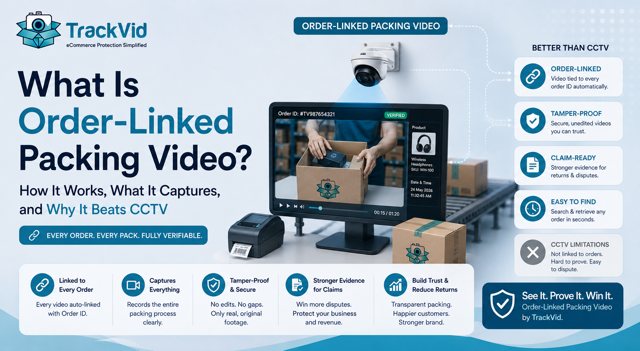
Order-linked packing video is a recording of an individual order being packed, tied to that order's identifiers, the Order ID, AWB, and SKU, at the moment it is recorded, so it can be retrieved in seconds by searching the Order ID. That is the whole idea in one sentence, and it is what separates it from ordinary CCTV, which records everything and links to nothing. This guide explains exactly what it is, how the linking works, what each clip captures, and why that link is the difference between evidence that wins disputes and footage that gets rejected.
The Definition, Clearly
Order-linked packing video is dispatch-side packing footage where each recording is automatically associated with the specific order it shows.
Break that down. It is packing footage, meaning it records the pack itself: the item going into the bag, the label, the seal. It is dispatch-side, meaning it captures what left your facility. And it is order-linked, meaning each clip is tagged with the Order ID, AWB, and SKU as it is recorded, so it is not an anonymous piece of video but a labelled record tied to one order.
The link is what matters. A video of a pack that is not tied to an order is just footage. The same video tagged with the Order ID becomes evidence, because you can retrieve exactly the right clip for exactly the order in dispute, and the marketplace can see it corresponds to the specific claim.
How the Linking Actually Works
The mechanism is simpler than it sounds, and it hinges on the scan.
Step 1: The order is scanned. At the packing station or on the packing line, the order barcode is scanned, whether from the invoice, the pick list, or the product. That scan identifies the order.
Step 2: The scan triggers the recording. Instead of a camera running continuously and blindly, the recording is tied to the scanned order. The system knows which order this footage belongs to because the scan told it.
Step 3: The video is tagged. As it is captured, the clip is labelled with the order's identifiers: the Order ID, the AWB, and the SKU. This tagging happens at the moment of recording, not afterward, so the link is built in rather than added later.
Step 4: It is stored searchably. The tagged clip is stored in searchable cloud, indexed by those identifiers.
Step 5: It is retrieved by Order ID. When you need it, you search the Order ID and the exact clip surfaces in seconds. No scrubbing through hours of footage by date and time.
That sequence, scan, trigger, tag, store, retrieve, is what makes the video order-linked. The scan at the start is what ties a specific pack to a specific order, and everything else follows from it.
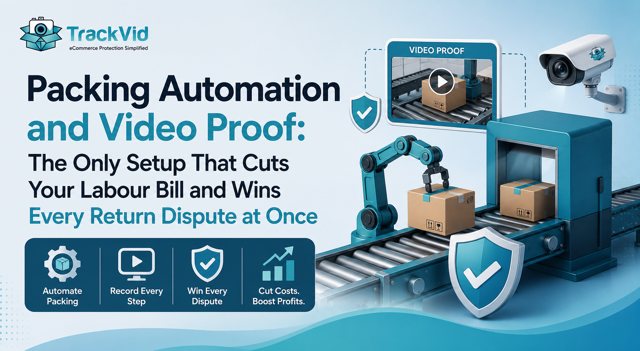
Related: How packing automation and order-linked video proof work together
What Each Clip Captures
Each clip documents the things a dispute turns on.
It captures the item, so you can show the correct product was packed. It captures the quantity, so short-shipment claims can be checked. It captures the condition at dispatch, so you can show the item left undamaged. It captures the label, so you can show the correct label went on the correct order. And it captures the seal, so you can show the bag was closed properly.
Together, these cover the evidence needed for the most common disputes: what was in the bag, in what condition, with which label, sealed and sent. That is the full dispatch-side story of one order, documented.
Why It Beats CCTV
This is the comparison that matters, because most sellers already have CCTV and assume it does the job.
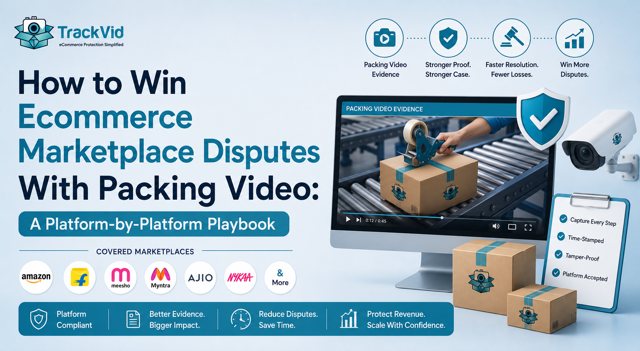
CCTV records continuously, by camera and by time. To find the footage for one order, someone searches by date and time and scrubs through hours of video, which takes so long that claim windows often close before the clip is found. And even when it is found, CCTV is not tied to any Order ID, so marketplace claim portals, including Amazon SAFE-T, Flipkart SPF, and AJIO's system, generally reject it as insufficient evidence. It is the wrong format and it arrives too late.
It is built to solve both problems. Retrieval is by Order ID, so the right clip surfaces in seconds, comfortably inside claim windows. And because it is tagged to the specific order, it is in the form marketplaces accept as evidence for that claim. The difference is not video quality, it is the link. CCTV has footage without a link. Order-linked video has footage with the link, and the link is what turns footage into evidence.
Related: How to win marketplace disputes with packing video, platform by platform
A Coimbatore Seller Who Learned the Difference
Sanjay runs an apparel brand out of Coimbatore, shipping around 340 orders per day across Amazon, Flipkart, and his own store.
He had CCTV at his packing station and assumed he was covered. Then a run of disputes taught him otherwise. When a claim came in, his team spent an afternoon scrubbing footage to find the right order, and by the time they submitted it, some windows had closed. Worse, the claims he did respond to were rejected, because his CCTV was not tied to any Order ID and the marketplace would not accept it.
The realization was that having video and having evidence were not the same thing. His footage existed, but it was not linked to orders, so it could not do the one job he needed it to do.
"I had cameras, so I thought I had proof. What I did not have was a link between the footage and the order. Without that link, the video could not be found fast enough or accepted by the marketplace. The link was the whole thing I was missing, and I did not even know it was the point."
Sanjay's confusion is extremely common. Sellers equate cameras with proof, when the actual requirement is the link between the footage and the specific order. That link is precisely what order-linked video adds and CCTV lacks.
Where Order-Linked Packing Video Comes From
There are two ways to capture it.
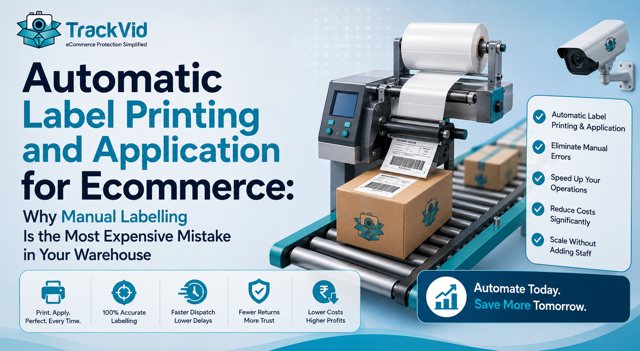
The first is software on your existing cameras. A platform can take the feed from cameras you already have, use the order scan to tag the footage, and store it order-linked. This adds the link to hardware you already own.
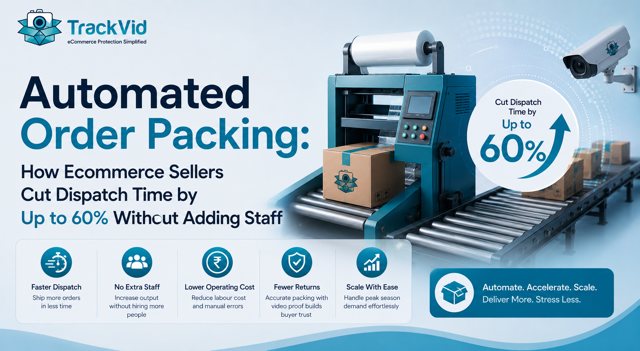
The second is built into the packing machine. An integrated packing machine has cameras in the line itself, so the same scan that drives the packing also triggers and tags the recording, capturing order-linked video as a natural part of the pack with no separate camera setup.
Both produce the same result, order-linked dispatch video retrievable by Order ID. The difference is whether the link is added to your existing cameras or built into the packing line from the start.
How the TrackVid Machine Captures It
TrackVid is a video proof and claim management platform, and order-linked video is its core. It is already used by 1,100+ Indian ecommerce sellers, who report claim win rates of 90 percent or above on disputes where packing video is submitted, against an industry average under 25 percent without structured proof, according to TrackVid data.
TrackVid's automatic packing machine builds this capture into the packing line. On the integrated version, the order is scanned to drive the pack, and that same scan triggers the built-in cameras to film the dispatch and tag the video with the Order ID, AWB, and SKU automatically. The clip is stored searchably and retrieved by Order ID in seconds. It is forward dispatch proof, documenting exactly what you shipped for each order, which is the evidence that wins the wrong-item, empty-box, not-received, and false-damage disputes.
The machine is pre-launch in India, with early access open to a limited first production batch.
Related: Join the early access waitlist for the TrackVid packing machine
The Short Version
Order-linked packing video is packing footage tied to a specific order's identifiers at the moment of recording, so it can be retrieved by Order ID in seconds and accepted as evidence. The link is created by the order scan, which triggers and tags the recording. It captures the item, quantity, condition, label, and seal for that order. And it beats CCTV not on video quality but on the link, because CCTV has footage with no link, which cannot be found fast enough or accepted by marketplaces.
Related: The return fraud this evidence defeats, and the fix that scales
Join the early access waitlist for the TrackVid automatic packing machine
Takes 30 seconds. No spam. We only contact you about early access and demos.
Frequently Asked Questions
What is order-linked packing video? Order-linked packing video is a recording of an individual order being packed that is automatically tied to that order's identifiers, the Order ID, AWB, and SKU, at the moment it is recorded. This link lets you retrieve the exact clip for a specific order in seconds by searching the Order ID, and it makes the video acceptable as evidence for that order's dispute. It differs from CCTV, which records continuously and is not linked to any order.
How is packing video linked to an order? Through the order scan. When the order barcode is scanned at packing, that scan identifies the order and triggers the recording, and the clip is tagged with the Order ID, AWB, and SKU as it is captured. Because the tagging happens at the moment of recording rather than afterward, the video is inherently tied to the order. Retrieval is then by Order ID, so the correct clip surfaces immediately.
Order linked packing video kya hota hai? Order linked packing video ek aisi recording hai jo kisi ek order ki packing ko capture karti hai aur automatically us order ke Order ID, AWB aur SKU se link ho jaati hai, recording ke time pe hi. Is link ki wajah se aap kisi specific order ki video seconds mein Order ID search karke nikal sakte ho, aur woh marketplace dispute ke liye valid evidence maani jaati hai. Yeh normal CCTV se alag hai, jo continuous record karti hai aur kisi order se linked nahi hoti.
How is order-linked packing video different from CCTV? The difference is the link, not the video quality. CCTV records continuously by camera and time, is not tied to any Order ID, takes a long time to search, and is generally rejected by marketplace claim portals as insufficient. Order-linked video is tagged to the specific order at recording, retrievable by Order ID in seconds, and in the format marketplaces accept. CCTV has footage without a link. Order-linked video has footage with a link, which is what makes it usable as evidence.
What does an order-linked clip capture? It captures the dispatch-side story of one order: the item packed, the quantity, the condition at dispatch, the label applied, and the seal. Together these cover the evidence needed for the most common disputes, showing what was in the bag, in what condition, with which label, sealed and sent. That documented record is what lets you contest wrong-item, empty-box, short-shipment, not-received, and false-damage claims.
How do you retrieve packing video for a specific order? By searching the Order ID. Because each clip is tagged with the order's identifiers when recorded and stored in searchable cloud, you enter the Order ID and the exact clip surfaces in seconds. This is the opposite of CCTV, where you search by date and time and scrub through hours of footage. Fast retrieval matters because marketplace claim windows are short, sometimes 24 to 48 hours, and slow retrieval means missed claims.
Do I need a special machine to capture order-linked video? Not necessarily. It can be captured two ways: software applied to your existing cameras, which uses the order scan to tag and store the footage order-linked, or built into a packing machine that has cameras in the line. Both produce order-linked dispatch video retrievable by Order ID. An integrated packing machine captures it as a natural part of the pack, while software adds the link to cameras you already own.
Sources: TrackVid seller data on claim win rates; Amazon SAFE-T, Flipkart SPF, and AJIO seller portal evidence requirements; general video evidence and retrieval benchmarks for ecommerce operations.
TrackVid is a video proof and claim management platform used by 1,100+ Indian ecommerce sellers on Amazon, Flipkart, AJIO, Myntra and Meesho. Officially authorised by Snapdeal. Learn more at trackvid.in.
Get the Marketplace Claim Recovery Checklist
A 12-point checklist used by 1,100+ sellers to recover 85-90% of marketplace claim losses. Free, instant access.
- Marketplace-specific evidence formats (AJIO, Flipkart, Amazon, Myntra)
- Claim window deadlines for every major platform
- The 6-step process that pushes approval from 85-90%
- Common rejection reasons and how to avoid them
No spam. Unsubscribe anytime. Used by sellers at Rare Rabbit, HRX, Da Milano + 1,100 more.
Stop Losing Money to Fake Returns
Join 1,100+ sellers who recover lakhs every month with TrackVid