
For sellers on Amazon, Flipkart, AJIO, Myntra, Meesho and D2C fashion stores. Updated June 2026.
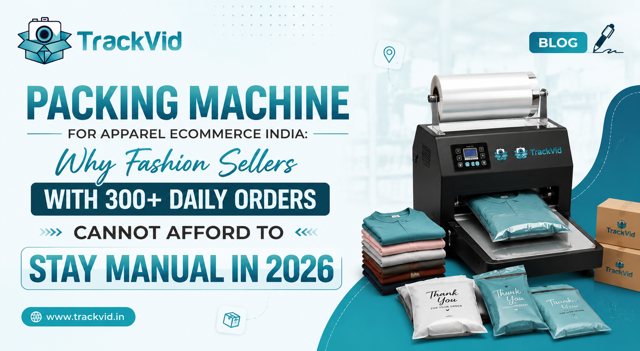
No category needs packing automation more than apparel, and nowhere is that felt harder than Indian fashion ecommerce. Fashion carries the highest return rate of any category, the tightest festive-season packing surges, and the most return fraud, so every weakness in a manual packing process is amplified. A packing machine for apparel ecommerce in India is not a luxury for large sellers, it is becoming a requirement for anyone shipping 300 or more orders a day. This guide explains why apparel is the hardest category to pack manually at scale, and what a machine built for fashion soft goods actually changes.
Why Apparel Has the Highest Stakes
Fashion is the category where packing mistakes cost the most, for one simple reason: apparel returns at a far higher rate than anything else.
According to IBEF data, India's fashion ecommerce return rate runs at 25 to 35 percent, among the highest of any category. That means a large share of every day's orders will come back, and every return is not just a lost sale but a handling event: reverse shipping, inspection, and restocking or write-off. When a quarter to a third of your orders return, any error in the packing process is multiplied across a huge volume of returns.
On top of the volume of genuine returns, fashion attracts the most return abuse. Wardrobing, wearing an item once and returning it as new, is a fashion-specific fraud. Size-based swaps and false damage claims are common. So apparel sellers face both the highest genuine return rate and the highest fraudulent return rate, and manual packing gives them no way to defend against either.
This is why the packing stakes are higher for apparel than for any other category. The same error rate that a low-return category could absorb becomes expensive for a fashion seller, because it lands on top of a return rate that is already the highest in ecommerce.
The Apparel-Specific Packing Challenges
Fashion packing has characteristics that make manual handling harder than it is for other categories.
Apparel ships in soft-goods packaging, poly bags and courier bags, not rigid boxes, and it comes in many sizes and variants of the same style. That variety raises the chance of a size or variant error, sending the wrong size of the right product, which then returns.
Volume is brutally seasonal. Myntra EORS, Flipkart's Big Billion Day, and the festive season create packing surges far above normal throughput. Fashion sellers routinely see order volumes multiply during these events, and manual teams supplemented with temporary staff make more errors under exactly that pressure.
And the marketplaces apparel sellers depend on, Myntra, AJIO, Flipkart Fashion, and Meesho, each enforce dispatch SLAs and run claim processes with short response windows. Miss a cut-off during a surge and the penalties compound.
So the apparel seller is packing high-variant soft goods, through violent seasonal spikes, under SLA and claim pressure, at the highest return rate in ecommerce. Manual packing strains at every one of those points.
Why Manual Packing Fails Apparel Sellers at Scale
Put those challenges together and manual packing breaks down for fashion sellers specifically.
The size and variant errors that manual packing produces are costly because they return at fashion's high rate. The festive surges overwhelm manual throughput, creating backlogs and late dispatches exactly when volume and stakes peak. The temporary staff brought in for those surges make more errors, which return, which compound. And through all of it, manual packing produces no order-linked proof, so the wardrobing and fake-return claims that hit fashion hardest go uncontested.
A low-return category might tolerate these weaknesses. Fashion cannot, because its return rate multiplies every one of them.
Related: When should you actually buy a packing machine? Five signals
A Tiruppur Seller's Fashion Packing Problem
Lakshmi runs a knitwear and casual-wear brand out of Tiruppur, shipping around 420 orders per day across Myntra, Flipkart, and her own store, rising far higher during sale events.
Her normal operation was manageable. Her sale seasons were not. During a Myntra EORS, her volume multiplied, she brought in temporary packers, and the errors climbed: wrong sizes sent, wrong labels applied, all of which returned at fashion's already high rate in the weeks that followed. On top of the genuine returns, she absorbed a run of wardrobing and false-damage claims she was sure were abuse but could not contest, because her manual packing left her no order-linked proof of what she had shipped.
When she added the sale-season error returns and the uncontested fashion claims to her normal return load, the real cost of manual packing during her peak periods was far larger than the wage line suggested.
"Fashion returns are already the highest of any category. When my own packing errors add to that during a sale, and I cannot even contest the fake returns, the manual process is not just slow, it is expensive in a way other categories never feel. The return rate turns every packing weakness into real money."
Lakshmi's experience is specific to fashion. The high return rate is what turns ordinary packing weaknesses into a serious cost, and it is why the case for automation is stronger for apparel than for almost any other category.
Why Fashion Needs the Proof, Not Just the Speed
For apparel sellers, the proof advantage of an integrated machine matters even more than the labour saving, because fashion attracts the most return abuse.
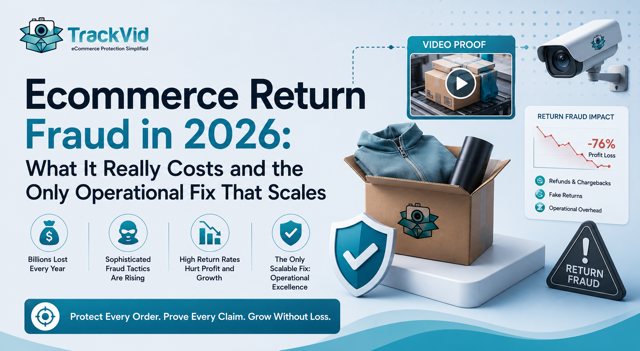
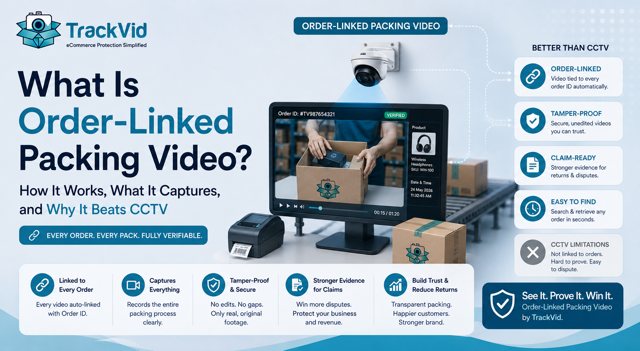
Wardrobing, size swaps, and false damage claims are concentrated in fashion. Order-linked dispatch video, capturing the correct item, size, condition, label, and seal for each order, is what lets you contest these. When a buyer claims the item arrived damaged or was the wrong thing, your video shows what actually left in what condition, and the claim fails. Manual packing gives you nothing to submit, and raw CCTV is rejected by Myntra, AJIO, and Flipkart claim processes because it is not order-linked.
So for a fashion seller, a packing machine that only packs faster solves half the problem. A machine that also captures order-linked proof addresses the return abuse that hits apparel hardest, which is where a large share of the losses actually sit.
Related: The return fraud behind fashion claims, and the fix that scales
How the TrackVid Machine Fits Apparel
TrackVid's automatic packing machine is built for exactly the soft goods that apparel ships. It handles courier and poly bags up to 45 cm wide, works for apparel and fashion soft goods, and processes both single and multi-item orders, which covers the packaging reality of an Indian fashion seller.
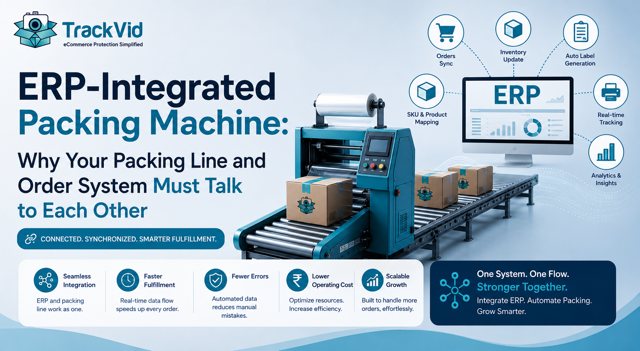
One operator runs the full scan, print, apply, seal, and convey line, so your packing holds up through EORS and festive surges without a proportional army of temporary staff. Labelling and application are deterministic, which reduces the size and label errors that return at fashion's high rate. And on the integrated version, built-in cameras film the pack at dispatch and link the video to the Order ID, giving you the order-linked proof that wins the wardrobing and fake-return disputes concentrated in fashion. TrackVid's platform is already used by 1,100+ Indian ecommerce sellers, who report claim win rates of 90 percent or above on disputes where packing video is submitted, according to TrackVid data.
The machine is pre-launch in India, built for the Indian fashion market, with early access open to a limited first production batch.
Related: Join the early access waitlist for the TrackVid packing machine
What Apparel Sellers Should Do
For a fashion seller above 300 orders a day, the question is rarely whether a packing machine for apparel helps, but whether the timing is right. Model the full cost of your manual packing, including the errors that return at your category's high rate and the fashion claims you cannot contest. That full number, not the wage line alone, is what you compare against automation.
If your sale seasons produce backlogs, late dispatches, and a spike in temporary-staff errors, that is the clearest signal that manual packing has hit its ceiling for your category. And if you are absorbing wardrobing and false-damage claims you cannot fight, order-linked proof is the specific fix, because fashion is where those claims concentrate.
Related: How to survive sale-season packing surges in India
Join the early access waitlist for the TrackVid automatic packing machine
Takes 30 seconds. No spam. We only contact you about early access and demos.
Related: What ecommerce packing automation is and how it works
Frequently Asked Questions
Why do apparel sellers need packing automation more than other categories? Because fashion has the highest return rate of any category, running at 25 to 35 percent in India per IBEF data, plus the most return fraud through wardrobing and size swaps. That high return rate multiplies the cost of every packing error, since a large share of orders come back and each is a handling and potential claim event. Automation reduces the size and label errors that return, holds throughput through sale surges, and, on integrated machines, captures the proof needed to contest fashion's high rate of fake returns.
What is the best packing machine for clothing ecommerce in India? The right machine for apparel handles soft-goods packaging, poly and courier bags rather than rigid boxes, manages size and variant complexity, and holds up through festive-season surges. The TrackVid automatic packing machine is built for apparel and soft goods, handles bags up to 45 cm, processes single and multi-item orders, and on the integrated version captures order-linked dispatch video to win fashion return disputes. It is in early access for the Indian market.
Apparel packing machine kaunsa lena chahiye India mein? Apparel ke liye woh machine sahi hai jo soft-goods packaging handle kare, matlab poly aur courier bags, rigid boxes nahi, size aur variant complexity manage kare, aur festive season ke surge mein bhi chale. TrackVid ki automatic packing machine apparel aur soft goods ke liye bani hai, 45 cm tak ke bags handle karti hai, single aur multi-item orders process karti hai, aur integrated version dispatch ki order-linked video capture karti hai jo fashion return disputes jeetne mein madad karti hai. Yeh abhi India market ke liye early access mein hai.
How do I handle a 30 percent return rate in fashion ecommerce? You cannot eliminate genuine fashion returns, but you can reduce the ones caused by your own packing errors and contest the fraudulent ones. Reduce size and label errors with deterministic packing so fewer wrong items go out and come back. And capture order-linked dispatch video so the wardrobing and false-damage claims that make up a share of fashion returns can be contested and won, instead of absorbed. Automation addresses both the error-driven returns and the fraudulent ones.
Does a packing machine handle poly bags and courier bags for apparel? A machine built for apparel does. Fashion ships in soft-goods packaging rather than rigid boxes, so the machine must handle poly and courier bags. The TrackVid machine handles courier and poly bags up to 45 cm wide and is built specifically for apparel and soft goods, which is the packaging reality for Indian fashion sellers, unlike machines adapted from rigid-box packaging equipment.
How do apparel sellers cope with Myntra EORS and Big Billion Day packing surges? Manual packing struggles because throughput cannot surge, so volume spikes create backlogs and late dispatches, and temporary staff raise the error rate. An automated packing line holds a consistent rate through the surge with one operator, absorbing volume that would bury a manual team, so the backlog clears and SLAs hold. For fashion sellers whose sale seasons are their highest-stakes periods, this consistency is the biggest operational gain.
Is a packing machine worth it for a fashion seller in India? For sellers above roughly 300 orders a day, usually yes, and the case is stronger for fashion than most categories. The high return rate multiplies the value of reducing packing errors, the festive surges make consistent throughput valuable, and the concentration of return fraud in fashion makes order-linked proof especially valuable. Model your full cost, including error-driven returns and uncontested claims, and compare it to automation before deciding.
Sources: IBEF India ecommerce fashion return rate data; TrackVid seller data on claim win rates; Myntra, AJIO, and Flipkart seller portal dispatch and claim requirements; NRF return-fraud research.
TrackVid is a video proof and claim management platform used by 1,100+ Indian ecommerce sellers on Amazon, Flipkart, AJIO, Myntra and Meesho. Officially authorised by Snapdeal. Learn more at trackvid.in.

Get the Marketplace Claim Recovery Checklist
A 12-point checklist used by 1,100+ sellers to recover 85-90% of marketplace claim losses. Free, instant access.
- Marketplace-specific evidence formats (AJIO, Flipkart, Amazon, Myntra)
- Claim window deadlines for every major platform
- The 6-step process that pushes approval from 85-90%
- Common rejection reasons and how to avoid them
No spam. Unsubscribe anytime. Used by sellers at Rare Rabbit, HRX, Da Milano + 1,100 more.
Stop Losing Money to Fake Returns
Join 1,100+ sellers who recover lakhs every month with TrackVid