

For sellers on Amazon, Flipkart, AJIO, Myntra, Meesho and D2C stores. Updated June 2026.
Sale season is when packing operations break, and the frustrating part is that it is entirely predictable. Every Big Billion Day, every Myntra EORS, every festive spike, order volume multiplies far beyond normal throughput, and the packing floor becomes the choke point that drags everything down. The ecommerce packing surge during sale season in India is the single hardest test a fulfilment operation faces, and most sellers respond by hiring a wave of temporary staff, which is exactly the wrong fix. This guide explains why the surge breaks manual packing, why hiring is a trap, and how sellers hold throughput through the peak without an army.
What the Surge Actually Does to Your Packing Floor
During a major sale event, order volume does not rise gently. It multiplies. A seller who ships a few hundred orders a day on a normal day can face several times that during Big Billion Day or an EORS, sometimes for several days running.
Your other functions can usually absorb this. Your storefront scales, your inventory is stocked for the event, your carriers are ready. The packing floor is where it concentrates, because packing is the one step whose speed is set by how many trained hands you have, and you cannot conjure trained hands for a three-day spike.
So the surge lands squarely on packing. The orders come in at several times normal rate, and the packing floor, which was already near capacity on normal days, simply cannot process them fast enough. Everything upstream worked, and the bottleneck is the box being sealed.
Why Hiring Temporary Staff Is a Trap
The instinct is to hire. Bring in twenty temporary packers for the sale week and power through. It feels like the obvious answer, and it creates as many problems as it solves.
Temporary staff are untrained. They pack slower than your experienced team and they make more errors, wrong items, wrong labels, weak seals, at exactly the moment volume is highest. Those errors do not stay contained to the sale week. They return in the following weeks, at the sale's inflated volume, so a burst of temp-staff mistakes becomes a wave of returns after the event.
They carry overhead. Recruiting, onboarding, and supervising twenty people for a few days is real management cost, and it competes for attention precisely when your operation is under the most stress.
And they leave. The moment the surge ends, the capacity you built disappears, so you rebuild it from scratch for the next event. You are renting a solution that resets to zero every time.
So hiring for the surge trades a throughput problem for an error problem and a management problem, and it does not actually fix the throughput ceiling, because the pack step is still limited by how fast people can work.
The Cascade When a Surge Fails
When packing cannot keep up during a sale, the failure does not stay in one place. It cascades.
You miss dispatch cut-offs, which brings SLA penalties and suppressed listings on the marketplaces running the sale, damaging your account health when visibility matters most. The backlog from the peak day spills into the next day and the day after, so your dispatch times degrade across the whole event. Orders shipped late enough trigger cancellations, losing the sale you fought to win. And the temp-staff errors return weeks later as a wave of returns and disputes, many of which you cannot contest because manual packing left you no order-linked proof.
One overwhelmed packing floor turns a sale, your biggest revenue opportunity of the year, into penalties, cancellations, and a return wave. That is the real cost of failing the surge, and it is far larger than the packing delay itself.
Related: How automated order packing cuts dispatch time and holds SLAs
Why Manual Throughput Simply Cannot Surge
The core issue is structural. Manual packing scales linearly, one packer per 80 to 100 orders a day, so to handle several times your volume you would need several times your packers, trained and ready for a three-day window. That is not achievable, which is why the surge always finds the ceiling.
The pack step has a speed limit that more people do not raise past a point, because beyond a certain floor density you get coordination problems, competing label printers, and more variability, not clean extra throughput. So manual packing cannot surge to meet a sale. It can only fall behind and create a backlog, which is exactly what happens every festive season.
How Automation Holds Through the Peak
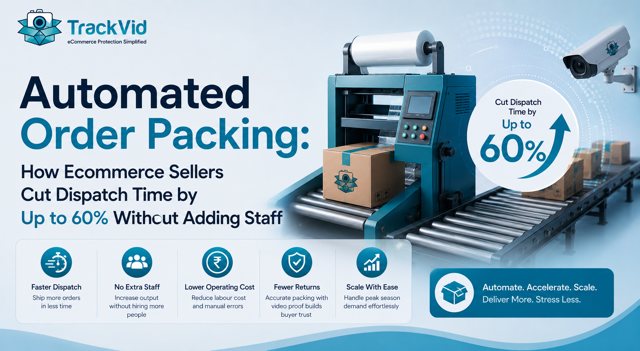
An automated packing line changes the surge from a crisis into a normal day at higher volume.
Its throughput is consistent regardless of volume. A line running with one operator processes the same rate whether the day brings 300 orders or 600, because its speed is set by the machine, not by how many tired hands are on the floor. The line does not slow in the third shift, does not make more errors under pressure, and does not need twenty temporary people who will make mistakes and then leave.
So the surge is absorbed rather than survived. The extra volume that would bury a manual team flows through the line at a steady rate, the backlog clears within the day instead of spilling across the event, and your dispatch times hold, so you make your cut-offs and avoid the penalties, cancellations, and return wave that a failed surge produces. The consistency that manual packing cannot deliver under peak stress is exactly what automation provides.
A Noida Seller's Festive Season
Nisha runs a fashion and lifestyle brand out of Noida, shipping around 400 orders per day normally, rising several times higher during major sales.
Her festive season had become something she dreaded. During the last Big Billion Day, her volume multiplied, she brought in temporary packers, and the operation buckled. The temp staff were slow and error-prone, she missed dispatch cut-offs and took SLA penalties, the backlog spilled across three days, and a batch of orders shipped late enough to cancel. Then, in the weeks that followed, the temp-staff errors came back as returns at the sale's inflated volume, along with fake-return claims she could not contest.
She had done everything the conventional way, hired for the surge, worked around the clock, and still the packing floor had turned her biggest sale of the year into a loss of penalties and returns.
"I used to think surviving the sale meant hiring enough bodies and hoping. But the temp staff made errors that came back to haunt me for weeks, and the floor still could not keep up. The problem was never how many people I hired. It was that the packing step itself could not scale, and no amount of hiring changed that."
Nisha's experience repeats across Indian ecommerce every festive season. The surge is predictable, hiring does not solve it, and the packing step's ceiling is the real constraint, which is why the durable fix is to raise that ceiling rather than to keep renting bodies.
The Proof Problem the Surge Makes Worse
Sale season does not just strain throughput, it concentrates return fraud. High volume, discounted goods, and a flood of new buyers mean the post-sale period brings the year's heaviest wave of fake returns, empty-box claims, and false damage disputes, layered on top of the genuine returns from temp-staff errors.
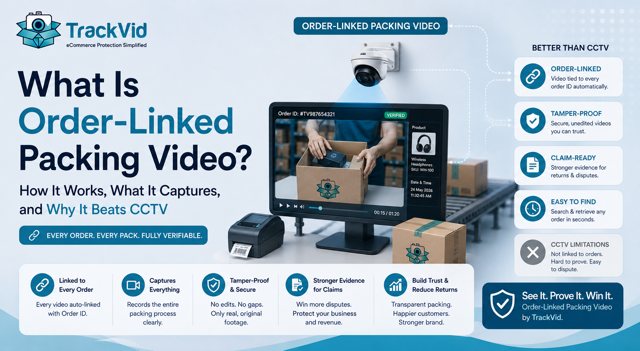
Manual packing leaves you defenceless against this, because it produces no order-linked proof, and raw CCTV is rejected by marketplace claim processes. An integrated packing machine films the pack at dispatch and links the video to the Order ID, so the post-sale claim wave can be contested and won rather than absorbed. For a surge, this matters doubly: you have more errors and more fraud arriving at once, and the proof is what lets you fight the fraudulent share.
Related: The return fraud that peaks after sales, and the fix that scales
How the TrackVid Machine Handles the Surge
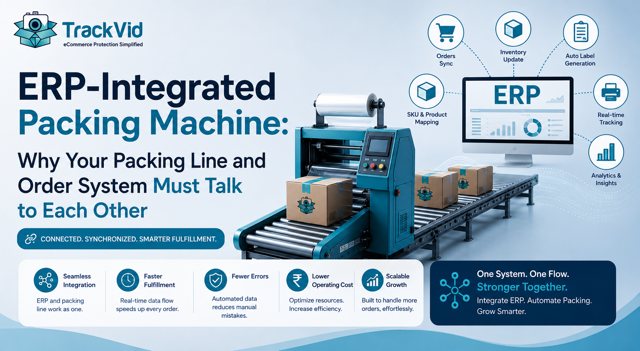
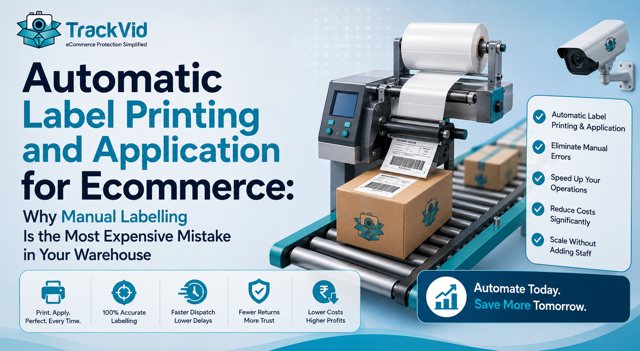
TrackVid's automatic packing machine is built to hold throughput through exactly the surges that break manual operations. One operator runs the full scan, print, apply, seal, and convey line at a consistent rate whether you are shipping 300 or 600 orders in a day, so a Big Billion Day or EORS spike is absorbed by the line rather than by a wave of temporary staff.
Labelling and sealing are deterministic, so you avoid the temp-staff error spike that returns after the sale. And on the integrated version, built-in cameras film the pack at dispatch and link the video to the Order ID, giving you the order-linked proof to contest the post-sale claim wave. TrackVid's platform is already used by 1,100+ Indian ecommerce sellers, who report claim win rates of 90 percent or above on disputes where packing video is submitted, according to TrackVid data.
The machine is built for the Indian market and is pre-launch, with early access open to a limited first production batch. Securing a place before the next festive season is the point of joining now.
Related: Join the early access waitlist for the TrackVid packing machine
Will Your Operation Survive the Next Surge?
Ask yourself what happened during your last major sale. Did you miss dispatch cut-offs? Did the backlog spill into the following days? Did you bring in temporary staff, and did their errors return as a wave after the event? Did you take SLA penalties or cancellations? Were you hit by fake-return claims you could not contest?
If the answer to several of these is yes, your packing operation failed its stress test, and the next surge will do the same, because nothing structural has changed. The durable fix is to raise the packing ceiling with automation so the surge becomes a high-volume normal day rather than a crisis, and to do it before the next festive season, not during it.
Related: Why apparel sellers in India feel the packing problem hardest
Join the early access waitlist for the TrackVid automatic packing machine
Takes 30 seconds. No spam. We only contact you about early access and demos.
Related: What ecommerce packing automation is and how it works
Frequently Asked Questions
How do I manage packing during sale season in India? The reliable approach is to raise your packing throughput ceiling before the sale, not to rent it during the sale. Hiring temporary staff is the common response, but they pack slower, make more errors that return after the event, and leave when it ends. Automated packing holds a consistent rate regardless of volume with one operator, so a Big Billion Day or EORS surge is absorbed rather than survived. Prepare before the event, because you cannot build capacity mid-surge.
How do sellers handle Big Billion Day order volume? Sellers who cope well have packing capacity that does not depend on how many people they can hire for a few days. Manual operations that rely on temporary staff typically miss cut-offs, build backlogs, and face a return wave from temp-staff errors afterward. An automated packing line processes the surge at a steady rate, clears the backlog within the day, and holds dispatch SLAs, which is what separates a smooth sale from a costly one.
Sale season packing kaise handle kare India mein? Sale season packing handle karne ka sahi tareeka hai apni packing capacity sale se pehle badhana, sale ke dauraan rent nahi karna. Temporary staff hire karna common hai, lekin woh slow pack karte hain, zyada errors karte hain jo sale ke baad return aate hain, aur event khatam hone pe chale jaate hain. Automated packing ek consistent rate pe chalti hai chahe volume kitna bhi ho, ek operator ke saath, toh Big Billion Day ya EORS ka surge absorb ho jaata hai. Event se pehle taiyari karo, kyunki surge ke beech capacity nahi banayi ja sakti.
Why does packing fail during sale season? Because manual packing scales linearly and cannot surge. To handle several times your normal volume you would need several times your trained packers, ready for a few-day window, which is not achievable. So the pack step, already near capacity on normal days, falls behind during the spike, creating a backlog that spills across the event. Temporary staff do not fix this, because they add errors and coordination problems rather than clean throughput.
Is hiring temporary packers a good way to handle a sale surge? Usually not. Temporary packers are untrained, so they pack slower and make more errors at the moment volume is highest, and those errors return as a wave after the sale at inflated volume. They also carry recruiting and supervision overhead and leave when the surge ends, so you rebuild capacity every event. Hiring trades a throughput problem for an error and management problem without raising the pack step's speed ceiling.
How does automation help specifically during festive sales? Automation provides consistent throughput regardless of volume, which is exactly what a surge demands. A line with one operator processes the spike at the same rate as a normal day, so the backlog clears within the day and dispatch SLAs hold, avoiding the penalties and cancellations a failed surge causes. It also avoids the temp-staff error spike, and on integrated machines captures order-linked proof to contest the heavy post-sale claim wave.
What happens to returns and claims after a big sale? The post-sale period brings the year's heaviest wave of returns and disputes, from both genuine temp-staff errors and concentrated return fraud, since high volume, discounts, and new buyers attract fake returns and false damage claims. Manual packing leaves you unable to contest the fraudulent share, because it produces no order-linked proof. Order-linked dispatch video, captured on an integrated packing machine, lets you win those claims instead of absorbing them.
Sources: IBEF India ecommerce data; TrackVid seller data on claim win rates; Amazon, Flipkart, and Myntra seller portal dispatch SLA and claim requirements; NRF return-fraud research.
TrackVid is a video proof and claim management platform used by 1,100+ Indian ecommerce sellers on Amazon, Flipkart, AJIO, Myntra and Meesho. Officially authorised by Snapdeal. Learn more at trackvid.in.


Get the Marketplace Claim Recovery Checklist
A 12-point checklist used by 1,100+ sellers to recover 85-90% of marketplace claim losses. Free, instant access.
- Marketplace-specific evidence formats (AJIO, Flipkart, Amazon, Myntra)
- Claim window deadlines for every major platform
- The 6-step process that pushes approval from 85-90%
- Common rejection reasons and how to avoid them
No spam. Unsubscribe anytime. Used by sellers at Rare Rabbit, HRX, Da Milano + 1,100 more.
Stop Losing Money to Fake Returns
Join 1,100+ sellers who recover lakhs every month with TrackVid